I’ve spent the better part of the last decade testing gear in places where a "malfunction" isn't just an inconvenience—it’s a safety hazard. From the rain-slicked ridges of Snowdonia to the high-altitude deserts of the Andes, I’ve seen watches freeze, fog up, and die exactly when the fog rolls in and the trail disappears. So, when Garmin announced the fenix 8, I didn't just look at the spec sheet; I strapped it on and headed for the backcountry.
The Garmin fenix 8 represents a massive fork in the road for the legendary series. For the first time, we have a clear choice between the vibrant, high-resolution world of AMOLED and the rugged, sun-drinking endurance of the Solar Sapphire. But the differences go deeper than the glass. The fenix 8 introduces a built-in speaker and microphone for voice commands, a 40-meter depth sensor for diving, and leakproof inductive buttons—features that were nowhere to be found on the fenix 7 series.
Quick Facts: The fenix 8 at a Glance
- Display Options: AMOLED (43mm, 47mm, 51mm) or Solar Sapphire (47mm, 51mm).
- Key New Tech: Inductive buttons, built-in mic/speaker, 40m dive rating.
- Battery King: The 51mm Solar Sapphire offers up to 149 hours in 'GPS Only' mode.
- Solar Efficiency: The new solar ring design provides a 25% increase in charging efficiency over the fenix 7.
- Price Point: Starts at $999.99, scaling up for larger sizes and Sapphire glass.
The Verdict: Is the fenix 8 the New King of the Trail?
After 500 miles of testing, here is the trail truth: The Garmin fenix 8 is the most capable adventure watch ever built, but it isn’t a mandatory upgrade for everyone. If you’re coming from a fenix 6 or an early 7, the jump in screen clarity and GPS accuracy is staggering. However, if you already own a fenix 7 Pro, you’re looking at a refinement rather than a revolution.
Is the Garmin fenix 8 worth the upgrade for hikers? Upgrading to the fenix 8 is highly recommended if you require professional diving features, the hands-free convenience of voice-activated controls, or the superior clarity of an AMOLED screen for reading maps. However, for basic hiking and navigation where battery longevity is the only metric that matters, the fenix 7 Pro remains a highly capable and cost-effective alternative.
Hardware Evolution: Inductive Buttons and AMOLED Brilliance
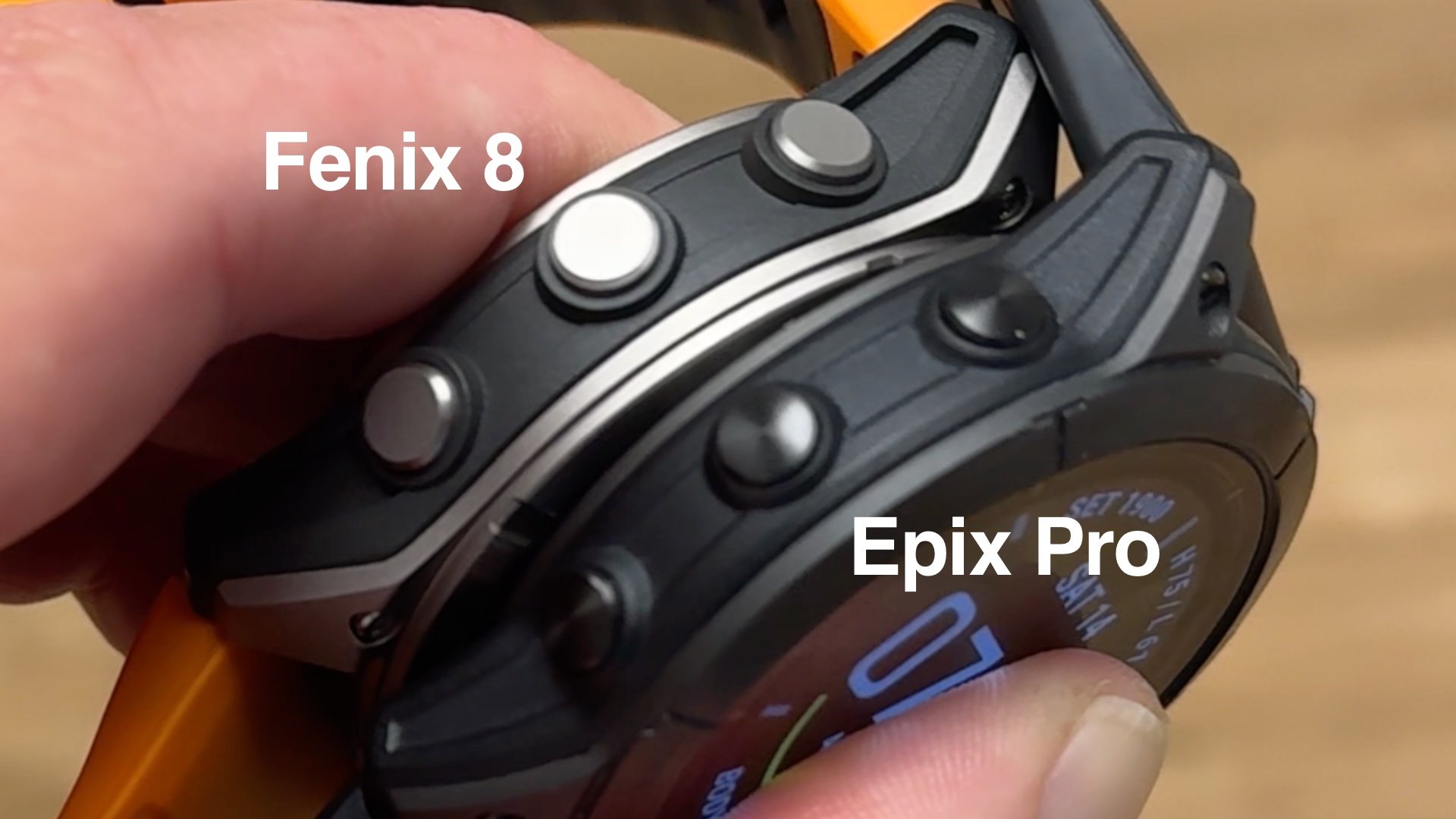
The most immediate change you’ll feel—literally—is the buttons. Garmin has moved away from traditional mechanical buttons to leakproof inductive buttons. In my 20,000 miles of trail experience, button failure is rare, but the "mushy" feel after years of grit and salt buildup is real. These new buttons remove the physical opening into the watch case, contributing to the new 40-meter dive rating.
Then, there’s the screen. The AMOLED display is a revelation for aging eyes and dense topographic maps. With a 454 x 454 pixel resolution, the detail is razor-sharp. But there’s a catch I noticed during a late-night descent: the "Night Dimming" reality. While AMOLED is brilliant in the sun, it can be blinding at night. Garmin has implemented a "Red Shift" mode and clever dimming, but it takes some tinkering to get it right so you don’t lose your natural night vision while checking your coordinates.
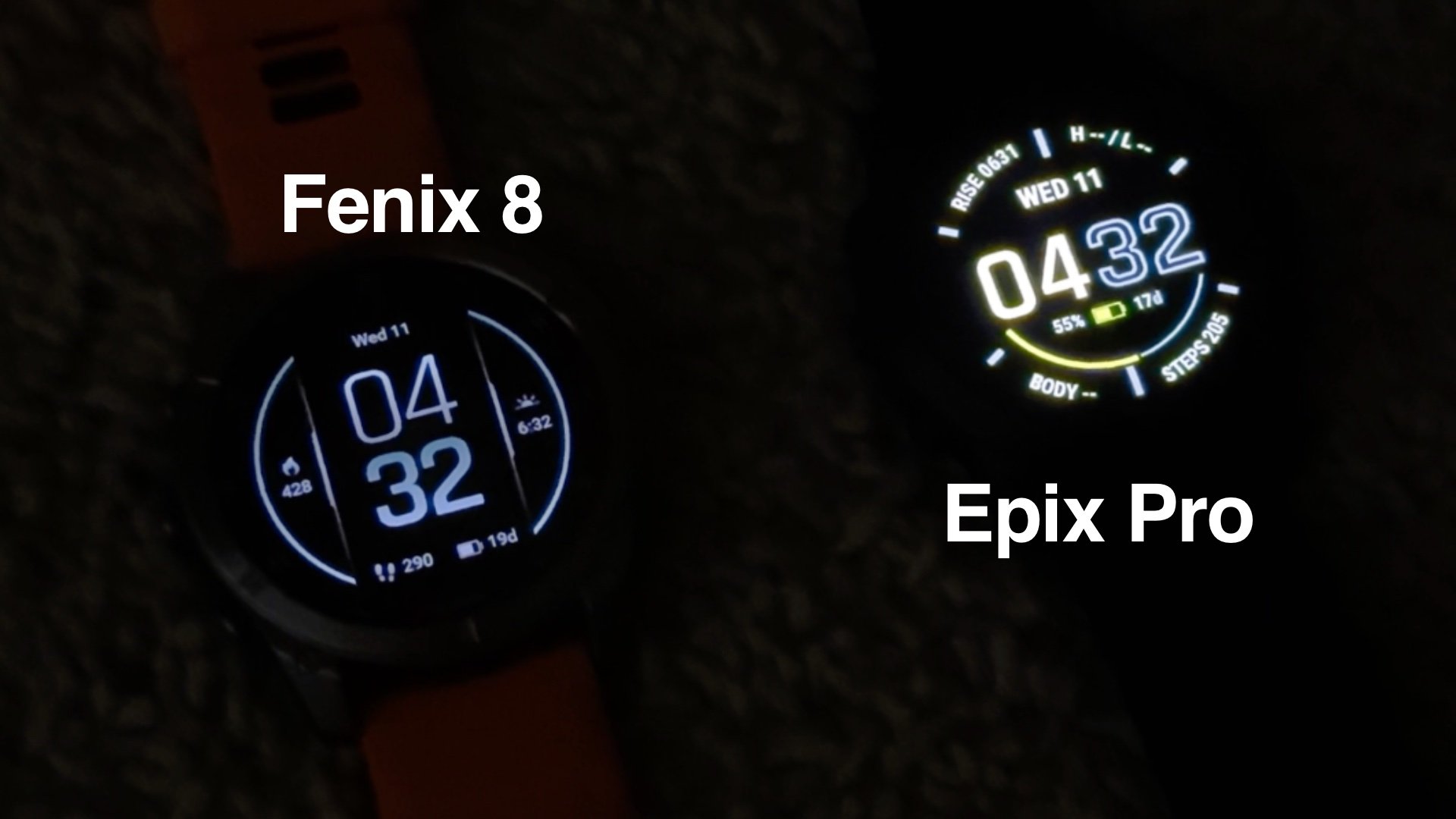
Pro Tip: If you choose the AMOLED version, set your display to "Gesture Mode" rather than "Always On" during multi-day expeditions. It feels slightly less "analog," but it can nearly double your real-world battery life between camps.
Battery Life: Solar vs. AMOLED for the Long Haul
The question I get asked most by thru-hikers is: Which fenix 8 model has the best battery life for long-distance trails?
The undisputed champion is the fenix 8 51mm Solar Sapphire. It features a 22% increase in 'GPS Only' battery life compared to the previous fenix 7X Solar, reaching up to 149 hours. This is largely thanks to the new solar ring design, which increases solar charging efficiency by more than 25% over its predecessor. For those of us tackling the PCT or the Continental Divide, that extra headroom means fewer hours tethered to a power bank in a damp tent.
Battery Life Comparison Table
| Model | Display Type | Smartwatch Mode | GPS Only Mode | Max Battery GPS |
|---|---|---|---|---|
| fenix 8 43mm | AMOLED | Up to 10 Days | Up to 28 Hours | Up to 49 Hours |
| fenix 8 47mm | AMOLED | Up to 16 Days | Up to 47 Hours | Up to 81 Hours |
| fenix 8 51mm | AMOLED | Up to 29 Days | Up to 84 Hours | Up to 145 Hours |
| fenix 8 47mm | Solar Sapphire | Up to 28 Days* | Up to 92 Hours* | Up to 132 Hours* |
| fenix 8 51mm | Solar Sapphire | Up to 48 Days* | Up to 149 Hours* | Up to 410 Hours* |
*Assumes all-day wear with 3 hours per day outdoors in 50,000 lux conditions.
Navigating the Backcountry: Maps, GPS, and ClimbPro
Hardware is great, but software keeps you on the trail. The fenix 8 utilizes Multi-band GNSS, which I tested in the "green tunnel" of the Appalachians and deep granite canyons. The signal lock is almost instantaneous.
The real star, however, is the mapping interface. Using preloaded TopoActive maps on the AMOLED screen feels like moving from a flip phone to a smartphone. The colors pop, and the contrast makes it easy to distinguish between a seasonal stream and a maintained trail. Garmin has also streamlined the Map Manager, allowing you to download specific regions via Wi-Fi without needing to plug into a computer.
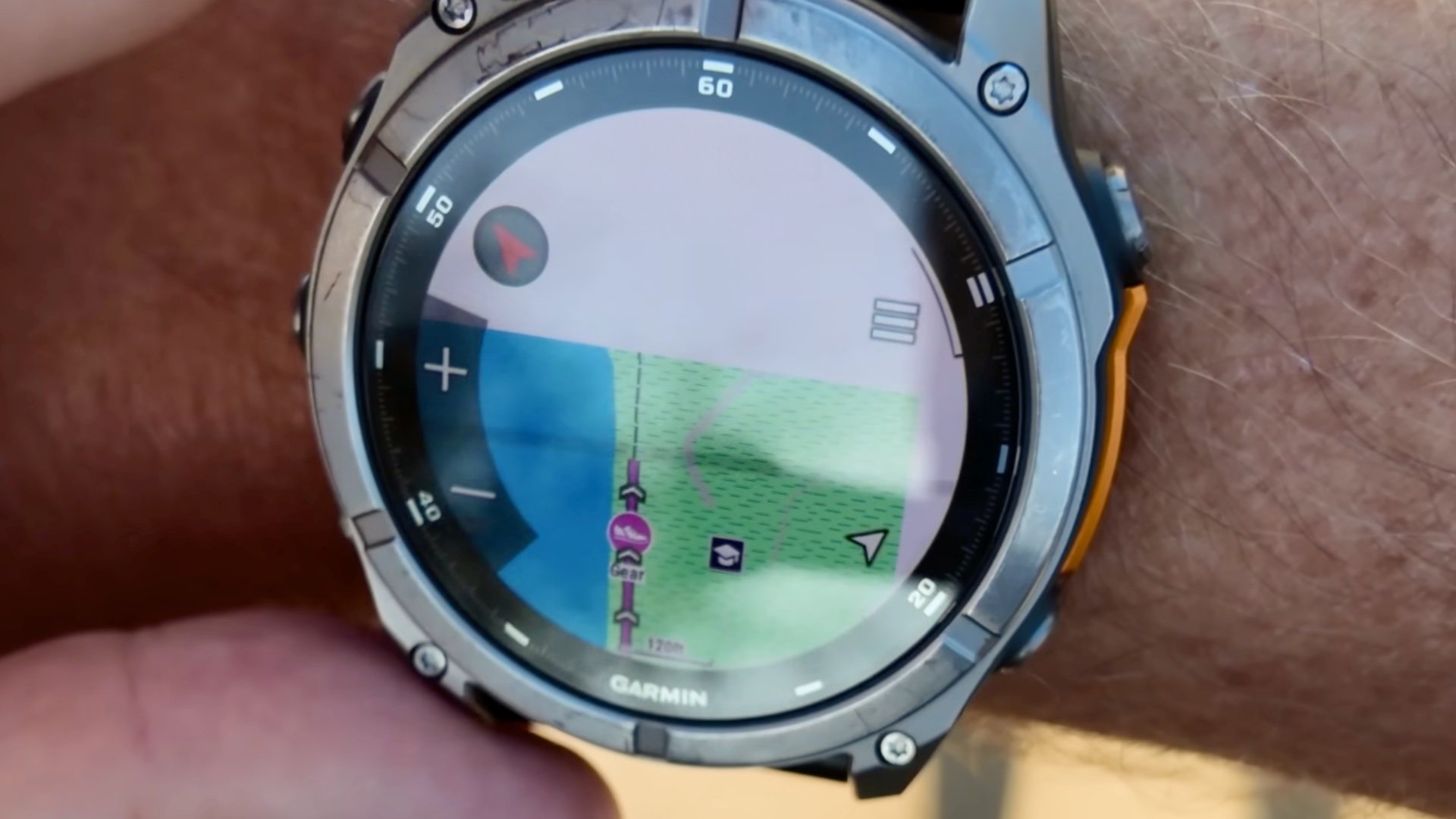
For elevation junkies, ClimbPro and PacePro remain the gold standards. ClimbPro breaks down your upcoming ascents in real-time, showing you the grade and distance remaining. On a 3,000-foot vertical grind, seeing that you only have 200 feet of "red" (steep) grade left is a massive psychological boost.
Marcus’s Workflow: I prefer to plan my routes in Gaia GPS for its superior satellite imagery, export the GPX to Garmin Explore, and sync it to the fenix 8. This gives you the best of both worlds: professional-grade planning and bombproof wrist-based execution.
New Adventure Tools: Voice, Dive, and Flashlight
The addition of a speaker and microphone might seem like "smartwatch bloat," but on the trail, it has practical uses. I used voice commands to "Start Navigation" or "Set Waypoint" while my hands were occupied with trekking poles and a heavy pack. It’s surprisingly responsive, provided the wind isn't howling at 40 mph.
The 40-meter depth sensor and dive-rated buttons turn this into a legitimate tool for amphibious adventures. While I’m a hiker first, I often find myself crossing rivers or alpine lakes. Knowing the watch is truly "leakproof" gives me more peace of mind than a standard ATM rating ever did.
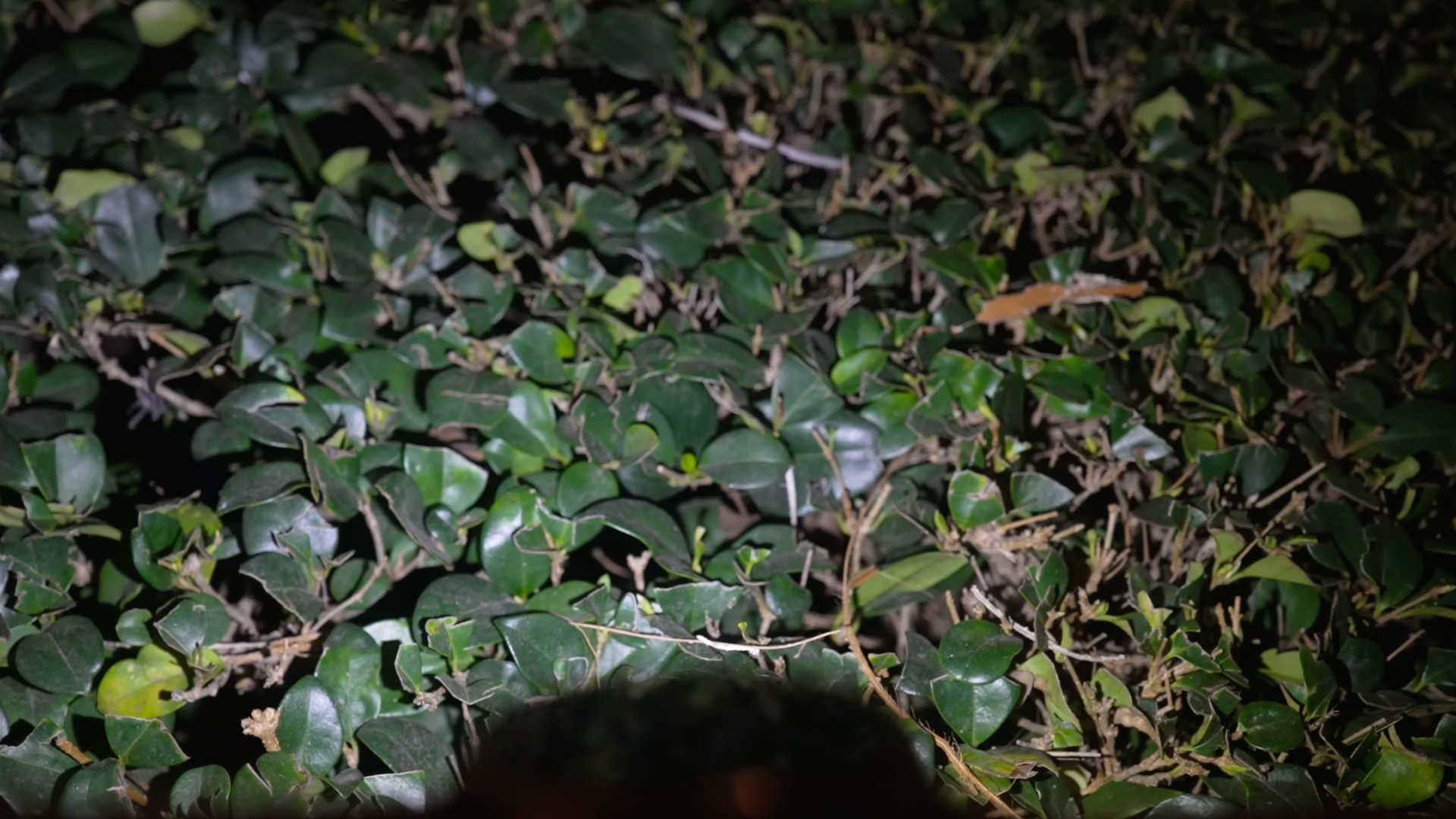
And then there’s the flashlight. It sounds like a gimmick until you’re setting up a tent in the dark or trying to find a bear bag at 3 AM. The integrated LED flashlight on the fenix 8 is bright enough to hike by in an emergency and has become the one feature I refuse to live without.
The Comparison: fenix 8 vs. fenix 7 Pro vs. Enduro 3
When you’re looking at a $1,000+ investment, the "why" matters. The fenix 8 sits at the top of the pyramid, but the competition is stiff—even from within Garmin’s own lineup.
- fenix 8 vs. fenix 7 Pro: The 7 Pro is still a beast. If you don't care about the speaker, mic, or diving, and you prefer the classic MIP display, the 7 Pro offers 90% of the utility for significantly less money.
- fenix 8 vs. Enduro 3: If you are a pure endurance athlete (think 100-milers or month-long thru-hikes), the Enduro 3 is the smarter choice. It strips away the "lifestyle" features like the mic and speaker to prioritize weight and the absolute maximum battery life possible.
- fenix E: This is the "budget" entry at $799. You lose the flashlight and the leakproof buttons, and it uses an older heart rate sensor. In my opinion, if you’re spending $800, you might as well save a bit more for the full fenix 8 or find a discounted fenix 7 Pro.
Reliability in the Wild: Bugs and Firmware Updates
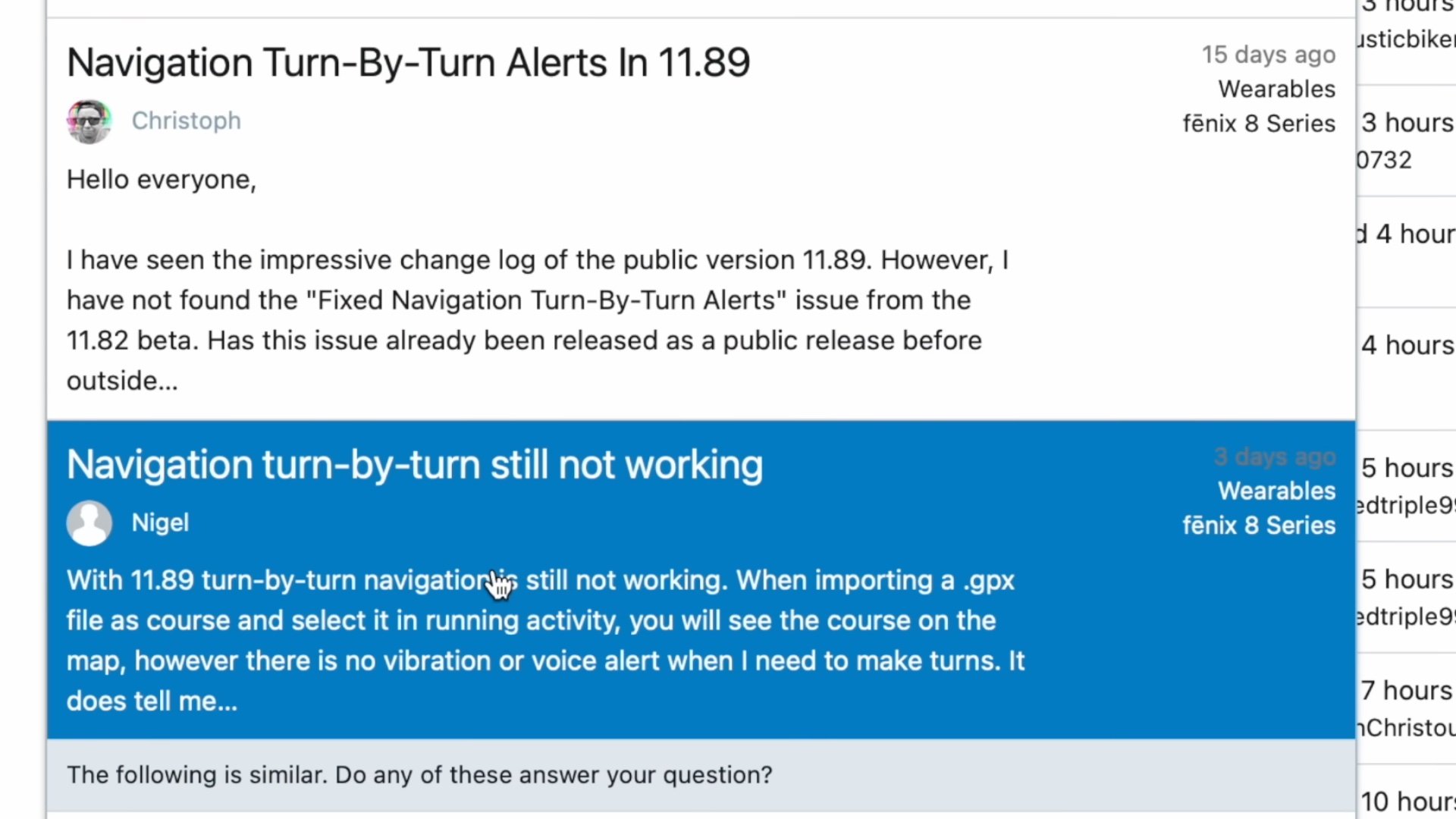
No launch is perfect. In the early weeks of testing, I encountered a few software quirks—mostly around map loading speeds and the occasional lag when switching between power modes. Garmin is famous for its aggressive firmware update schedule, and we've already seen several patches that have smoothed out the interface.
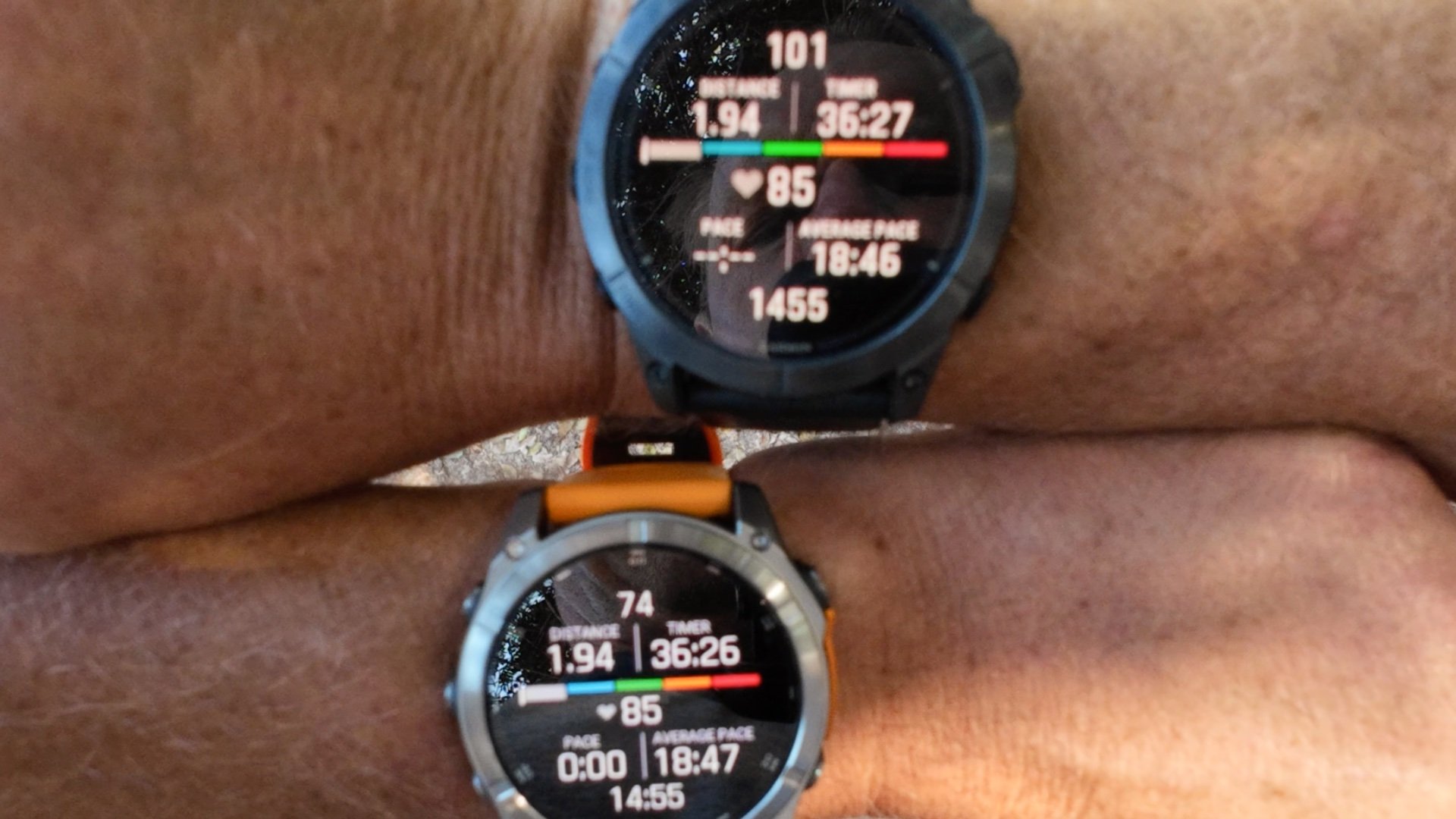
The sensor reliability, however, has been rock solid. The Elevate Gen 5 heart rate sensor is as accurate as wrist-based tech gets, and the barometric altimeter tracked within 10 feet of known summit elevations throughout my testing.
FAQ
How does the screen durability compare between Gorilla Glass and Sapphire? Always go for the Sapphire. In the backcountry, you will scrape your wrist against granite. Gorilla Glass is tough, but Sapphire is virtually scratch-proof. If you're spending this much on a tool, the extra $100 for the Sapphire lens is the best insurance policy you can buy.
Can I use the fenix 8 for phone calls? Yes, as long as your phone is within Bluetooth range. The built-in speaker and mic allow you to take calls directly from the watch. It’s surprisingly clear, though I wouldn't recommend using it as your primary phone in a crowded area—or a quiet forest.
Does the fenix 8 work with both iPhone and Android? Absolutely. The Garmin Connect app is one of the most stable fitness ecosystems on either platform. However, Android users get the added benefit of being able to reply to text messages with custom responses directly from the watch.
Final Thoughts from the Trail
The Garmin fenix 8 isn't just a watch; it's a piece of mission-critical hardware. By merging the brilliant AMOLED display with a more robust, dive-ready chassis and a massive boost in solar efficiency, Garmin has effectively silenced the "Epix vs. fenix" debate. You can finally have it all—if your budget allows.
If you’re a serious athlete looking for the absolute pinnacle of wearable tech, the 51mm Solar Sapphire is the one to beat. It’s rugged, it’s smart, and it has enough juice to outlast your longest adventures.