I’ve spent the better part of the last decade chasing horizons, from the rain-slicked trails of the Pacific Northwest to the unpredictable heat of the High Sierra. If there’s one thing I’ve learned, it’s that Mother Nature doesn’t care about your data plan. When the sky turns that ominous shade of bruised purple and the power grid flickers out, your $1,200 smartphone becomes a very expensive glass brick. That’s when you need a "fail-safe"—a piece of kit that works when nothing else does.
For years, the Midland ER310 was the gold standard in that category. It was the "Old Reliable" sitting in every prepper’s go-bag and every camper’s trunk. But in 2025, Midland finally dropped the upgrade we’ve been waiting for: the Midland ER310PRO. After putting it through its paces in the field, I can tell you that the "Pro" tag isn't just marketing fluff. By integrating a massive 10,000mAh battery, modern USB-C charging, and Bluetooth connectivity, Midland has addressed every gripe I ever had with the original.
Is the Midland ER310PRO worth the upgrade? Absolutely. It features a battery four times larger than the original, provides over 200 hours of radio broadcast time on a full charge, and can recharge a modern smartphone like an iPhone 14 approximately three times. It’s no longer just an emergency radio; it’s a high-capacity power bank that happens to have the best weather-tracking tech on the market.
ER310 vs. ER310PRO: What’s Actually Different?
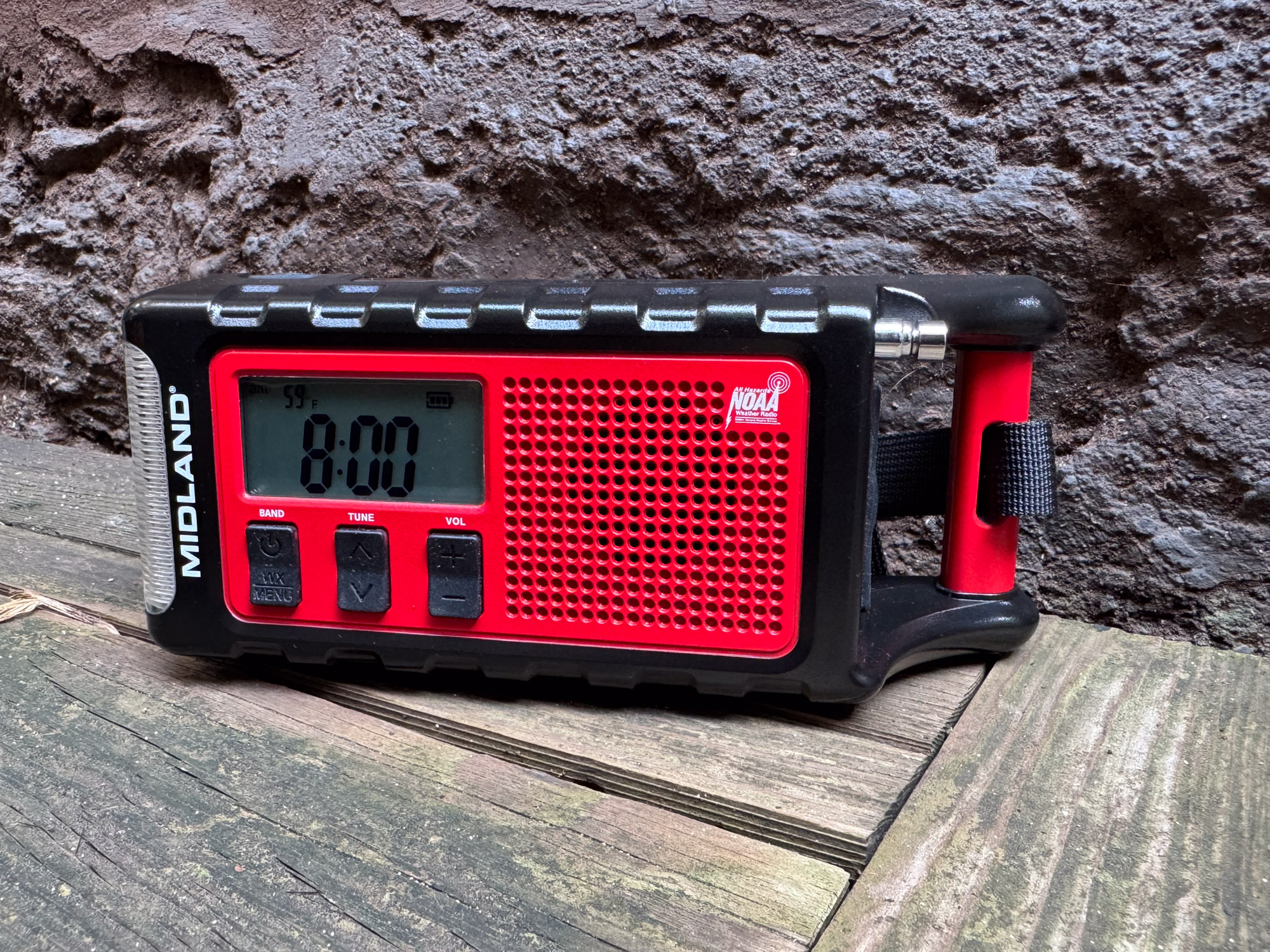
When you place the ER310PRO next to its predecessor, you might not notice a massive physical shift immediately. It maintains that iconic, rugged "safety orange" and black chassis. However, the internal overhaul is staggering. The most critical change is the jump from a 2,600mAh battery to a whopping 10,000mAh internal battery. That is a 284% increase in capacity.
In the old days, the ER310 relied heavily on its ability to swap in AA batteries as a backup. While the PRO model moves away from the AA compartment to house that massive internal cell, the trade-off is more than fair. You’re trading three flimsy AAs for a dedicated power plant that can keep the lights on and the radio humming for days on end without needing a single accessory.
| Feature | Midland ER310 (Standard) | Midland ER310PRO (New) |
|---|---|---|
| Internal Battery | 2,600 mAh Li-ion | 10,000 mAh Li-ion |
| Charging Port | Micro-USB | USB-C (Fast Charging) |
| Bluetooth | No | Yes |
| Radio Runtime | Approx. 32 Hours | 200+ Hours |
| Flashlight | 130 Lumens Cree LED | 130 Lumens Cree LED |
| Phone Charging | ~0.5 to 1 full charge | ~3 full charges (iPhone 14) |
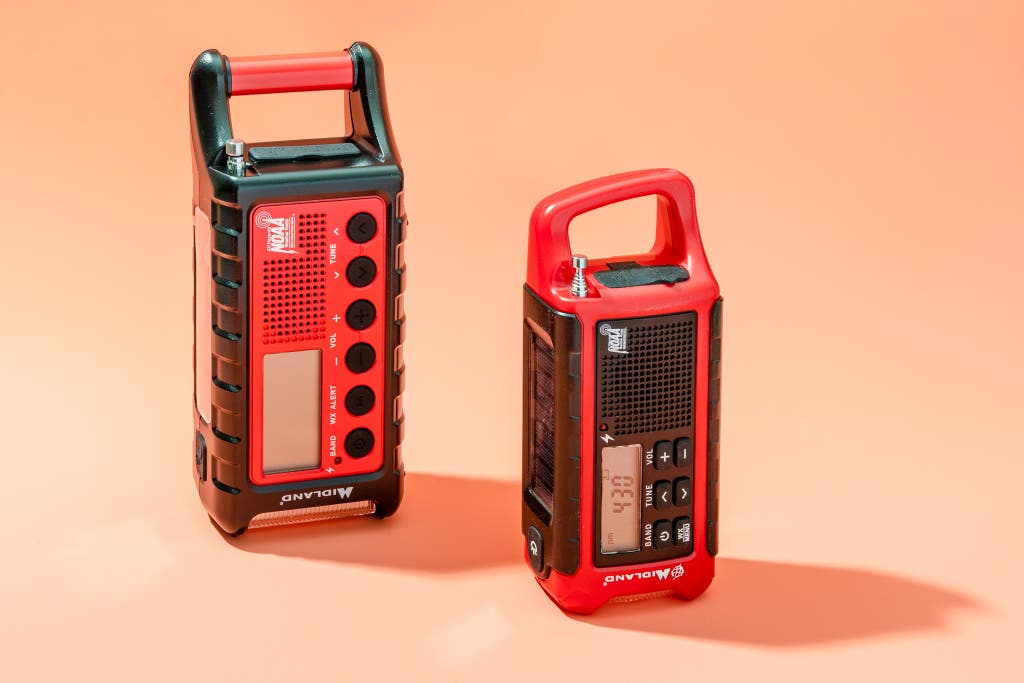
The Power House: 10,000mAh Performance
Let’s talk real-world utility. In an emergency, your biggest anxiety is power management. I tested the ER310PRO’s endurance by running the NOAA weather scan at a moderate volume. Midland claims 200+ hours of radio operation, and in my testing, the radio barely made a dent in the battery meter after a full weekend of use.
But the real game-changer is the "Power Bank" functionality. Most emergency radios can give your phone a "mercy charge"—maybe 20% to 30% so you can make one last call. The ER310PRO is a different beast. With 10,000mAh, I was able to take a dead iPhone 14 from 0% to 100% three times, with enough juice left over to keep the flashlight running through the night.
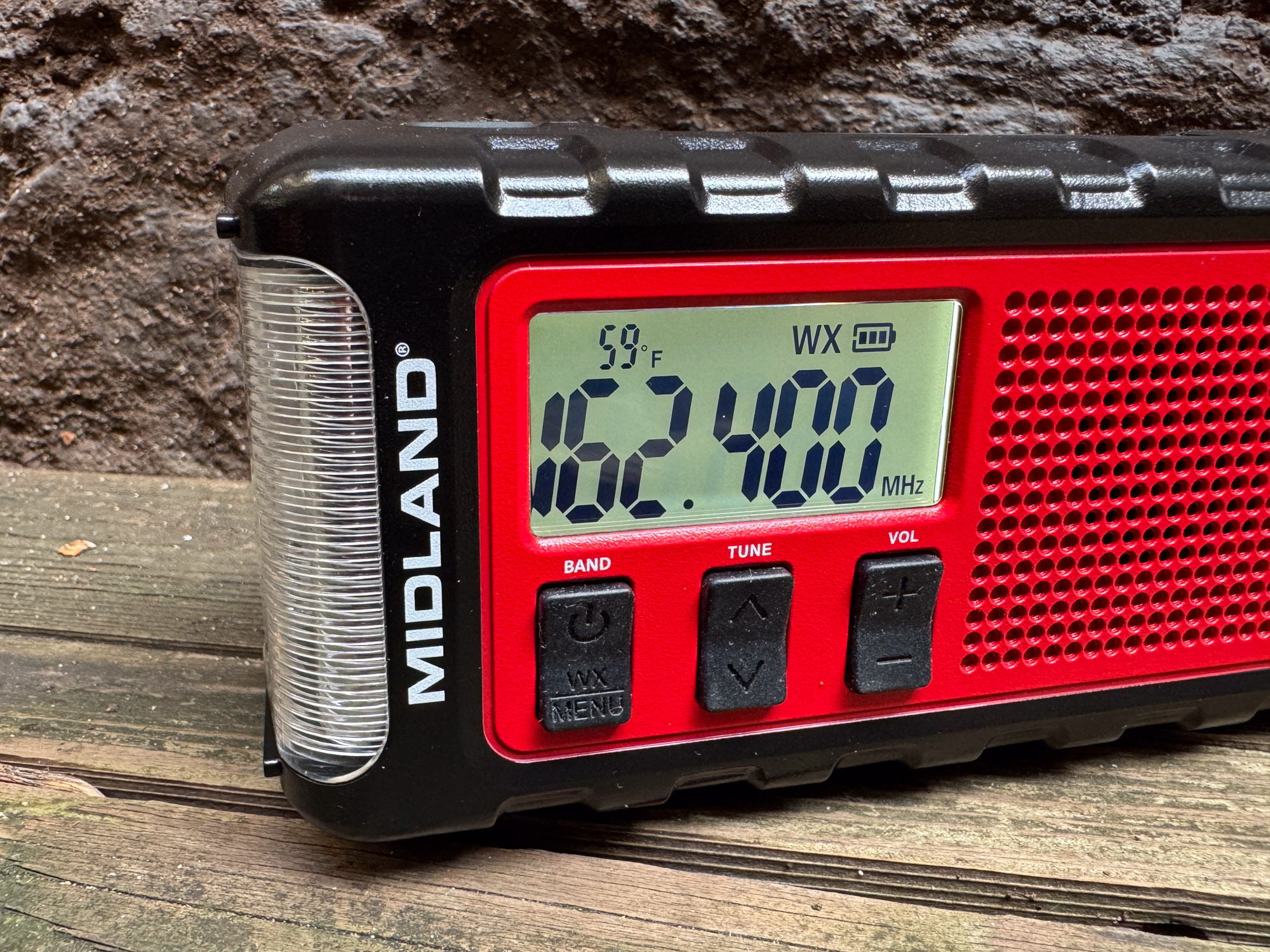
Marcus’s Field Tip: The battery meter on the LCD uses a 3-bar icon. While it’s helpful, remember that because the battery is so large, that "last bar" actually holds a significant amount of power—roughly 3,300mAh. Don't panic when you drop to one bar; you still have more juice than the original ER310 had at full capacity!
Charging Efficiency: Solar, Crank, and USB-C
The beauty of a high-end emergency radio is the "triple threat" of charging. The ER310PRO offers USB-C, a hand crank, and an integrated solar panel.
USB-C: The Modern Standard
Midland finally ditched the fragile Micro-USB port for USB-C Power Delivery. This is huge. It means you can use the same cable as your MacBook or modern Android phone. It also allows for faster input—recharging that massive 10,000mAh battery takes a few hours from a wall outlet, but it’s remarkably efficient compared to older models.
The Hand Crank: Manual Insurance
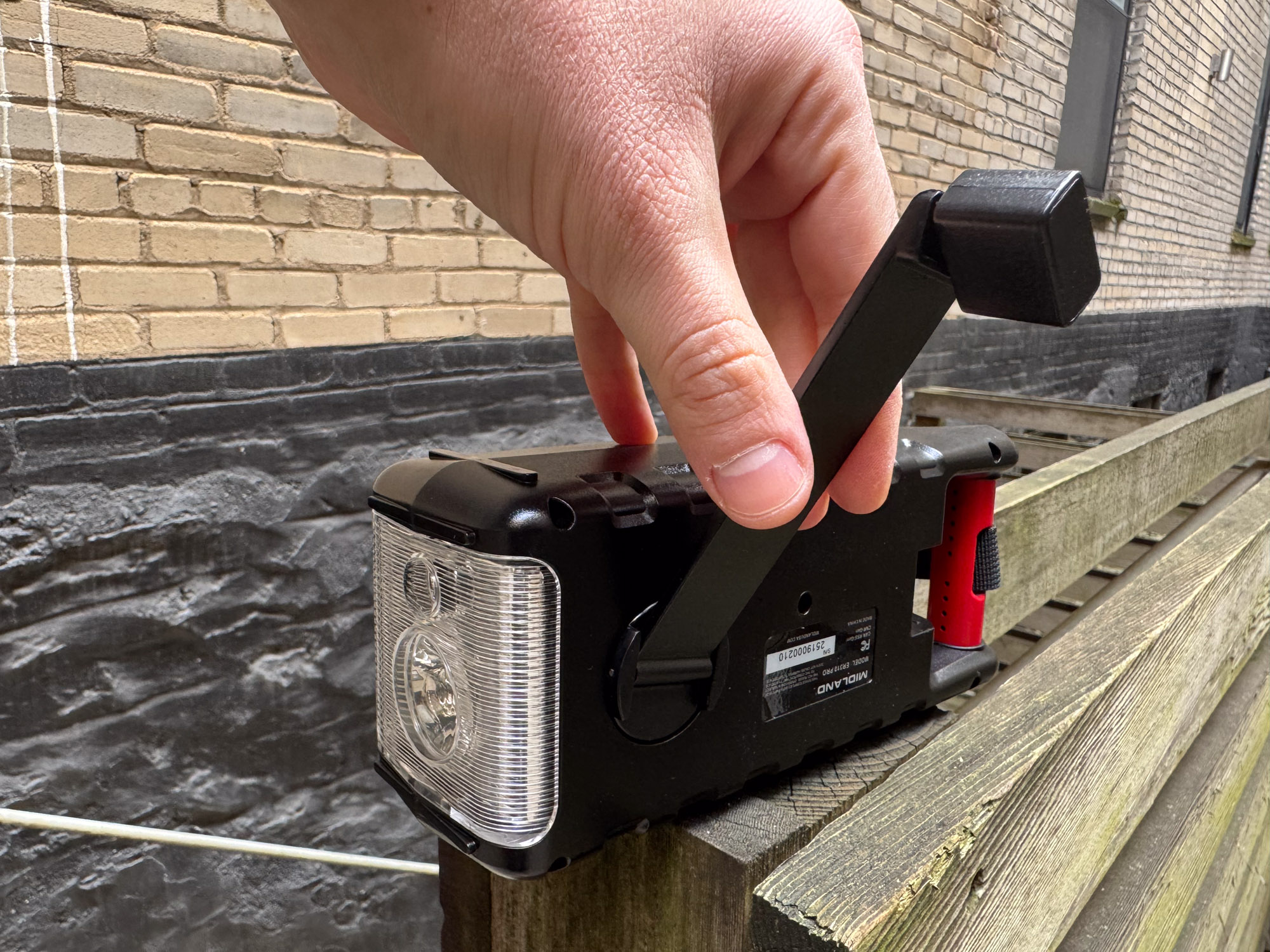
We’ve all seen the cheap "toy" cranks on budget radios that feel like they’ll snap if you turn them too hard. The ER310PRO’s crank is robust. In my testing, one minute of hand cranking provided approximately 9 minutes of radio use. It’s an arm workout, sure, but when the grid is down and your batteries are drained, those nine minutes of critical weather updates are worth the sweat.
Solar Panel: Passive Maintenance
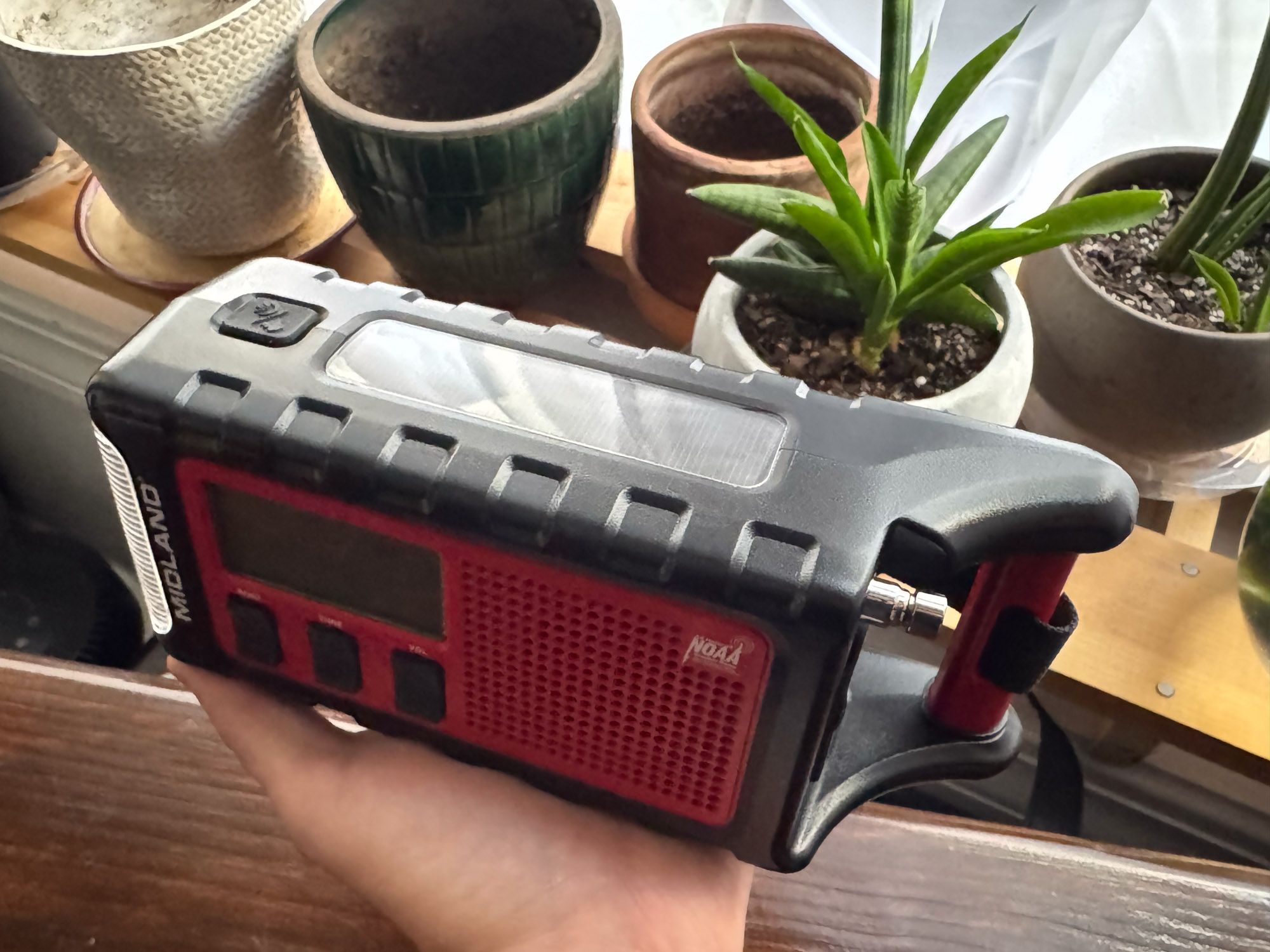
Don’t expect the solar panel to charge this radio from 0% to 100% in an afternoon—physics just doesn't work that way with a panel this small. However, it is perfect for "trickle charging." One hour of optimal sunlight provides about 45 minutes of radio use. I found it most useful for keeping the battery topped off while sitting on a picnic table or a windowsill during the day.
Emergency Tools: Beyond the Radio
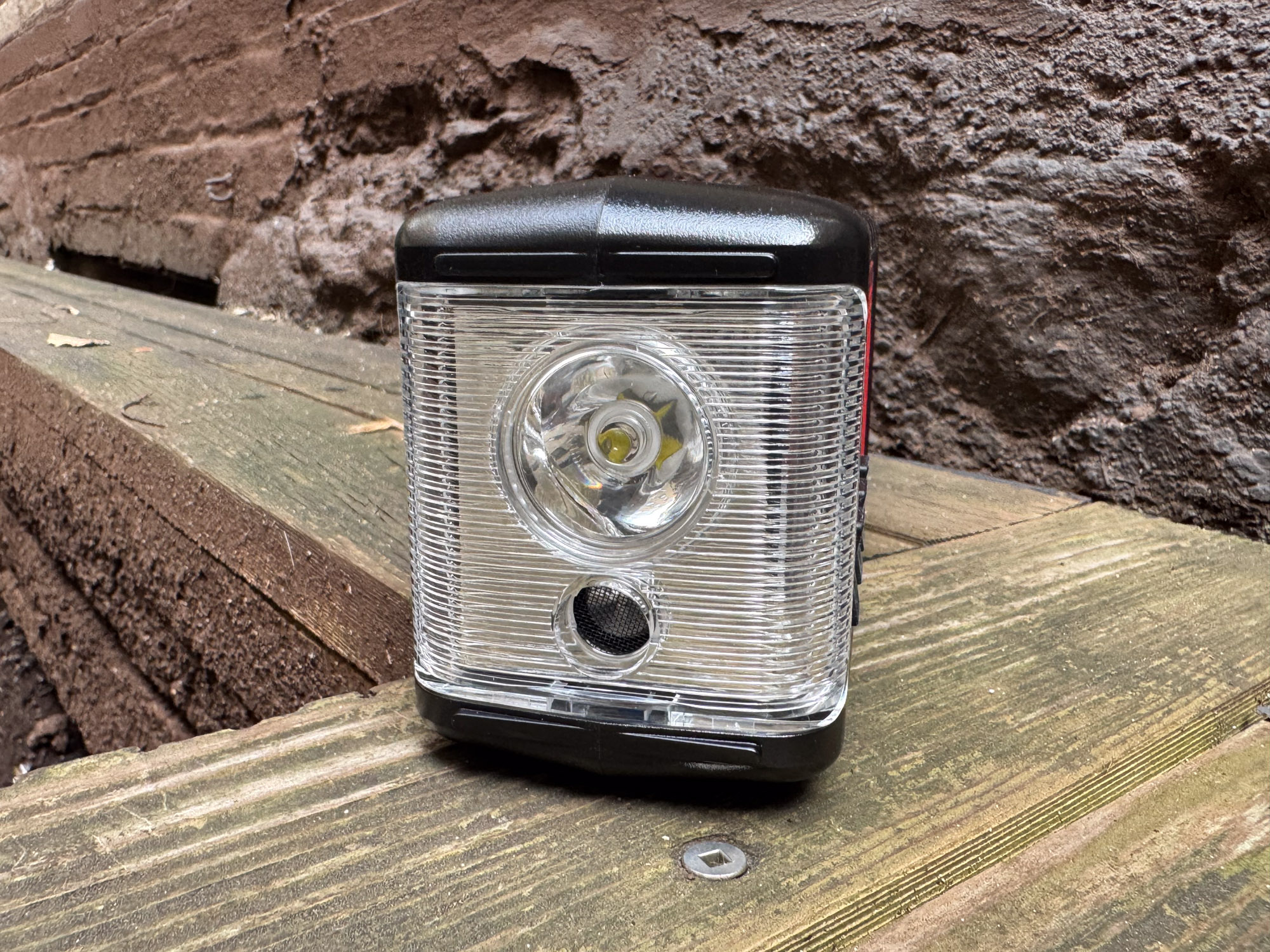
A good emergency radio should be a Swiss Army Knife for the dark. Midland kept the excellent 130-lumen Cree LED flashlight from the previous generation. It features three settings: High, Low, and an SOS Strobe beacon that flashes the international distress signal. In a pitch-black forest or a basement during a blackout, 130 lumens is plenty to navigate safely without blinding yourself with reflection.
One of the more unique features is the Ultrasonic Dog Whistle. You might think it’s a gimmick, but if you’re trapped or lost, a dog whistle can help Search and Rescue (SAR) K9 units locate you long before they hear your voice. It’s one of those features you hope you never use, but you’re glad it’s there.
As for durability, the ER310PRO doesn't carry an official IPX water-resistance rating, which is a slight disappointment for a "Pro" device. However, the build quality is rugged. All the ports are protected by thick rubber seals, and the buttons are rubberized to keep out moisture. I’ve used it in heavy mist and light rain without a single hiccup.
Connectivity and Reception: The Core Mission
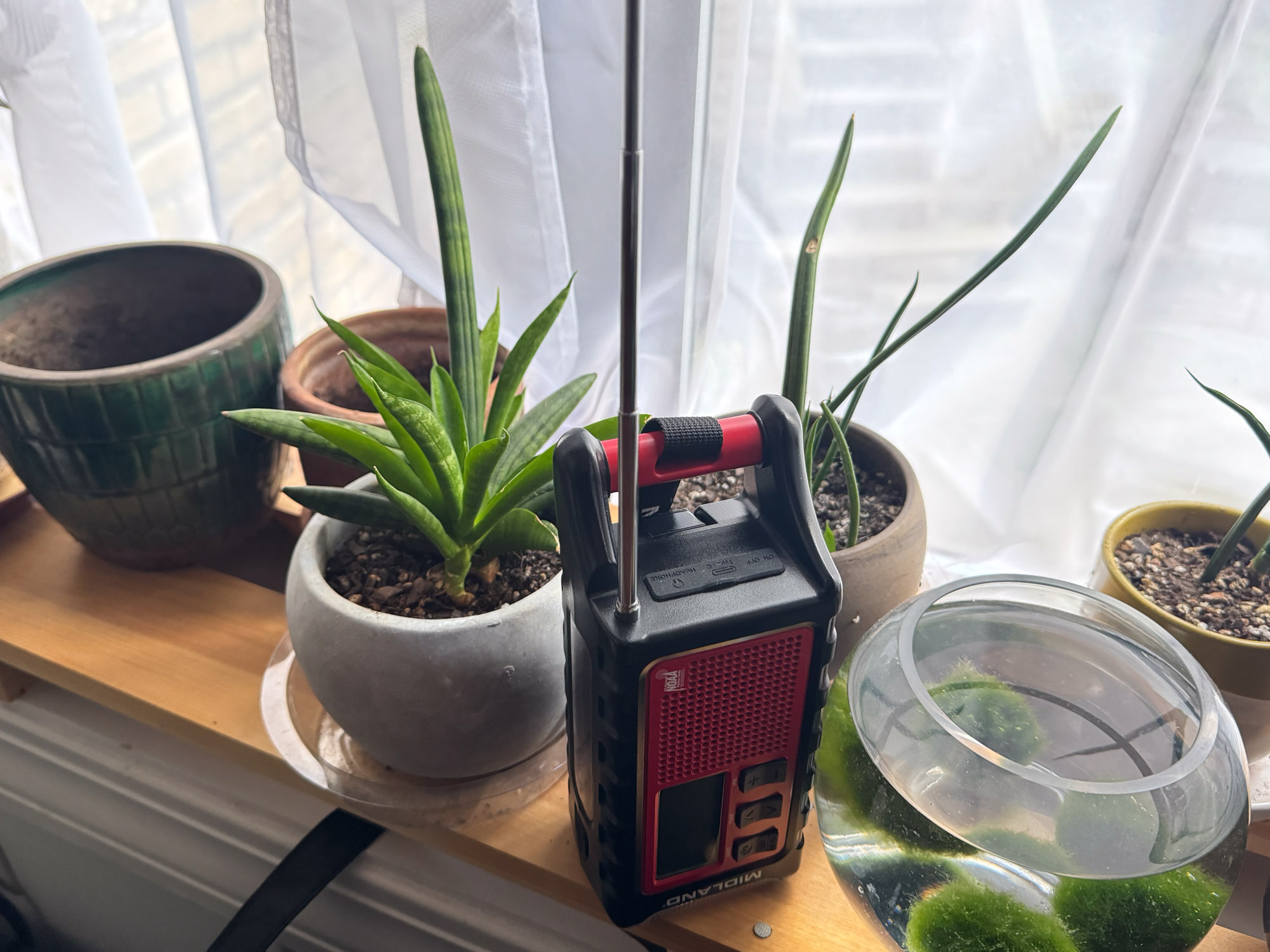
At its heart, this is a communication tool. The ER310PRO features AM, FM, and all 7 NOAA Weather Radio channels. The "Weather Scan" feature is excellent—it automatically locks onto the strongest signal in your area. In my apartment, which usually gets terrible reception, the telescoping antenna pulled in a crystal-clear signal from a station over 40 miles away.
The new addition here is Bluetooth connectivity. Some purists might ask: "Why do I need Bluetooth on an emergency radio?" My answer: Morale. During a long-term power outage or a week-long camping trip, being able to stream a podcast or some music from your phone (which you can charge via the radio!) makes a huge difference in your mental state. The audio quality isn't going to rival a Bose speaker, but it’s loud, clear, and far superior to the tinny speakers found on cheap portables.
Final Verdict: Who Should Buy the ER310PRO?
At roughly the $100 price point, the Midland ER310PRO is an investment in peace of mind.
You should buy the ER310PRO if:
- You live in an area prone to hurricanes, tornadoes, or wildfires.
- You are an avid camper or overlander who needs a reliable way to charge devices away from the grid.
- You want the absolute best battery life currently available in a portable weather radio.
Should you upgrade if you already have the ER310? If your current ER310 is working fine and you already carry a separate 10,000mAh power bank, you might not need to upgrade immediately. But if you want a consolidated, "all-in-one" solution that charges via USB-C and offers massive endurance, the PRO model is a significant step up.
In my book, the Midland ER310PRO is currently the best emergency weather radio of 2025. It takes a legendary platform and brings it into the modern era with the power and connectivity we actually use in the real world.
Pros & Cons
Pros:
- Massive 10,000mAh battery provides days of use.
- USB-C charging is much faster and more reliable than older ports.
- Bluetooth integration adds versatility for daily use.
- Excellent NOAA reception and clear audio.
- Reliable hand-crank and solar backup options.
Cons:
- No AA battery backup (replaced by the larger internal battery).
- No official IP water-resistance rating.
- Slightly heavier than the original model.
FAQ
Q: Can I use the ER310PRO to charge a laptop?
A: No. While the 10,000mAh battery is large, the USB-C output is designed for smartphones, tablets, and small electronics. It does not provide the high wattage (Power Delivery) required to charge a laptop.
Q: Is the battery replaceable?
A: Yes, Midland typically offers replacement battery packs. While the 10,000mAh cell is much more durable than older NiMH batteries, you can eventually swap it out if it stops holding a charge after several years.
Q: How long does the flashlight last on a full charge?
A: On the "Low" setting, the 130-lumen LED can run for dozens of hours. If you are only using the flashlight, you can expect several nights of continuous illumination thanks to the massive battery capacity.
Stay prepared, stay informed, and I’ll see you out on the trail. — Marcus Rivera