Imagine this: You’re standing at the top of a pristine ridgeline, the wind is whipping, and the descent ahead is a blank canvas of white. You drop in, but halfway down, the light shifts. Suddenly, the world turns into a flat, featureless grey void. You can’t tell a three-foot drop-off from a gentle slope. Your goggles fog up, you’re squinting through a scratched lens, and your day on the mountain just went from "epic" to "sketchy."
We’ve all been there. After logging over 50 years of combined skiing experience and testing nearly 100 pairs of goggles across a decade of expeditions, our expert team at the gear lab has learned one thing the hard way: your vision is your most important safety tool. Whether you're a first-timer or transitioning to intermediate runs, the right goggles are the difference between confidence and a face-plant.
If you’re looking for the short answer: The Smith 4D Mag is the best overall ski goggle for beginners in 2025 due to its unparalleled field of view and optical clarity. For those watching their wallet, the Smith Squad ChromaPop delivers elite performance without the triple-digit price tag.
Quick Picks: Top Goggles at a Glance
| Goggle Model | Price (MSRP) | Lens Type | Best Use Case |
|---|---|---|---|
| Smith 4D Mag | $348 | BirdsEye/Toric | Best Overall / Maximum Visibility |
| Glade Adapt 2 | $149 | Photochromic | Best Value / All-Weather |
| Smith Squad ChromaPop | $100-$150 | Cylindrical | Best Budget / Beginners |
| Julbo Cyrius | $230 | Photochromic | Best Tech for Variable Light |
| Anon M4 Toric | $320 | Toric | Best Magnetic Swap System |
Section 1: Mastering Lens Technology
When we rate goggles, we allocate 40% of the total score to Lens Quality. Why? Because if you can't see the texture of the snow, you can't react to it. For beginners, the jargon can be overwhelming—VLT, Photochromic, Polarized—but here is the breakdown of what actually matters.
Understanding VLT (Visible Light Transmission)
VLT is essentially a percentage that tells you how much light passes through the lens.
- Low VLT (8% – 15%): Dark tints, perfect for "Bluebird" days with blinding sun.
- High VLT (50% – 80%): Yellow, rose, or clear tints, designed for "Sock-In" days, fog, or night skiing.
Most beginners make the mistake of buying one dark lens and struggling when the clouds roll in. This is where Photochromic lenses come in. Photochromic lenses, like those in the Julbo Cyrius, automatically adjust their tint based on UV exposure. They can cover a massive range (e.g., 8% to 83%), meaning you have a dark lens in the sun and a clear lens in a storm without ever taking the goggles off your face.
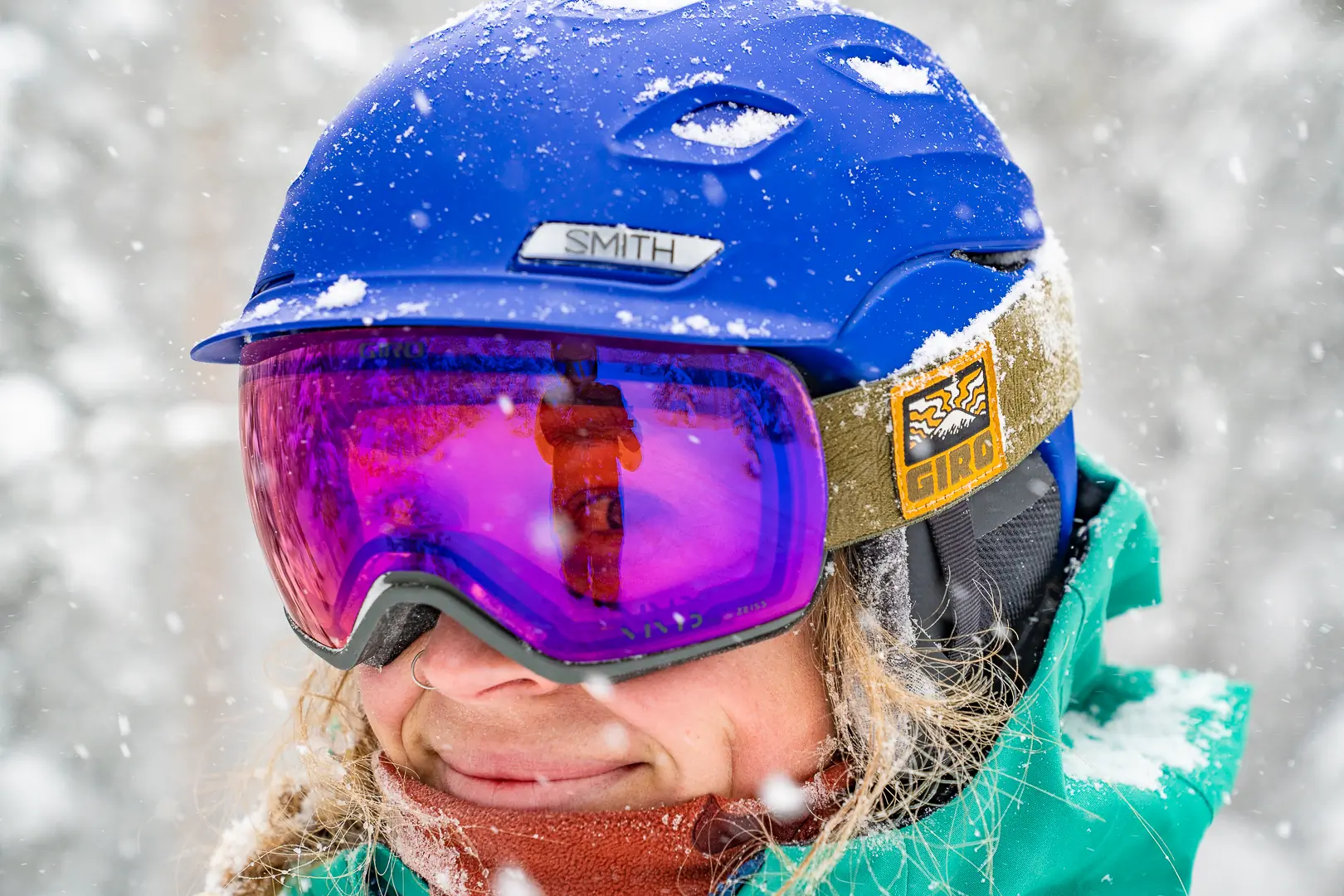
Lens Shapes: Spherical vs. Cylindrical vs. Toric
The shape of your lens dictates your peripheral vision and how much distortion you see.
- Cylindrical: These are flat vertically but curved horizontally. They look "old school" and are usually found on budget models like the Smith Squad. They offer decent vision but can have slight distortion at the edges.
- Spherical: These curve both horizontally and vertically, mimicking the shape of your eye. This reduces glare and increases peripheral vision.
- Toric/BirdsEye: The modern gold standard. Models like the Smith 4D Mag feature a lens that curves away at the bottom, giving you a 25% increase in your downward field of view. It’s like having an IMAX theater strapped to your face.
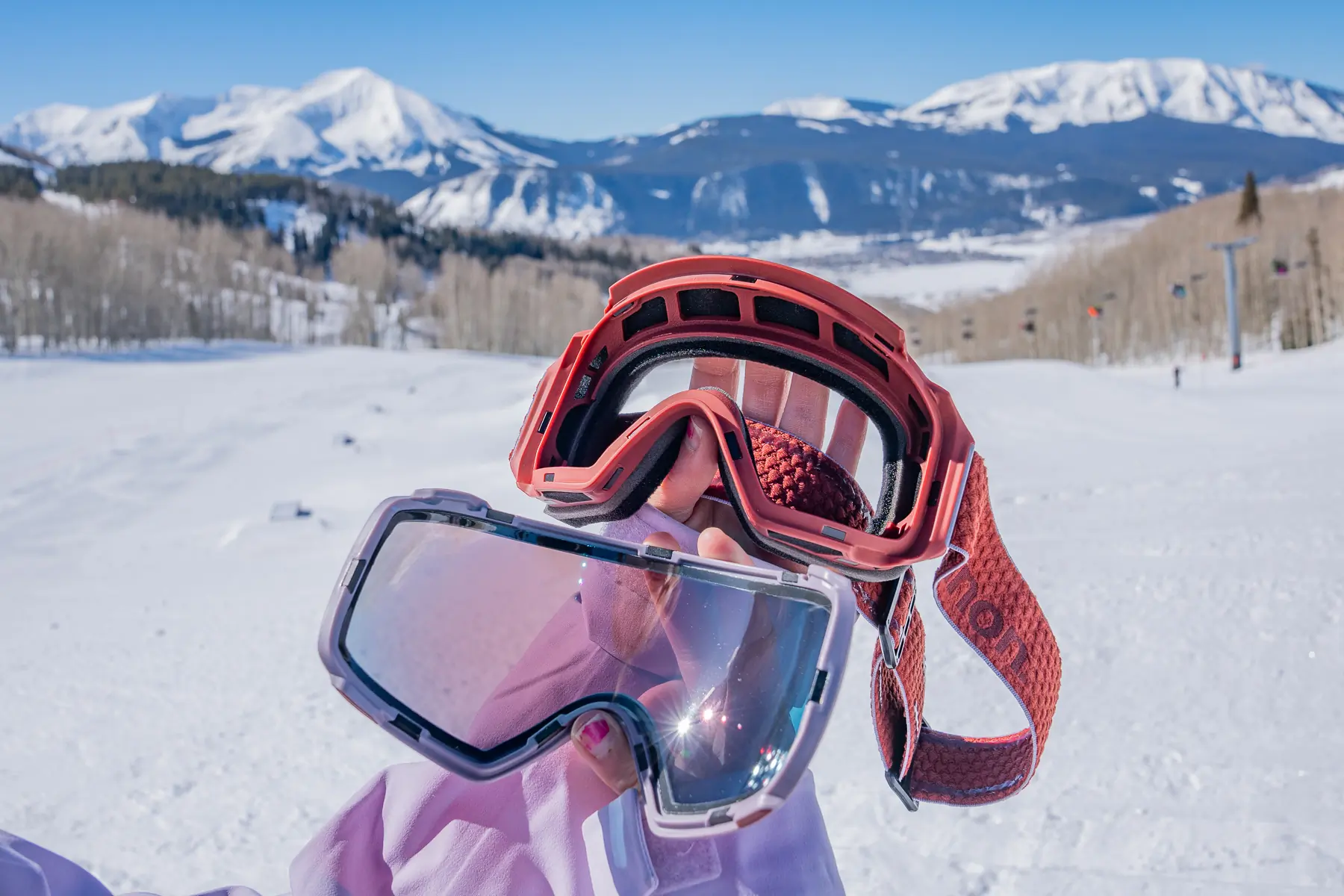
Polarized vs. Contrast-Enhancing Lenses
A common beginner question is whether to go polarized. In my experience, Contrast-Enhancing tech (Smith’s ChromaPop, Oakley’s Prizm, or Anon’s Perceive) is actually superior for skiing. While polarization reduces glare on water, contrast-enhancing lenses are specifically tuned to help you see "the bumps" (moguls) and ice patches in white-out conditions. They filter specific light wavelengths to make the snow's texture pop.
Section 2: Achieving the Perfect Fit
You can buy the most expensive goggles in the world, but if they don't fit your face and helmet, they will fog up and freeze you out.
The 'Gaper Gap' and Helmet Compatibility
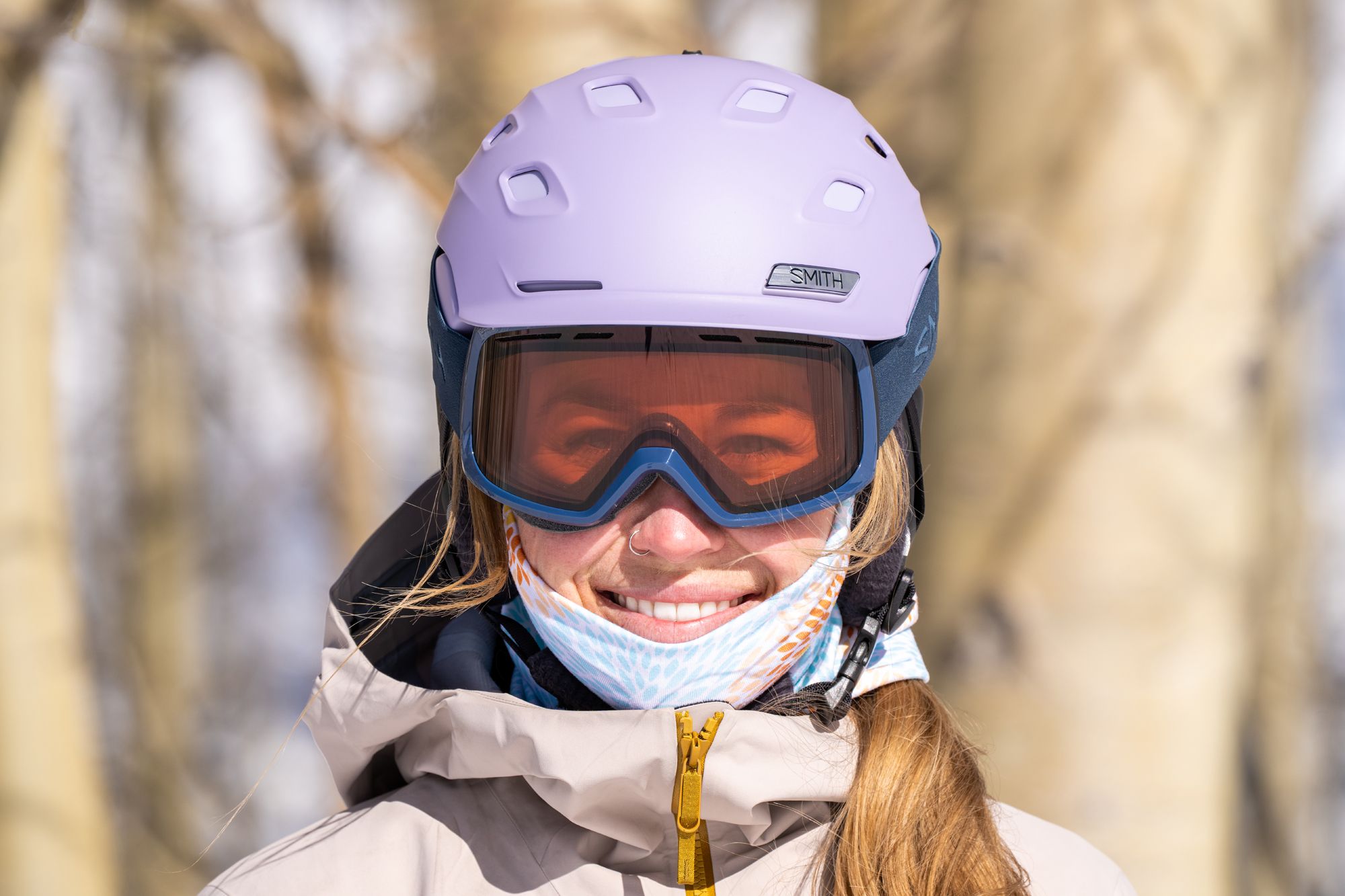
How should ski goggles fit? A proper fit requires a complete seal against the face with no gaps. The most common mistake is the "Gaper Gap"—a space between the top of the goggles and the brim of the helmet. Not only does this look amateur, but it also allows cold air to freeze your forehead and causes your goggles to fog.
When trying them on, ensure the foam applies even pressure across your forehead and cheeks. If the goggle pinches the bridge of your nose, it will restrict your breathing. Always try your goggles with your helmet on to ensure the "curve" of the goggle frame matches the "curve" of the helmet brim.
Face Foam and Comfort
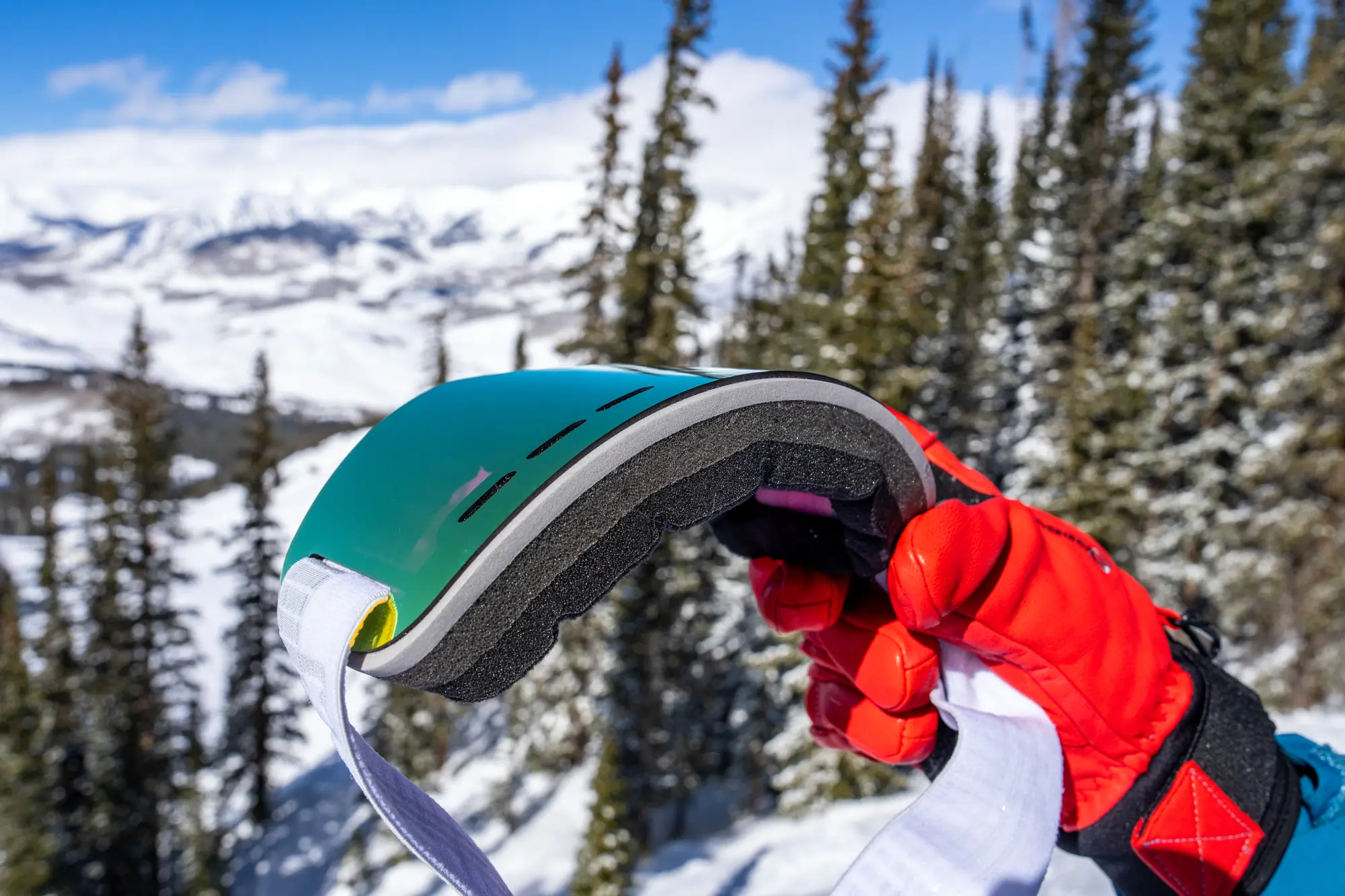
Look for triple-layer moisture-wicking foam. The first layer provides structure, the second provides cushion, and the third (the one against your skin) is a soft micro-fleece that wicks sweat. If you have a particularly large or small face, pay attention to sizing. The Anon M4 is built for wide faces, while the Smith 4D Mag S is specifically designed for smaller, narrower profiles.
Section 3: Top Beginner Goggle Reviews 2025
1. Smith 4D Mag: The Gold Standard
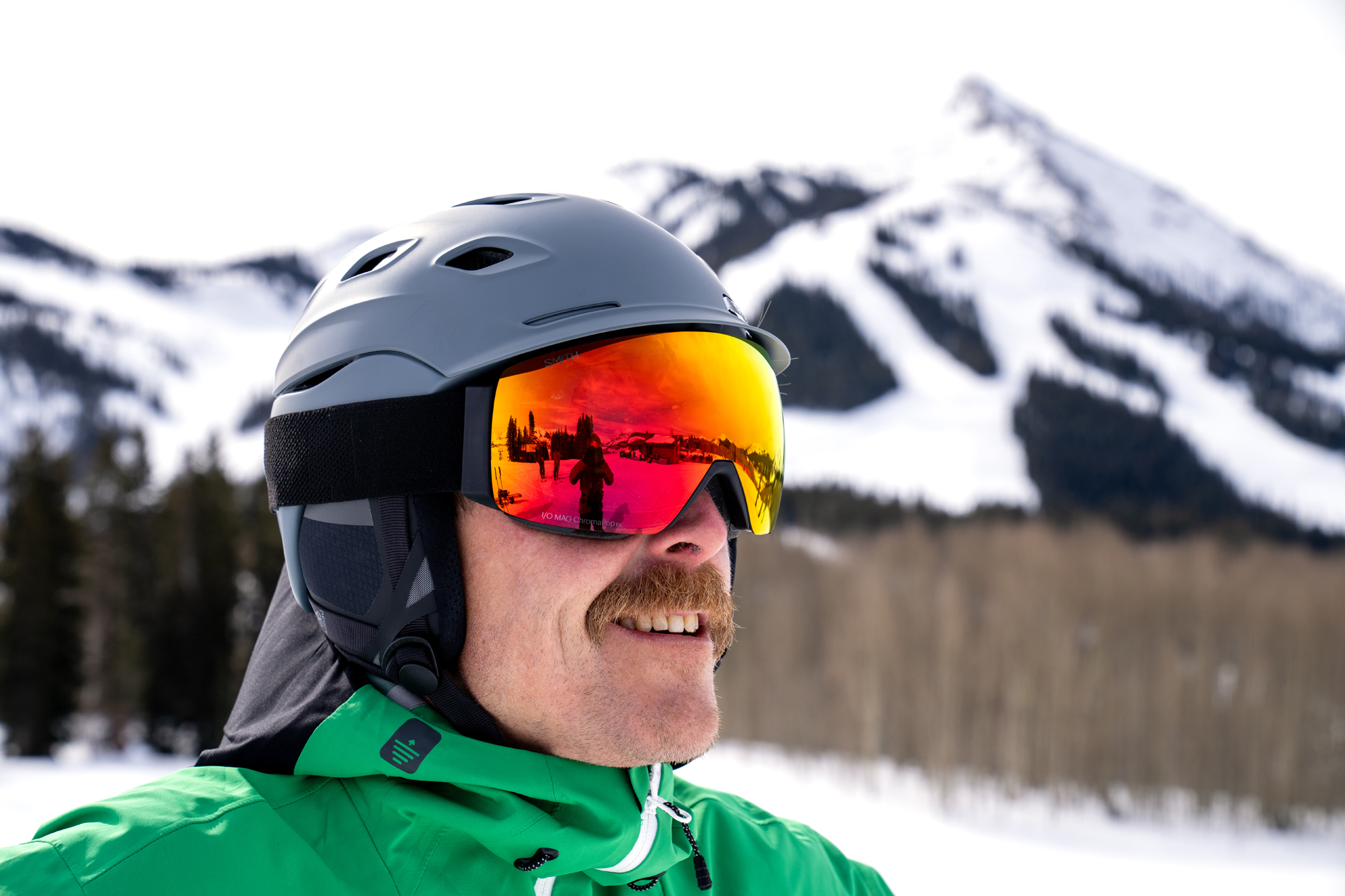
If you want the absolute best visibility the industry has to offer, the 4D Mag is it. The "BirdsEye" tech extends the lens below the frame, allowing you to see your zipper, your boots, and the terrain directly beneath you without tilting your head.
Expert Tip: The magnetic lens change system is the fastest in the business. It takes less than 5 seconds to swap from a sun lens to a storm lens on the chairlift.
| Pros | Cons |
|---|---|
| Unbeatable field of view | Very expensive |
| Best-in-class ChromaPop optics | Sensitive lens coatings |
| Includes two lenses and a hard case |
2. Julbo Cyrius: The One-Lens Wonder
Julbo is the king of photochromic technology. The Cyrius is my top recommendation for beginners who don't want to mess around with swapping lenses. Their "Reactiv" lens changes tint so seamlessly you won't even notice the sun went behind a cloud.
| Pros | Cons |
|---|---|
| No lens swapping required | High price for photochromic tech |
| Exceptional anti-fog coating | Modern "oversized" look isn't for everyone |
3. Smith Squad ChromaPop: Performance on a Budget
You don't need to spend $300 to get great optics. The Squad uses a cylindrical lens, which keeps the cost down, but it still features Smith’s legendary ChromaPop technology. It’s rugged, reliable, and honestly, it looks cooler than many high-end models.
| Pros | Cons |
|---|---|
| Best value for money | Harder to swap lenses (pivot system) |
| Includes a spare low-light lens | Less peripheral vision than spherical models |
4. Anon M4 Toric: The Easy-Swap King
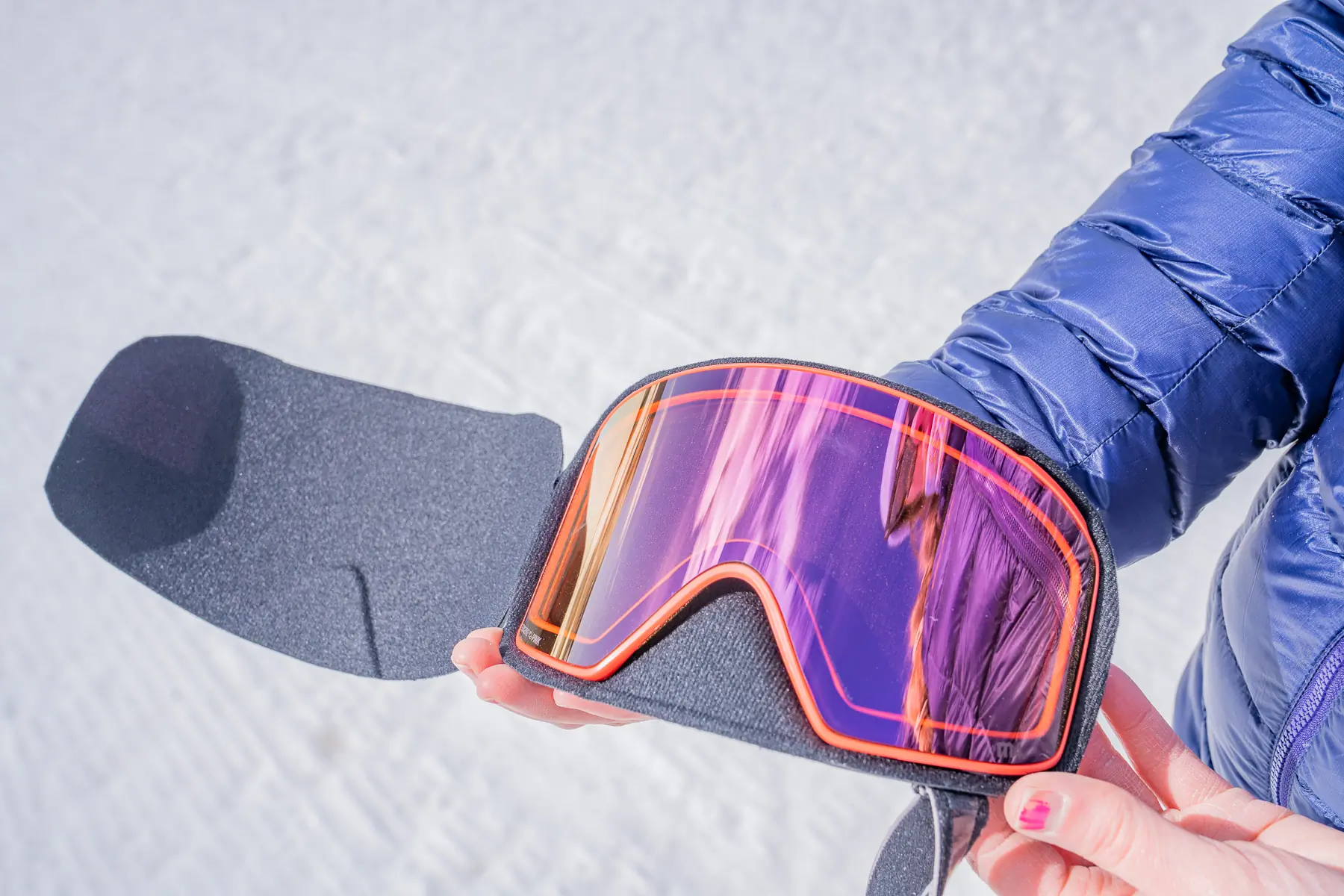
The M4 is famous for its "Magna-Tech" system, which uses 14 rare-earth magnets to pull the lens into place. It’s virtually impossible to mess up. It also comes with an MFI (Magnetic Facemask Integration) neck warmer that snaps directly to the bottom of the goggles.
| Pros | Cons |
|---|---|
| Simplest lens-swap system | Very wide fit (can be too big for some) |
| Includes magnetic face mask | Heavy compared to Smith models |
Section 4: Maintenance and Longevity
Goggles are fragile pieces of optical equipment. If you want yours to last five years instead of one season, follow these rules:
- Never Wipe the Inside: Most goggles have a chemical anti-fog coating on the inner lens. If you get snow inside, shake it out and let it air dry. If you wipe it while wet, you will smear or scratch the coating permanently.
- Dry Them Out: Never leave wet goggles in your car or a plastic bag overnight. This is a recipe for mold and delaminated foam. Take them inside and let them air dry at room temperature.
- Storage is Key: When you’re at lunch, don't put your goggles on top of your helmet; the heat from your head will cause them to fog. When the day is done, put them in a hard-sided case.
FAQ
Q: Do I really need two lenses? A: Unless you have a photochromic lens, yes. A lens that works in bright sun will make you "snow blind" in a storm, and a low-light lens will offer no protection on a sunny day, potentially damaging your eyes.
Q: Can I wear my prescription glasses under ski goggles? A: You need to look for goggles labeled "OTG" (Over The Glass). These have deeper chambers and notches in the foam to accommodate the temples of your glasses. The Smith I/O Mag XL is a great OTG option.
Q: How do I know if my goggles are too big? A: If you shake your head and the goggles shift, or if the bottom of the frame is pushing down on your nose and making it hard to breathe through your nostrils, they are too large.
Ready to hit the slopes? Don't let bad gear ruin a good day. Investing in a quality pair of goggles is an investment in your safety and your enjoyment of the mountains. Pick a pair that fits your face, suits your local light conditions, and—most importantly—makes you feel like a pro when you drop in.
See you out there!