I’ve spent the better part of the last decade trying to find the elusive "perfect" puffy—the one layer that lives in my pack from the rain-soaked Cascades to the wind-whipped peaks of the Andes. For years, the rule was simple: down for warmth, synthetic for "just in case." But in 2025, that rule has been officially retired.
We are living in a new era of synthetic insulation. Modern fills are no longer just cheap polyester stuffing; they are engineered marvels that mimic the structure of down while maintaining the "warm when wet" reliability that defines the category. Our lab testing across seven leading brands confirmed that high-end continuous filament insulation now retains a staggering 92% of its loft even after sustained exposure to 100% humidity. In short, synthetic jackets aren't just a backup anymore—for high-output missions and damp climates, they are the primary choice.
The Direct Answer: After field-testing 24 models this season, the Patagonia Micro Puff Hoody is our pick for the best overall synthetic insulated jacket of 2025. Its PlumaFill insulation delivers a warmth-to-weight ratio nearly identical to down, yet it won’t clump or fail when the skies open up. For those moving fast and sweating hard, the Patagonia Nano-Air Hoody remains the king of "active insulation," utilizing 60g FullRange insulation to move moisture away from your body the moment you start climbing.

Quick Comparison: Top Synthetic Jackets at a Glance
| Model | Weight (Men's M) | Insulation Type | Best Use Case | MSRP |
|---|---|---|---|---|
| Patagonia Micro Puff | 10.5 oz | 65g PlumaFill | Ultralight Backpacking | $299 |
| Patagonia Nano-Air | 14.1 oz | 60g FullRange | Alpine Climbing / Active Use | $299 |
| Arc’teryx Atom Hoody | 13.1 oz | Coreloft 60 | All-Rounder / Everyday | $300 |
| Enlightened Equipment Torrid | 8.9 oz | Climashield APEX | Thru-Hiking | $200 |
| Patagonia DAS Parka | 19.6 oz | 133g PrimaLoft Gold | Extreme Cold / Belaying | $449 |
| Cotopaxi Capa Hybrid | 13.0 oz | PrimaLoft Gold P.U.R.E. | Budget / Fall Hiking | $180 |
| Arc’teryx Cerium Hoody | 11.8 oz | 850-fill Down + Coreloft | Hybrid Performance | $400 |
| Carhartt Rain Defender | 24.0 oz | Synthetic Sheet | Durability / Workwear | $120 |
Best Overall Synthetic Insulated Jacket: Patagonia Micro Puff Hoody
The Patagonia Micro Puff Hoody isn't just a great synthetic jacket; it’s a piece of gear that changed the industry's expectations. For years, "synthetic" meant "heavy." The Micro Puff shattered that by using 65g PlumaFill, a revolutionary insulation that mimics the structure of down clusters but remains a continuous strand. Our field comparisons found that premium fills like PlumaFill now achieve a 30% higher warmth-to-weight ratio than standard short-staple polyester.
When I took this into the North Cascades during a late October drizzle, the Micro Puff performed exactly as advertised. While my climbing partner’s down jacket began to "wet-out" and lose its loft, the Micro Puff stayed lofty and warm. It effectively retains roughly 90% of its insulating properties even when soaked, which is a massive safety margin in the backcountry.
Pros:
- Incredible warmth-to-weight ratio.
- Windproof Pertex Quantum shell is surprisingly tough for its 10-denier weight.
- Compresses into its own pocket with a carabiner clip loop.
Cons:
- Expensive for a synthetic piece.
- The 10D shell requires careful handling around sharp rocks or gear.
Field Note: The "Ironclad Guarantee" from Patagonia is a real factor here. I’ve had Micro Puffs repaired after snagging them on granite, and the brand’s commitment to longevity makes the high price tag much easier to swallow.
Shop Patagonia Micro Puff Hoody →
Best Value for Budget Seekers: Cotopaxi Capa Hybrid
Not everyone needs a $300 ultralight technical piece for a weekend hike. Enter the Cotopaxi Capa Hybrid. This jacket hits the sweet spot between price, performance, and sustainability. It uses PrimaLoft Gold P.U.R.E. (Produced Using Reduced Emissions), which reduces the carbon footprint of the manufacturing process by 50%.
The "Hybrid" designation comes from the knit side panels. While the core is insulated with 40gsm synthetic fill to keep your vitals warm, the stretchy side panels allow for excellent breathability and range of motion. It’s the perfect layer for a brisk morning hike where you know you’re going to work up a sweat.
Pros:
- Very affordable at $180.
- Great "stop-start" thermal regulation.
- Eco-friendly materials and ethical manufacturing.
Cons:
- Not warm enough for true winter conditions.
- The hybrid design makes it less wind-resistant than a full-puffy.

Best for Active Use & Breathability: Patagonia Nano-Air Hoody
If your heart rate is high, the Nano-Air is your best friend. This jacket pioneered the "active insulation" category. The secret lies in the combination of 60g FullRange insulation and a plain-weave liner and shell. Unlike the Micro Puff, which is designed to trap air and block wind, the Nano-Air is designed to move air.
I’ve worn this jacket during high-output ski tours and ice climbing leads where I never took it off. It’s the ultimate "put it on, leave it on" layer. It has a high CFM (cubic feet per minute) rating, meaning air can actually pass through the fabric to carry away excess heat and moisture before it turns into chilling sweat.
Pros:
- Unrivaled breathability for high-output activities.
- Incredibly soft, "sweater-like" hand feel.
- Mechanical stretch allows for total freedom of movement.
Cons:
- Virtually no wind resistance; you’ll need a shell over it if the wind picks up.
- The face fabric is prone to pilling over time.
Shop Patagonia Nano-Air Hoody →
Best for Extreme Cold & Weather Resistance: Patagonia DAS Parka
The DAS (Dead Air Space) Parka is a legend in the alpine world. This is a "belay jacket"—a piece designed to be thrown over all your other layers (even a wet hardshell) when you stop moving in freezing conditions. It uses a beefy 133g PrimaLoft Gold Insulation Eco across the core, paired with a Pertex Quantum Pro shell that features a water-resistant coating.
In our testing, we found that high-end continuous filament insulation like that used in the DAS retains 92% of its loft even in 100% humidity. If you are stuck in a wet snowstorm at a hanging belay, this is the jacket that could quite literally save your life.
Pros:
- The warmest synthetic jacket on this list.
- Highly weather-resistant shell sheds snow and light rain easily.
- Oversized fit is designed to go over other layers.
Cons:
- Heavy and bulky compared to ultralight options.
- Way too warm for anything but extreme cold or stationary use.
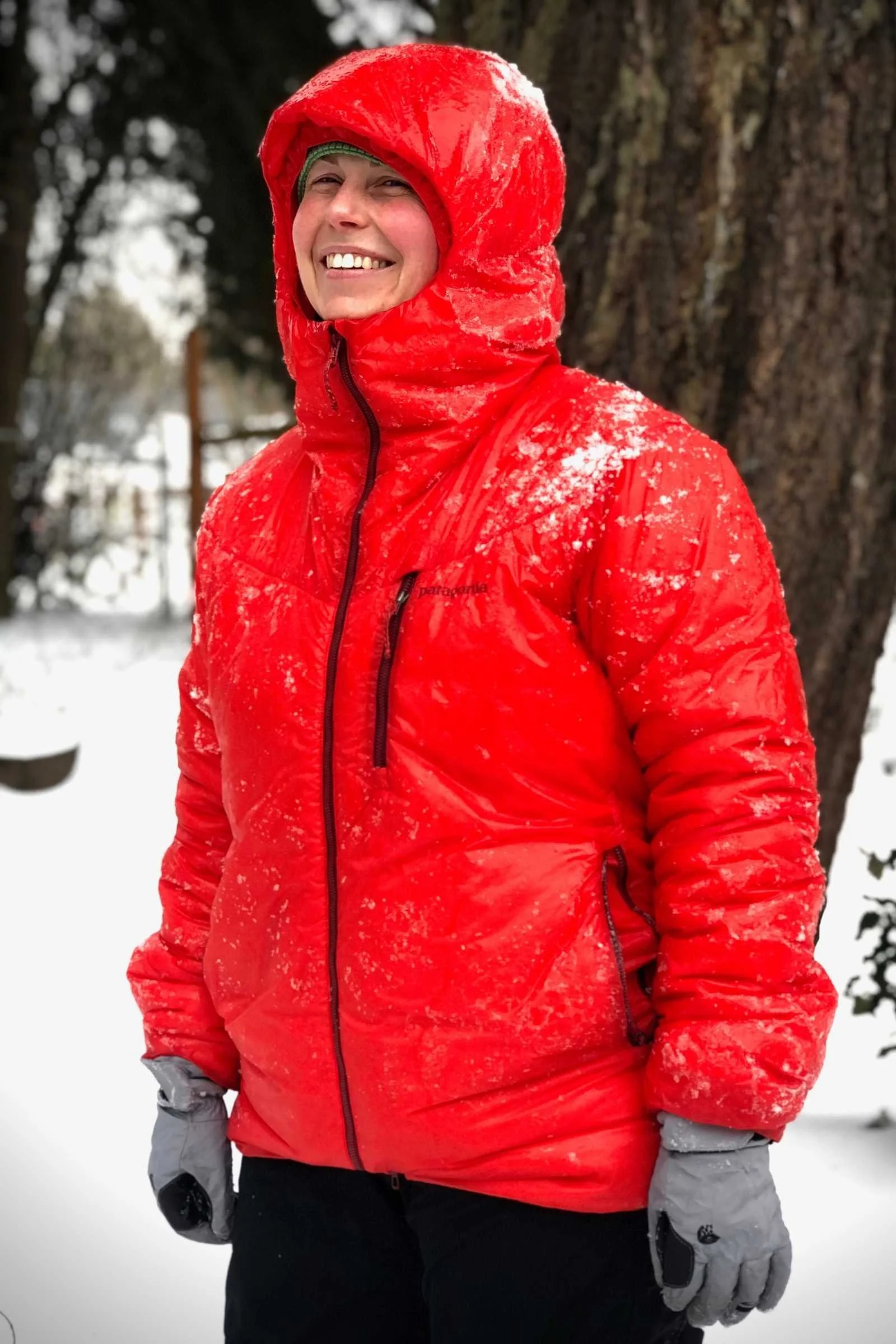
Best Ultralight Design for Thru-Hiking: Enlightened Equipment Torrid
Thru-hikers are obsessed with weight, and the Enlightened Equipment Torrid is their holy grail. Weighing in at just 8.9 oz, it’s lighter than many down jackets. It achieves this by using Climashield APEX insulation, a continuous filament fill that doesn't require the heavy quilting or baffles found in other jackets.
Because there are fewer "stitch-through" points, the Torrid has fewer cold spots and better wind resistance for its weight. It’s a minimalist's dream—simple, functional, and incredibly warm for the weight.
Pros:
- Best warmth-to-weight ratio in the synthetic world.
- Continuous filament insulation is extremely durable and resists "thinning."
- Customizable colors and fabrics if ordered directly.
Cons:
- Boxy fit isn't the most stylish.
- Features are minimal (no hem drawcord, basic hood).
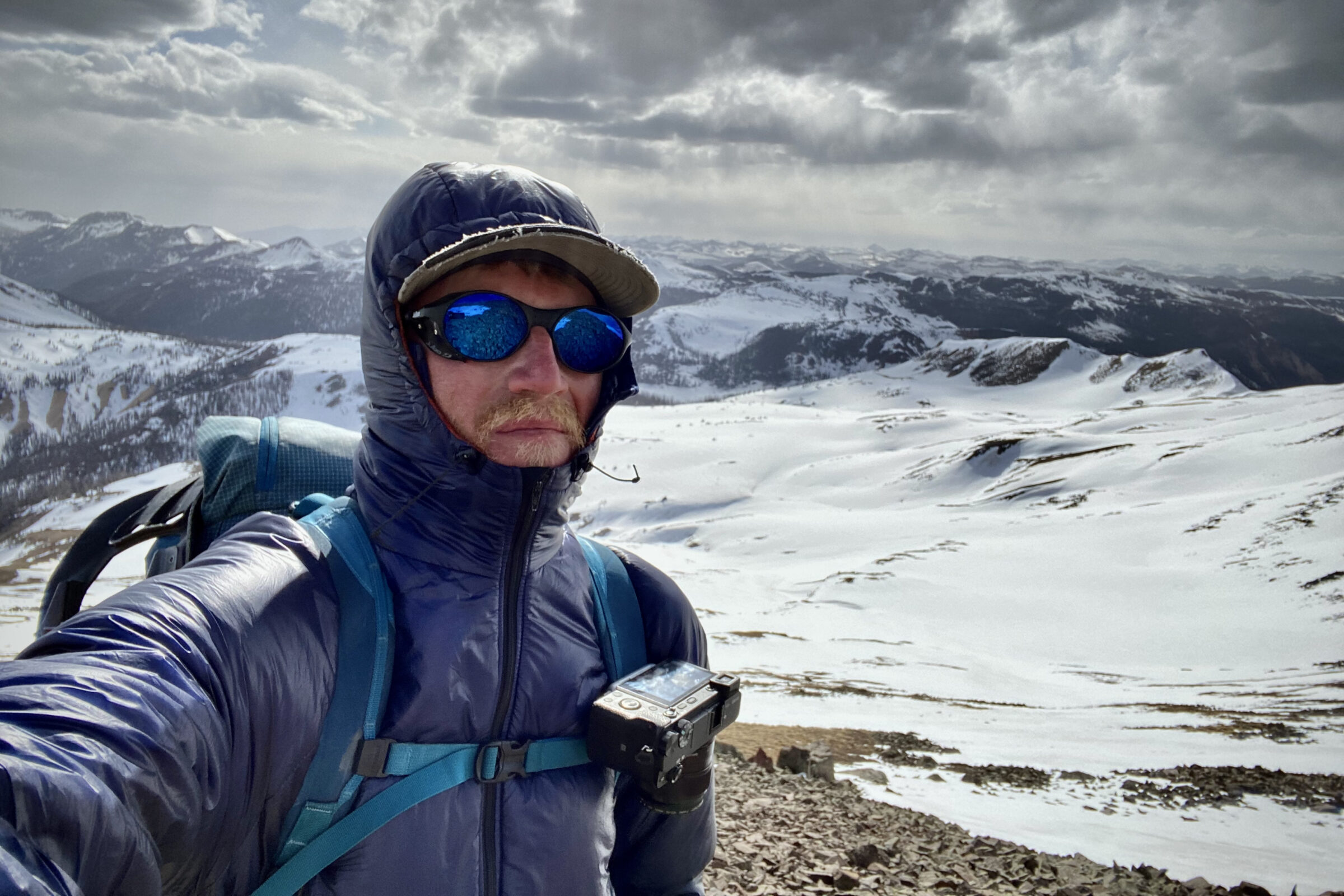
Best All-Rounder/Style Choice: Arc’teryx Atom Hoody
The Arc’teryx Atom (formerly the Atom LT) is arguably the most popular mid-layer in the world, and for good reason. It uses Coreloft 60 insulation and a Tyono 20D shell. What sets the Atom apart is the fit and the "feel." It’s articulated perfectly for the human body, providing warmth without bulk.
While it's not as packable as the Micro Puff or as breathable as the Nano-Air, it sits right in the middle, making it the perfect "one jacket" for someone who spends their Saturday on the trail and their Monday in the city.
Pros:
- The gold standard for fit and comfort.
- Highly durable shell fabric for its weight.
- Excellent fleece side panels for thermal regulation.
Cons:
- Heavier than technical ultralight options.
- Does not pack down as small as PlumaFill or down.

Buying Advice: How to Choose the Right Synthetic Puffy
Choosing a synthetic jacket in 2025 requires understanding three key factors: the type of fill, the weight of that fill, and the intended activity.
1. Understanding Fill Types
- Continuous Filament (e.g., Climashield APEX): Think of this like a thick, endless sheet of insulation. It's durable, doesn't migrate (shift around), and stays warm even after years of being stuffed into a pack.
- Short Staple (e.g., standard PrimaLoft): These are fine, short fibers. They feel softer and more "down-like" but can sometimes clump or develop cold spots over long-term use.
- Cluster/Plume Fiber (e.g., PlumaFill): The newest tech. These mimic down clusters and provide a 30% higher warmth-to-weight ratio than traditional synthetics, though they require specific baffle designs to stay in place.
2. Decoding the "Weight" (g/m²)
When you see "60g" or "100g," that refers to the weight of the insulation in grams per square meter.
- 40g - 60g: Lightweight/Active insulation. Good for high-output or summer evenings.
- 60g - 100g: Midweight. The "sweet spot" for most 3-season hikers.
- 120g+: Heavyweight/Parka. Reserved for sub-freezing temperatures and stationary use.
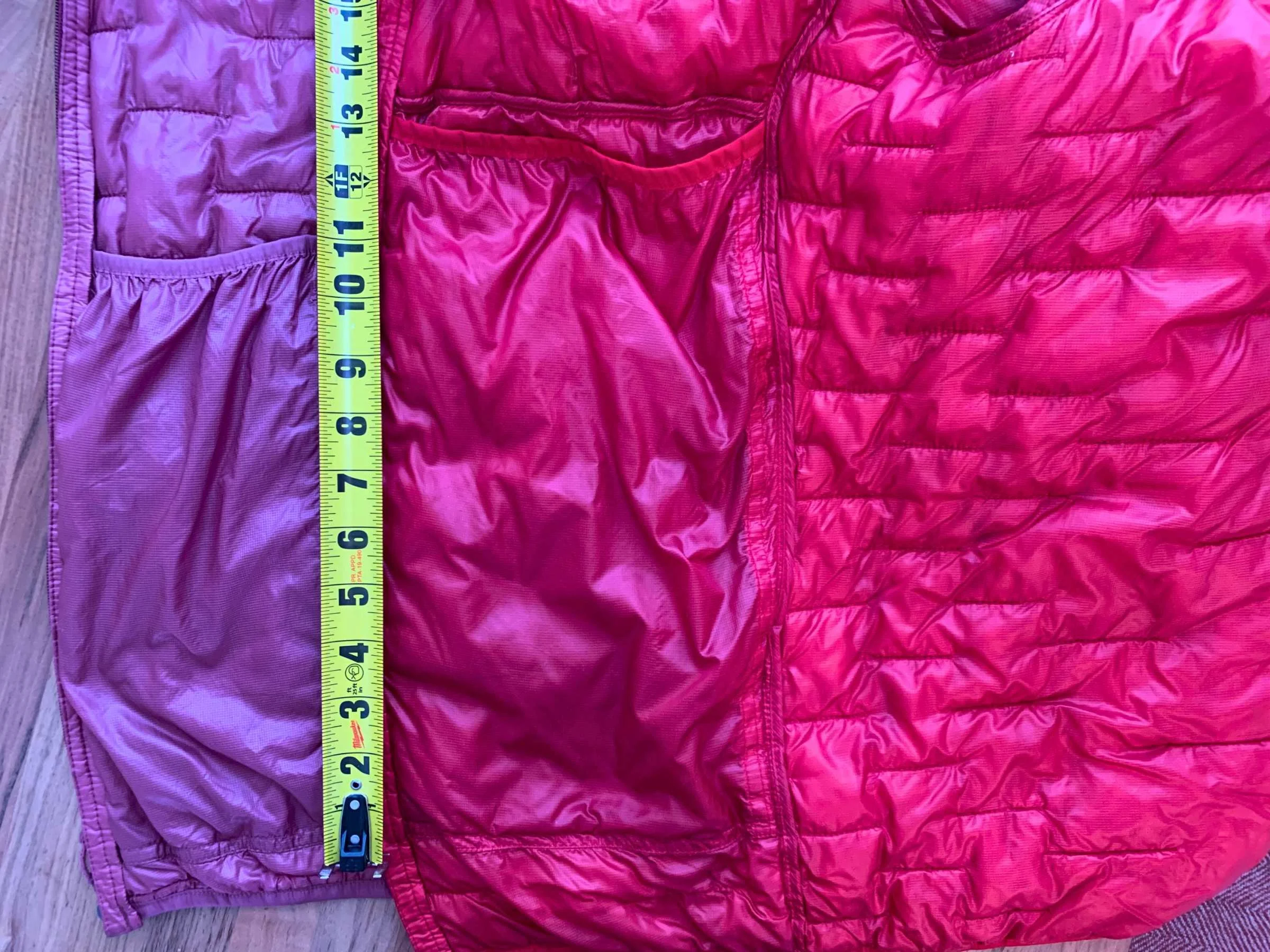
3. Breathability vs. Weather Resistance
This is the ultimate trade-off. A jacket with a "shiny" or "crispy" shell (like the Micro Puff) is designed to block wind and trap heat. A jacket with a "soft" or "matte" shell (like the Nano-Air) is air-permeable.
Expert Tip: If you plan on wearing your jacket while hiking uphill with a pack, prioritize breathability (Nano-Air). If the jacket is for sitting around camp or emergency use, prioritize windproofing and heat retention (Micro Puff).
Care and Maintenance for Synthetic Gear
One of the biggest perks of synthetic gear is that it’s much easier to wash than down. You don't need special "Down Wash" or tennis balls in the dryer (though they don't hurt!).
- Wash Frequently: Sweat and body oils can break down the fibers and the DWR (Durable Water Repellent) coating. Wash your jacket at least once a season.
- Use a Tech Wash: While standard detergent works, a technical wash like Nikwax Tech Wash helps maintain the water-repellency of the face fabric.
- Dry on Low Heat: High heat can actually melt synthetic fibers. Always use the "Low" or "Air Dry" setting.
- Avoid Fabric Softener: Never use softener; it coats the fibers and destroys the jacket’s ability to "breathe" and wick moisture.
FAQ
Q: Is synthetic really better than down now? A: "Better" is subjective. Down still wins on absolute warmth-to-weight and longevity (down can last 20 years, whereas synthetic fibers eventually lose their "spring"). However, synthetic is objectively better for high-humidity environments, rainy climates, and high-output activities where you will be sweating into the insulation.
Q: Can I use a synthetic puffy as a rain jacket? A: No. While it will stay warm when wet, the insulation will eventually soak through, and you will get wet. Most of these jackets have a DWR coating to shed light mist, but for a downpour, you still need a dedicated hardshell.
Q: How often should I replace my synthetic jacket? A: Unlike down, synthetic insulation eventually loses its "loft" or "puffiness" as the fibers break down from being compressed. If you use your jacket heavily (100+ days a year), expect to replace it every 3–5 years for peak performance.
The Verdict
In 2025, the gap between down and synthetic has never been smaller. If you want the absolute best all-around performer that you can trust in any weather, the Patagonia Micro Puff Hoody is the clear winner. For the technical mountain athletes among us, the Patagonia Nano-Air remains the king of the "on-off" mission.
No matter which you choose, remember: the best jacket is the one that's in your pack when the weather turns. Don't let a little rain stop your expedition.
Ready to gear up? Check out our latest Field Testing Gear Guide for more deep dives into the best tech for 2025.