I’ve stood on a lot of ridgelines over the last decade, and if there’s one thing I’ve learned, it’s that your relationship with your gear is a zero-sum game. Every ounce you pack is an ounce you have to carry over that next 2,000-foot gain. Last summer, while scouting a new route in the North Cascades, I found myself cursing a heavy, double-walled steel bottle that felt more like a boat anchor than a hydration tool. But a week later, on a jagged granite scramble in the High Sierra, that same "heavy" bottle survived a 20-foot tumble that would have shattered a budget plastic container into a thousand pieces.
The hiker’s dilemma is simple but brutal: Do you prioritize lightweight agility or indestructible durability?
For long-distance trekking where every gram is a grievance, the answer is clear: go with lightweight BPA-free Tritan plastic or collapsible TPU bottles. However, if your mission involves rugged day hikes, winter conditions, or environments where "delicate" isn't in the vocabulary, 18/8 stainless steel is the undisputed king of the trail.

Quick Comparison: Choosing Your Vessel
| Feature | BPA-Free Tritan Plastic | 18/8 Stainless Steel | Collapsible TPU |
|---|---|---|---|
| Best For | Multi-day Backpacking | Day Hikes & Rugged Scrambles | Ultralight & Backup Water |
| Durability | High (Hard to crack) | Maximum (Indestructible) | Moderate (Puncture risk) |
| Weight | Ultra-light | Heavy (Insulated) | Near-Zero |
| Insulation | None | 24h Cold / 12h Hot | None |
| Compatibility | Filter-Ready (Wide Mouth) | Limited Filter Use | Excellent (Thread-matched) |
The Great Debate: Lightweight vs. Durable
When we talk about "lightweight" in 2026, we aren't just talking about shaving off a few grams. Real-world performance testing indicates that moving from a standard double-wall vacuum-insulated stainless steel bottle to a lightweight Tritan plastic alternative can reduce your specialized gear weight by up to 70% for the same 1-liter capacity. On a 20-mile day, that’s energy you’re putting back into your legs rather than your shoulders.
The Case for Lightweight
If you’re an ultralight enthusiast or a thru-hiker, volume and weight are your primary enemies. Modern BPA-free plastics, specifically Tritan, have bridged the gap between weight and strength. They don't retain odors, they handle freezing temperatures without cracking, and they weigh next to nothing.
The Case for Durability
On the flip side, steel is about legacy and reliability. In standardized drop tests, 100% of food-grade stainless steel bottles maintained their structural integrity and leak-proof seals after multiple impacts on solid granite. Compare that to a 40% failure rate for non-sleeved glass or lower-grade plastics. If you are miles from the nearest trailhead and your only source of hydration relies on that bottle staying sealed, those extra ounces are essentially an insurance policy.
Material Science: Which One Should You Carry?
Understanding the "why" behind the material helps you choose the "what" for your pack. I've rotated through all three of these categories depending on the season and the terrain.
1. BPA-Free Tritan Plastic (The Balanced Choice)
This is the "Goldilocks" of hiking water bottles. It’s significantly lighter than metal but far tougher than the disposable bottles you find at a gas station.
- Pros: Incredible weight-to-strength ratio, transparent (easy to see water levels), and generally the most affordable.
- Cons: Zero insulation; your water will be the temperature of the air around you.
- Pro Tip: Look for the "Sustain" line from brands like Nalgene, which uses 50% recycled material without sacrificing that legendary "bombproof" reputation.
2. Stainless Steel (The Rugged Insulator)
Most high-end steel bottles use 18/8 food-grade stainless steel. This refers to the 18% chromium and 8% nickel content, making it highly resistant to rust and corrosion.
- Pros: Keeps water ice-cold for 24+ hours; survives being dropped down a cliffside with only a few character-building dents.
- Cons: The weight. A vacuum-insulated steel bottle is often the heaviest single item in a hiker's basic kit.
- Expert Insight: Use these for day hikes where a cold drink at the summit is a massive morale booster.
3. Collapsible TPU (The Ultralight Specialist)
Made from Thermoplastic Polyurethane, these are the "disappearing" bottles. They are soft-sided and shrink as you drink.
- Pros: Saves massive amounts of space in your pack; often weighs less than 2 ounces.
- Cons: Floppy and hard to handle when half-full; vulnerable to sharp gear inside your pack (knives, crampons).
Key Features to Inspect Before You Buy
Beyond the material, the "interface"—how you actually drink and fill the bottle—can make or break your experience on the trail.
Wide Mouth vs. Narrow Mouth
This is the oldest debate in the hiking community.
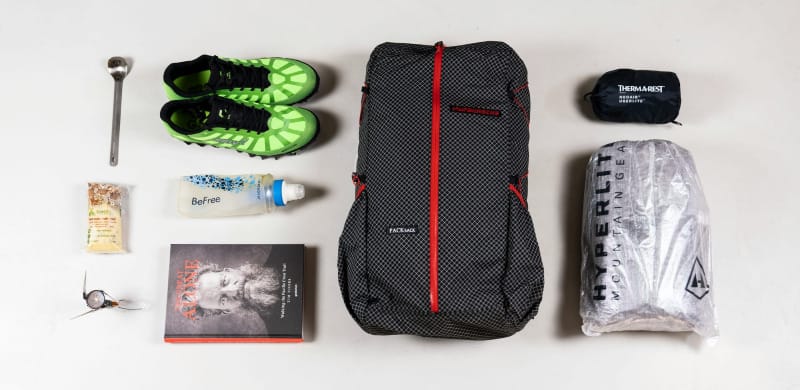
- Wide-Mouth: These are the gold standard for backcountry backpacking. Why? Because they are compatible with almost every major water filter (like the Katadyn BeFree or Sawyer Squeeze) and are much easier to fill from shallow streams.
- Narrow-Mouth: Better for on-the-go drinking. You won’t splash your face when you’re walking and drinking at the same time. However, they are a nightmare to clean and impossible to fit ice cubes or filters into.
Lid Mechanics & Leak Prevention
I’ve seen more trips ruined by a leaky lid than a broken bottle.
- Screw Caps: Simple, reliable, and fewer moving parts to break.
- Straw/Bite Valves: Great for staying hydrated without stopping, but they are notorious for leaking under pressure (like during elevation gains) and are harder to keep hygienic in the dirt.
Best Hiking Water Bottles of 2026: Top Picks
Based on hundreds of miles of trail testing and current 2026 market availability, these are the bottles currently occupying the side pockets of my own packs.
Best Overall: Hydro Flask Wide Mouth (Insulated)
If you want one bottle that does it all—from the office to the summit—this is it. The TempShield™ insulation is world-class, and the 2026 models have further refined the weight-to-insulation ratio.
- Material: 18/8 Stainless Steel.
- Best for: Day hikes and road trips. Check Price on Hydro Flask →
Best for Ultralight: Nalgene Sustain 1L
The classic 32oz wide-mouth hasn't changed its silhouette in decades because it doesn't need to. It’s nearly indestructible and weighs a fraction of a metal bottle.
- Material: BPA/BPS-Free Tritan (50% recycled content).
- Best for: Thru-hiking and long-distance backpacking. Shop Nalgene Sustain →
Best for Backcountry: Grayl GeoPress
This isn't just a bottle; it’s a purification system. You fill it from a murky stream, press down, and in seconds you have clean, drinkable water. It’s heavy, but it replaces the need for a separate filter.
- Material: Rugged Polypropylene.
- Best for: International travel and remote wilderness. View Grayl GeoPress →
Best Space-Saver: HydraPak Flux 1L
The Flux acts like a hard bottle but compresses like a soft flask. It’s got a spill-proof high-flow nozzle that makes it my go-to for fast-packing and trail running.
- Material: TPU.
- Best for: Fast-and-light missions. Explore HydraPak Flux →
Maintenance: Keeping Your Hydration Clean
Nothing ruins a beautiful mountain morning like taking a swig of water that tastes like a wet gym shoe.
- Avoid the "Plastic Taste": For new Tritan or TPU bottles, rinse them with a mixture of lemon juice and warm water. Let it sit for an hour before your first trip.
- UV Exposure: Don't leave your plastic bottles in the direct sun for days at a time. While modern materials are UV-stabilized, extreme heat can eventually degrade the plastic.
- Dishwasher Safety: Most Tritan and Stainless Steel bottles are dishwasher safe, but hand-washing is always better for preserving the vacuum seal on insulated bottles and the longevity of the graphics.
Marcus’s Pro Tip: If you’re using a hydration bladder or a narrow-mouth bottle, drop a couple of denture cleaning tablets in with warm water once a month. It’s the easiest way to kill bacteria in the hard-to-reach nooks.

Frequently Asked Questions (FAQ)
Q: Are stainless steel water bottles worth the extra weight? A: Only if you value temperature control or are hiking in extremely rocky, "gear-destroying" terrain. For most 3+ day backpacking trips, the 12–16oz weight penalty of a steel bottle is hard to justify when a Tritan bottle weighs 6oz.
Q: Will my water bottle freeze in winter? A: Plastic and single-wall steel will freeze quickly. If you're winter hiking, an insulated stainless steel bottle is actually a safety tool—it prevents your water from turning into an unusable block of ice. Alternatively, store your lightweight plastic bottle upside down in your pack (ice forms from the top down).
Q: Why do most hikers prefer wide-mouth bottles? A: It’s all about the ecosystem. Most backcountry water filters are designed to thread directly onto a 63mm wide-mouth opening. It also makes it much easier to add electrolyte powders or snow for melting.
Final Verdict
Choosing the right bottle comes down to your objective.
If you are counting every calorie and every ounce to crush a 30-mile day on the PCT, stick with the Nalgene Sustain or a HydraPak collapsible. The weight savings (up to 70%) are simply too significant to ignore.
However, if your Saturday involves a steep climb up a rocky peak where your pack might get tossed around, or if you simply want a cold drink waiting for you at the vista, the Hydro Flask 18/8 Stainless Steel is a lifetime investment that won't let you down.
See you out on the trail—stay hydrated!
— Marcus Rivera Adventure & Outdoors Editor