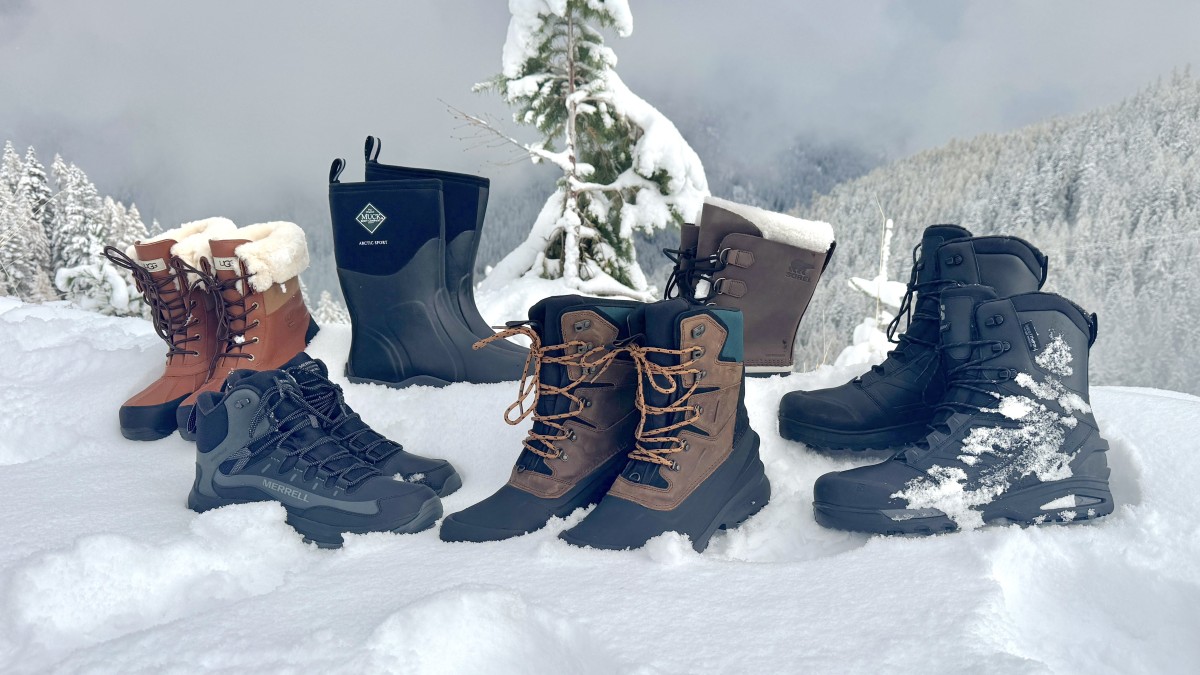
You can spend $1,000 on the stiffest carbon-fiber boots and another $800 on a Gore-Tex Pro shell, but if you skimp on the thirty-dollar fabric between your foot and your liner, your day is already over. I’ve spent the better part of a decade chasing winter across both hemispheres, and if there’s one thing I’ve learned the hard way—usually while shivering on a wind-scoured ridge in the Andes—it’s that cold feet aren’t just a nuisance; they are a performance killer.
After logging thousands of vertical feet this season, we’ve identified the clear winners for the 2025 season. The Smartwool Ski Targeted Cushion is the best overall ski sock because it provides strategic padding exactly where you need it without compromising that "connected" feel to your boots. For those watching their bank account, the Fox River Chatter Ultra Lightweight offers incredible technical performance at a budget-friendly price. And if you’re a backcountry enthusiast or a high-performance charger, the Dissent GFX Compression Hybrid is the absolute king of fit and circulation.
Quick Picks: The Best Ski Socks of 2025
| Category | Our Top Pick | Primary Material | Best For |
|---|---|---|---|
| Best Overall | Smartwool Ski Targeted Cushion | 59% Merino Wool | All-mountain resort skiing |
| Best Value | Fox River Chatter Ultra Light | 38% Merino / Synthetic | Budget-conscious skiers |
| Best Performance | Dissent GFX Compression Hybrid | Nano-synthetic blend | Touring and precision fit |
| Best Ultralight | Smartwool Ski Zero Cushion | 55% Merino Wool | Tight-fitting racing boots |
Why Trust Our 9-Year Testing Process
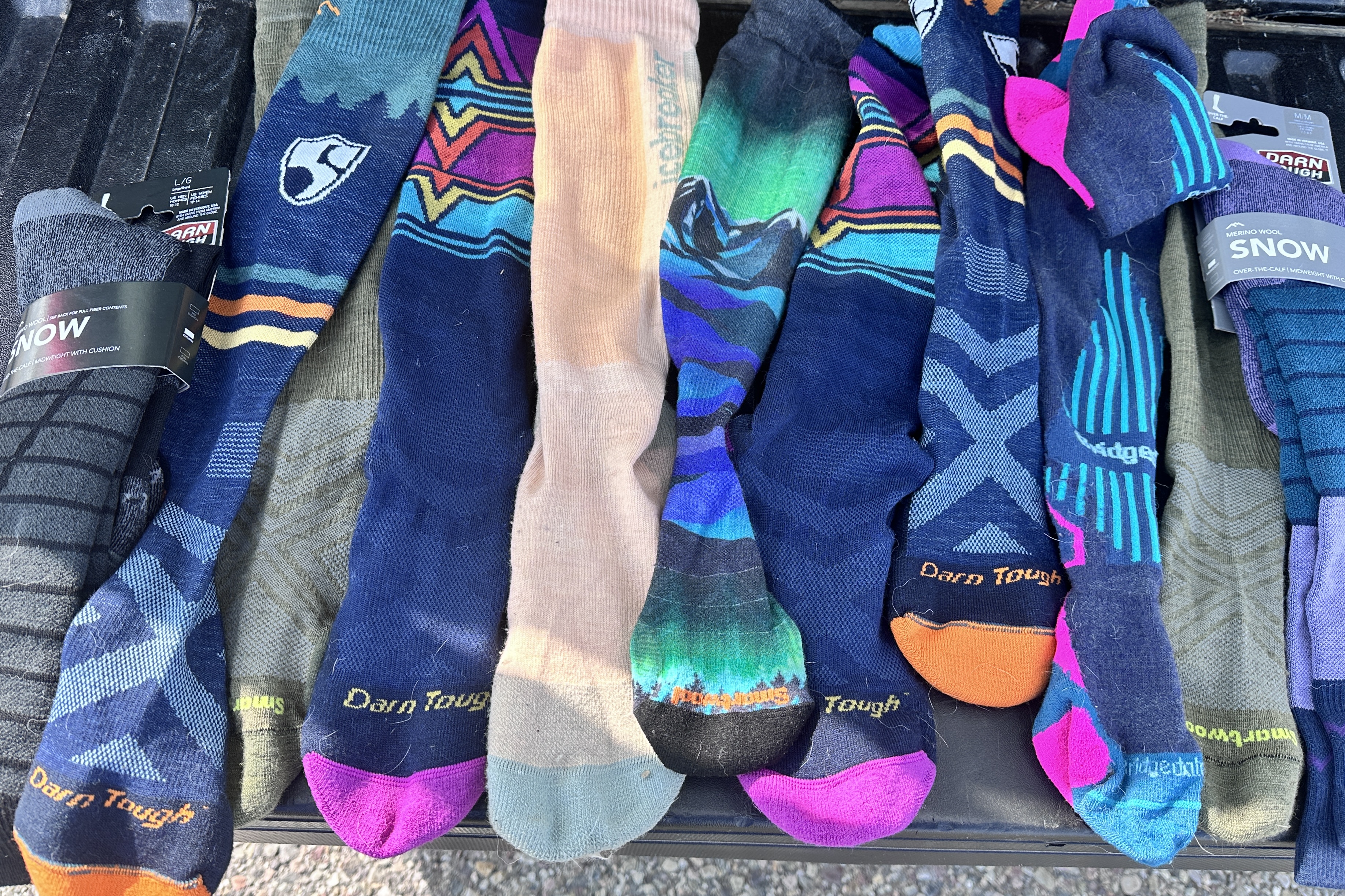
We don't just pull these socks out of the packaging and walk around the living room. Our review is built on over nine years of continuous, real-world testing that began in 2015. Over the last decade, we have evaluated more than 20 pairs of professional-grade socks across every imaginable terrain.
Our primary testers are on the snow for over 130 days a season. We’ve pushed these socks to their absolute limits, from the freezing dawn patrols of the Eastern Sierra to high-altitude expeditions reaching 21,122 feet in the mountains of Bolivia. We look for five critical metrics: warmth-to-weight ratio, moisture management (breathability), anatomical fit, long-term durability, and "boot feel." When I tell you a sock won't bunch up after ten hours of skinning, it’s because I’ve actually spent ten hours skinning in them.
Best Overall Ski Sock: Smartwool Ski Targeted Cushion
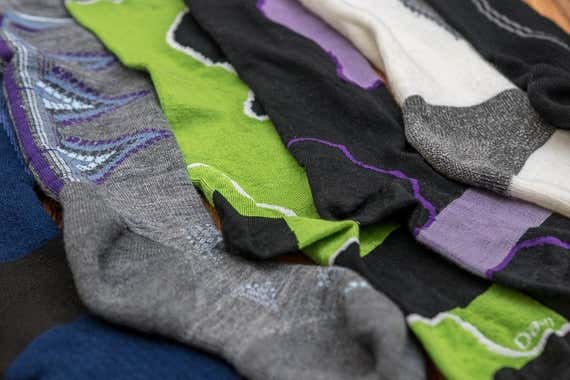
If I could only own one pair of socks for the rest of my life, this would be it. The Smartwool Ski Targeted Cushion strikes a legendary balance. In the past, you had to choose between "thin for performance" or "thick for warmth." Smartwool’s Indestructawool technology allows them to place high-density cushioning specifically on the shin (to prevent boot bang) and under the heel and toe, while keeping the rest of the sock remarkably thin.
With a 59% Merino wool blend, these socks are masters of thermoregulation. I’ve worn them in 40-degree spring slush and sub-zero January mornings at Mammoth, and my feet stayed consistently dry. The "Targeted" aspect is the secret sauce—it fills the dead space in your boot without altering the shell’s intended fit.
- Pros: Exceptional breathability, strategic padding, incredible durability over dozens of wash cycles.
- Cons: Higher price point than generic alternatives.
Shop Smartwool Targeted Cushion →
Best Value for Money: Fox River Chatter Ultra Lightweight
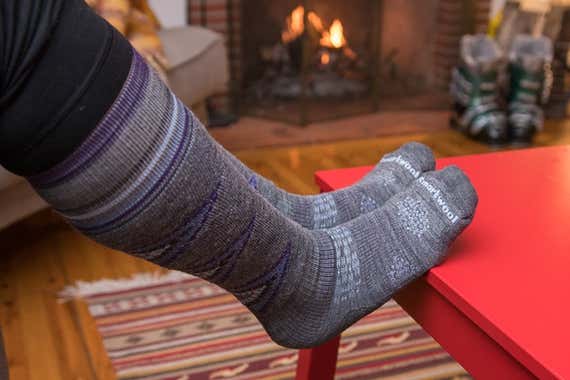
Quality gear doesn't always have to break the bank. The Fox River Chatter is proof that you can get technical, USA-made performance for a fraction of the cost of the big-name brands. Despite the "Ultra Lightweight" moniker, these socks provide a surprising amount of warmth thanks to a clever blend of Merino wool and Wick Dry® synthetics.
What really sold me on the Chatter was the longevity. Fox River offers a lifetime warranty, which is almost unheard of at this price point. They feature a memory-knit construction that helps them keep their shape, so you won't find them sagging into your toe box by lunchtime. They are a "no-frills, all-function" choice for the weekend warrior.
- Pros: Extremely affordable, Made in the USA, lifetime warranty.
- Cons: Slightly less "silky" feel than premium competitors; thinner shin protection.
Best High-Performance & Touring: Dissent GFX Compression Hybrid
When the objective is a 5,000-foot climb followed by a technical descent, I reach for Dissent. The GFX Compression Hybrid is a masterpiece of textile engineering. Unlike standard socks, these use medical-grade compression to actively improve circulation. This is a game-changer for people who suffer from chronically cold feet; by keeping the blood flowing, your body can naturally maintain warmth better than any thick padding ever could.
The fit is "locked-in." Because of the high compression, there is absolutely zero movement between your foot and the sock. This eliminates friction and, by extension, blisters. During uphill skinning, where your heel is constantly moving, these socks act like a second skin.
- Pros: Eliminates bunching, improves blood flow, incredible moisture wicking.
- Cons: Very difficult to put on/take off; very expensive.
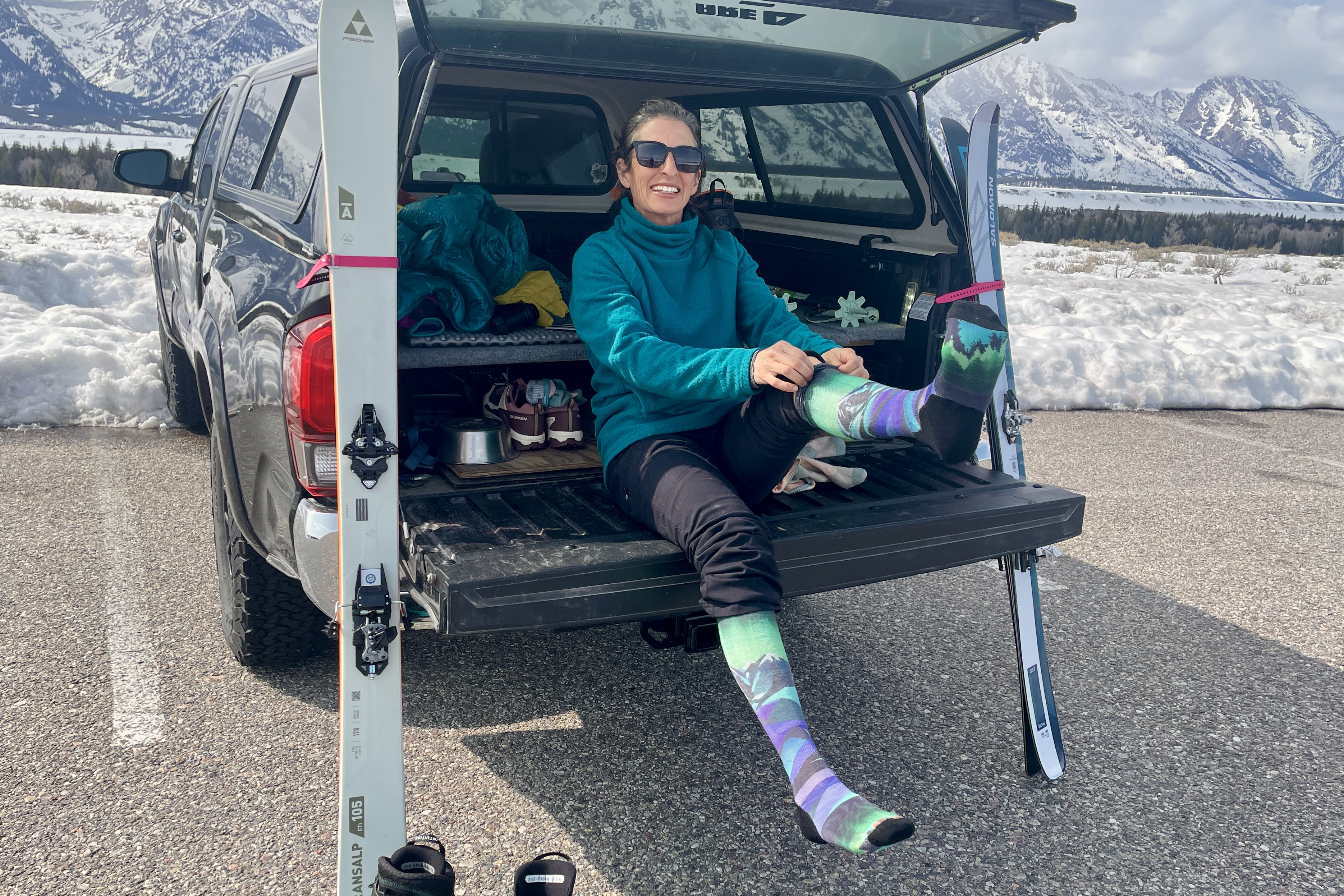
Best Ultralight for Tight Boots: Smartwool Ski Zero Cushion
For the "plug fit" crowd—ski racers or those of us who prefer a performance-molded boot that leaves zero room for error—even a tiny bit of cushion is too much. The Smartwool Ski Zero Cushion is the thinnest sock in our test. It’s essentially a high-tech liner that provides a barrier against friction while maximizing the "feel" for the snow.
Even without padding, the high Merino content ensures that sweat is wicked away instantly. This is vital, because moisture is the enemy of warmth. If your feet are dry, they are warm.
- Pros: Maximum boot feel, excellent temperature regulation, very low volume.
- Cons: Offers zero impact protection for the shins.
Buying Guide: How to Choose Your Perfect Pair
Choosing a ski sock is more scientific than you might think. Here’s the breakdown of what actually matters when you’re standing in the gear shop.
1. Material Matters: The Magic of Merino Wool
If you see a sock made of cotton, run the other way. Cotton absorbs moisture, loses its shape, and becomes a frozen block of ice the moment you sweat. Merino wool is the gold standard because it can hold up to 30% of its weight in moisture without feeling wet. It’s also naturally antimicrobial—meaning you can wear them for a three-day weekend trip without clearing out the lodge when you take your boots off.
Pro Tip: Look for a blend. 100% wool socks lack the elasticity needed to stay up on your calf. A mix of Merino (for warmth) and Nylon/Elastane (for fit and durability) is the sweet spot.
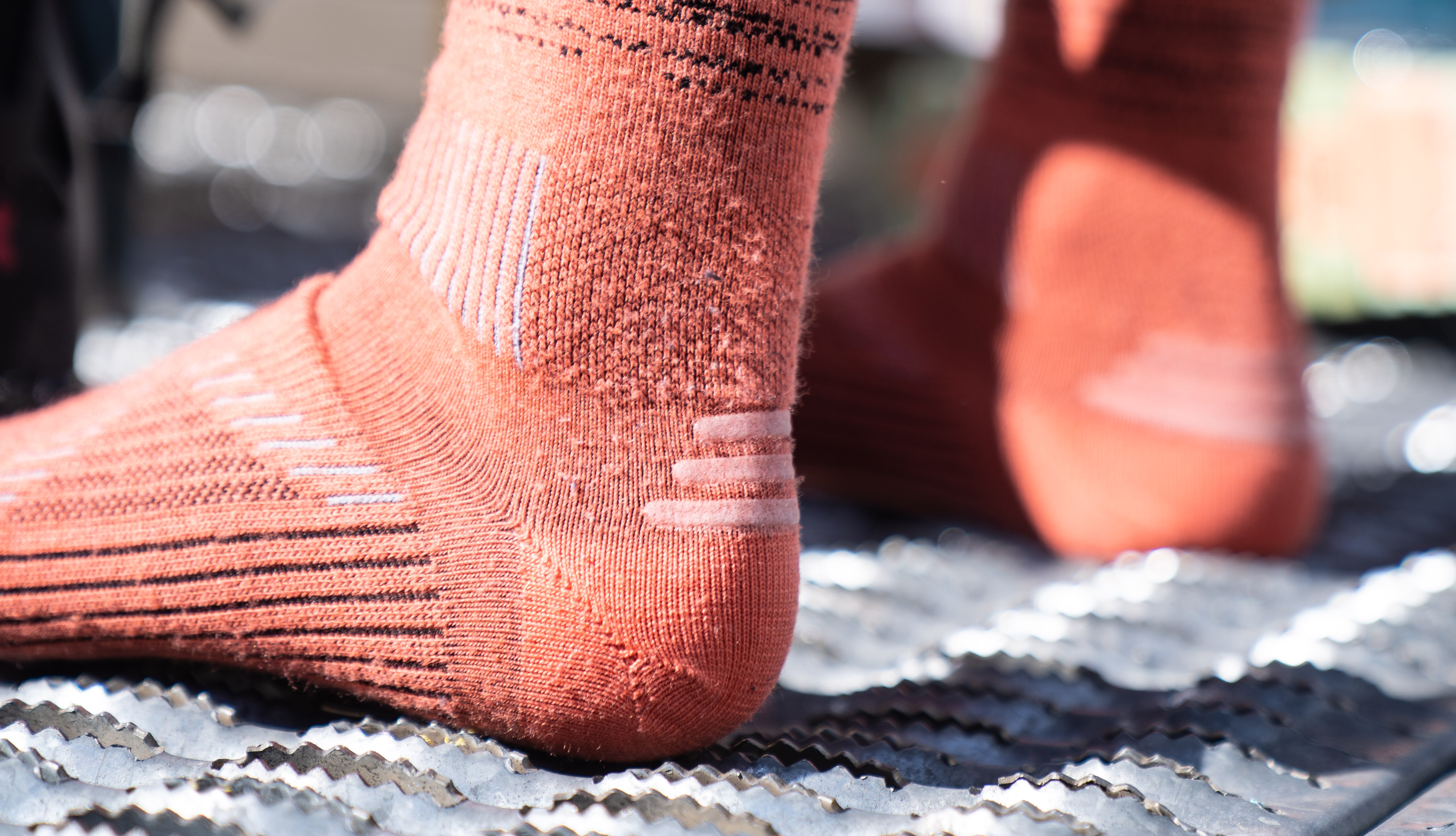
2. Cushioning Levels: From Zero to Full
Thickness does not always equal warmth. In fact, if a sock is too thick, it can restrict circulation in a tight boot, making your feet colder.
- Zero Cushion: For expert skiers with tight-fitting boots who want maximum control.
- Targeted Cushion: The versatile choice. Padding on the shin and toes, thin elsewhere.
- Full Cushion: Best for beginners with looser rental boots or those with very low-volume feet who need to fill extra space.
3. Compression Benefits
Compression isn't just for marathon runners. In skiing, graduated compression helps push blood back up toward the heart, keeping your extremities supplied with fresh, warm oxygenated blood. It also reduces muscle vibration, which can help your calves feel fresher during that last run of the day.
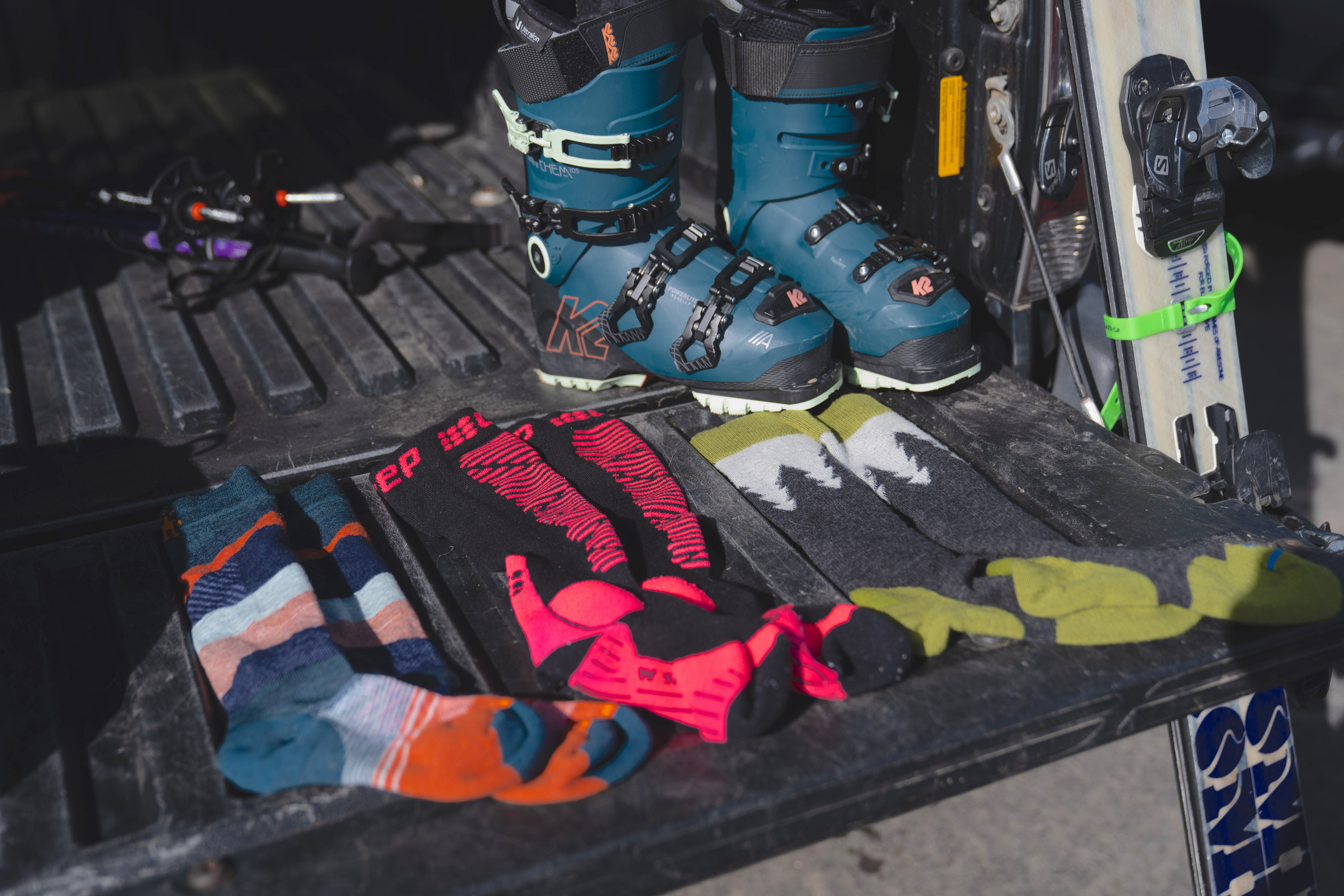
Comparison Table: 20+ Tested Pairs Side-by-Side
| Model | Wool % | Thickness | Primary Use | Durability |
|---|---|---|---|---|
| Smartwool Targeted | 59% | Light/Medium | All-Mountain | High |
| Fox River Chatter | 38% | Ultra-Light | Budget Resort | Medium |
| Dissent GFX | 0% (Synthetic) | Light | Touring/Pro | Extreme |
| Smartwool Zero | 55% | Paper-Thin | Racing | Medium |
| Darn Tough Over-the-Calf | 54% | Medium | Extreme Cold | Extreme |
| Icebreaker Ski+ | 52% | Medium | All-Mountain | High |
FAQ
Q: How often should I wash my Merino ski socks?
A: Because of Merino’s natural odor resistance, you can often get 2-3 days of skiing out of a single pair if you hang them up to dry properly. When you do wash them, use a gentle cycle and never put them in the dryer on high heat—air drying is best to preserve the wool fibers.
Q: Why are my feet still cold even with expensive socks?
A: It’s likely a fit issue. If your boots are buckled too tightly, you're cutting off circulation. Also, make sure you never tuck your base layer (long johns) into your boots; this creates a pressure point and a gap for cold air to enter.
Q: Should I wear two pairs of socks for extra warmth?
A: Absolutely not. Two pairs of socks create friction (blisters) and take up too much volume, which kills circulation. One high-quality Merino wool sock is significantly warmer than two layers of anything else.
The Bottom Line
Your socks are the unsung heroes of your ski kit. If you want the best all-around performer that will last you through several seasons of abuse, grab the Smartwool Ski Targeted Cushion. If you’re pushing deep into the backcountry or demand a precise, race-like fit, the Dissent GFX is worth every penny.
Stop settling for cold toes. Invest in your feet, and I’ll see you out there on the mountain.