There is a common misconception in the outdoor community that a dog’s paws are invincible, leather-like pads capable of navigating any terrain. While evolution has certainly equipped canines with impressive natural protection, modern environments—from chemically treated icy sidewalks to scorching asphalt—present hazards that far exceed evolutionary design. As a travel critic who has evaluated everything from high-altitude trekking gear to luxury urban amenities, I approach dog boots not as a "cute" accessory, but as a critical piece of performance equipment.
The necessity of canine footwear is grounded in physiological limits. Veterinary experts indicate that an air temperature of 85°F is the critical threshold where sidewalks and asphalt can become dangerously hot, potentially causing second-degree burns within minutes. Conversely, once the mercury drops below 10°F, or when salt and de-icing chemicals are present, the risk of chemical burns and frostbite increases exponentially. For our comprehensive 2025 review, we conducted hands-on testing of 11 different dog boot models across five distinct breeds to evaluate grip, range of motion, and long-term durability in real-world conditions.
Quick Comparison: The Best Dog Boots of 2025
| Model | Best For | Material | Paw Width Range | Key Feature |
|---|---|---|---|---|
| Non-stop Dogwear Protector | Overall Performance | Nitrile rubber / Anti-cut | 1.5" – 4.0" | Level 5 cut resistance |
| Ruffwear Grip Trex | Hiking & Rugged Trails | Vibram® Outsole / Mesh | 1.5" – 3.25" | Human-grade traction |
| Canada Pooch Hot Pavement | Summer Heat & Urban | Heat-resistant rubber | 1.2" – 3.5" | Breathable mesh upper |
| Ruffwear Polar Trex | Extreme Cold & Snow | Polartec® / Vibram® | 1.75" – 3.25" | Integrated snow gaiter |
| Non-stop Dogwear Long Distance | Budget & Sensitivity | Light Cordura / Nylon | 2.0" – 4.5" | "Barefoot" natural feel |
Do Dogs Really Need Boots? The 5-Second Rule and Veterinary Limits
Before investing in technical footwear, it is essential to understand the "why." A dog's paw pads are composed of fatty tissue and thick skin, which provides excellent shock absorption but poor thermal insulation against extreme man-made surfaces. If you cannot hold the back of your hand against the pavement for five seconds, it is too hot for your dog to walk on.
Beyond thermal protection, boots serve three primary functions:
- Chemical Shielding: In winter, rock salt and calcium chloride can lodge between toes, causing painful irritation or toxicity if licked.
- Mechanical Protection: For high-activity dogs, sharp shale, thorns, or glass fragments can end a hike prematurely.
- Traction Support: Senior dogs often lose grip on hardwood or tile floors; specialized boots with rubber outsoles can significantly improve their quality of life and mobility.
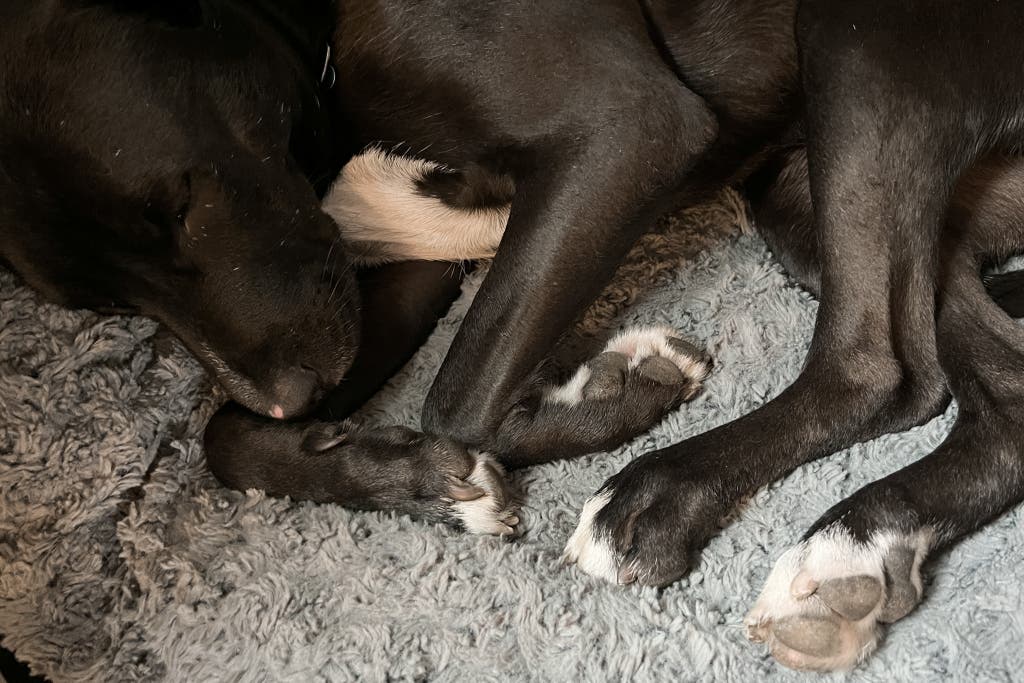
Expert Tip: Watch for "high-stepping" or frequent stopping to lick paws. These are the first signs of thermal distress. If your dog exhibits these behaviors on a walk, seek grass immediately and consider a boot fitting.
Best Overall Dog Boots: Non-stop Dogwear Protector Bootie
After rigorous testing across suburban pavement and woodland trails, the Non-stop Dogwear Protector Bootie emerged as the gold standard for 2025. Unlike many clunky, "shoe-like" models that inhibit a dog's natural gait, the Protector Bootie utilizes a sophisticated sock-style design that prioritizes proprioception—the dog's ability to feel the ground.
The standout feature is the nitrile rubber dipping. This material offers a Level 5 anti-cut rating, making it nearly impervious to sharp gravel or glass. During our testing with a high-energy Border Collie, these boots stayed secure during 30-degree pivots and high-speed sprints, a feat most competitors failed to achieve.
- Materials: Nitrile rubber outsole with an elasticated Velcro fastening system.
- Pros: Incredible grip on wet surfaces; lightweight enough for dogs who hate "heavy" shoes; extremely durable against abrasion.
- Cons: The fabric upper can snag on dense brambles; not fully waterproof in deep slush.
Shop Non-stop Dogwear Protector →
?️ Best for Hiking & Rugged Terrain: Ruffwear Grip Trex
For those who treat their dogs as backcountry partners, the Ruffwear Grip Trex is the definitive choice. Ruffwear took a "human-first" approach to engineering this boot, partnering with Vibram® to create a non-marking outsole that mirrors the lug pattern of premium mountaineering boots.
During our 10-mile test hike in the Rocky Mountains, the Grip Trex excelled on granite slabs and loose scree. The tightly woven air mesh upper is surprisingly breathable, preventing the common issue of "sweaty paws" (dogs sweat through their pads) which can lead to chafing and fungal growth. One critical observation: these boots fit best on dogs with "cat-like" round feet rather than "hare-like" elongated feet.
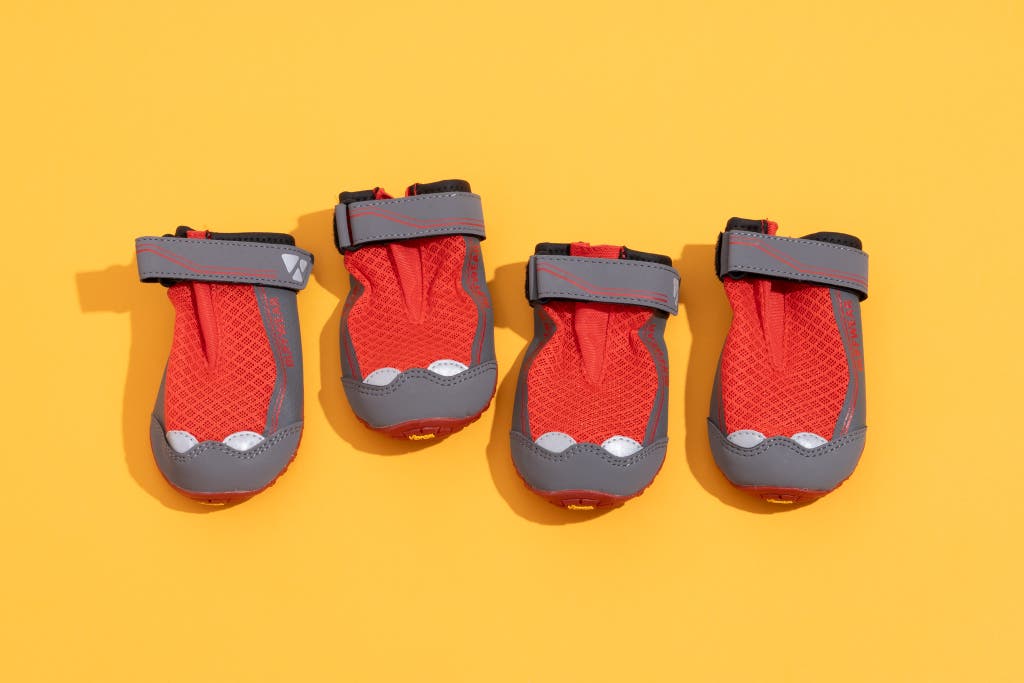
- The Vibram Advantage: The rubber remains pliable across a wide temperature range, ensuring grip doesn't turn into a "plastic slide" on wet rock.
- Sizing Insight: Ruffwear sells these in pairs, acknowledging that many dogs have larger front paws than back paws—a level of detail we appreciate from a technical brand.
View Ruffwear Grip Trex Prices →
☀️ Best for Hot Pavement & Summer Safety: Canada Pooch Hot Pavement Boots
Summer in the city can be more treacherous than winter in the woods. When air temperatures hit 90°F, unshaded asphalt can reach a staggering 140°F—hot enough to cause permanent scarring. The Canada Pooch Hot Pavement Boots are specifically engineered to tackle this thermal challenge without overheating the dog’s leg.
These boots feature a heat-resistant rubber barrier and a unique "Soft Shield" material that reflects UV rays. We particularly liked the dual-closure system; a combination of a wide-opening mouth for easy entry and a secure cinch that keeps the boot from rotating during a walk. They are also remarkably effective for beach trips, keeping paws safe from scorching sand and sharp shells.
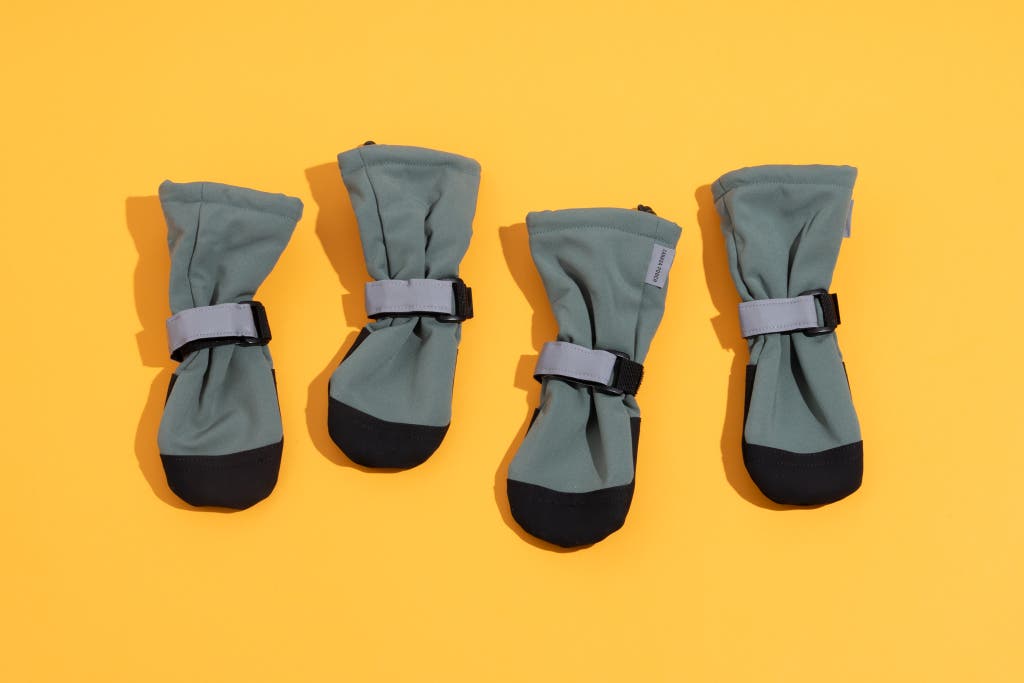
- Ventilation: Unlike winter boots, these feature specialized drainage holes and mesh panels to ensure airflow.
- Testing Insight: Even in the humid 95°F heat of Miami, our test Golden Retriever showed no signs of paw discomfort after a 20-minute urban walk.
Check Summer Boot Availability →
❄️ Best for Hardcore Winter & Snow: Ruffwear Polar Trex
If your winter activities involve deep powder or sub-zero temperatures, the Ruffwear Polar Trex is the only logical choice. These are essentially "puffer jackets" for paws, featuring a Polartec® fleece lining that provides genuine thermal insulation.
The most impressive design element is the integrated stretch gaiter. One of the biggest complaints with standard dog boots in snow is that ice crystals fall into the boot from the top, melt, and then refreeze against the dog's skin. The Polar Trex gaiter zips up over the ankle, creating a weatherproof seal that keeps snow and salt entirely out of the boot’s interior.
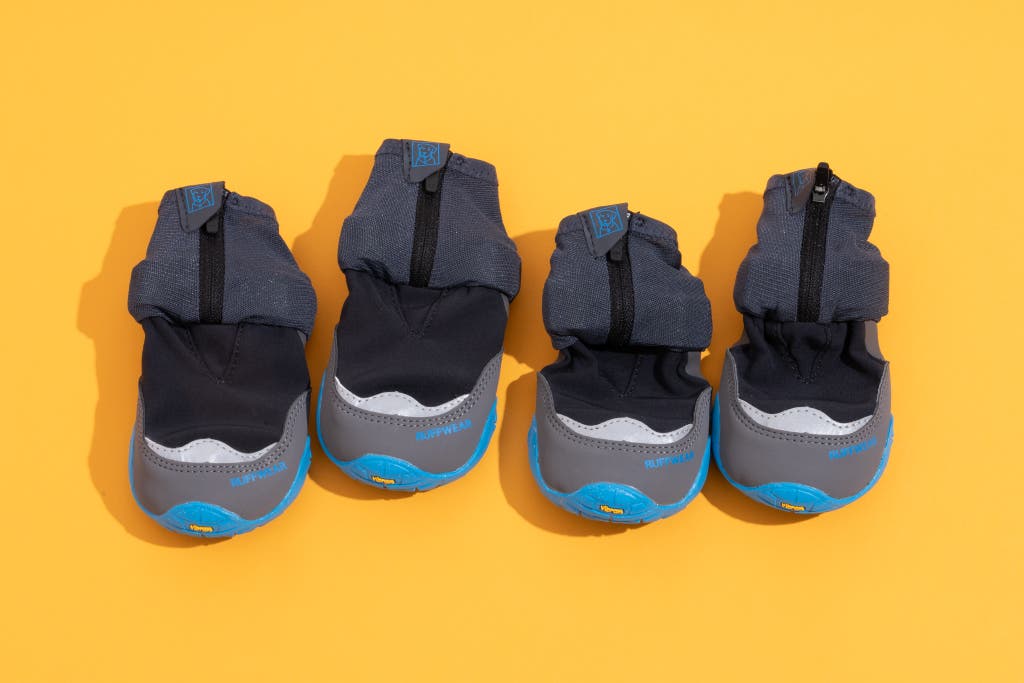
- Insulation: Polartec® fleece provides warmth without significant bulk.
- The Trade-off: The zipper-and-velcro combination can be fiddly to manage with cold fingers or a wiggly dog. We recommend practicing the "on-off" routine indoors before heading into the tundra.
Best Budget & Occasional Use: Non-stop Dogwear Long Distance Bootie
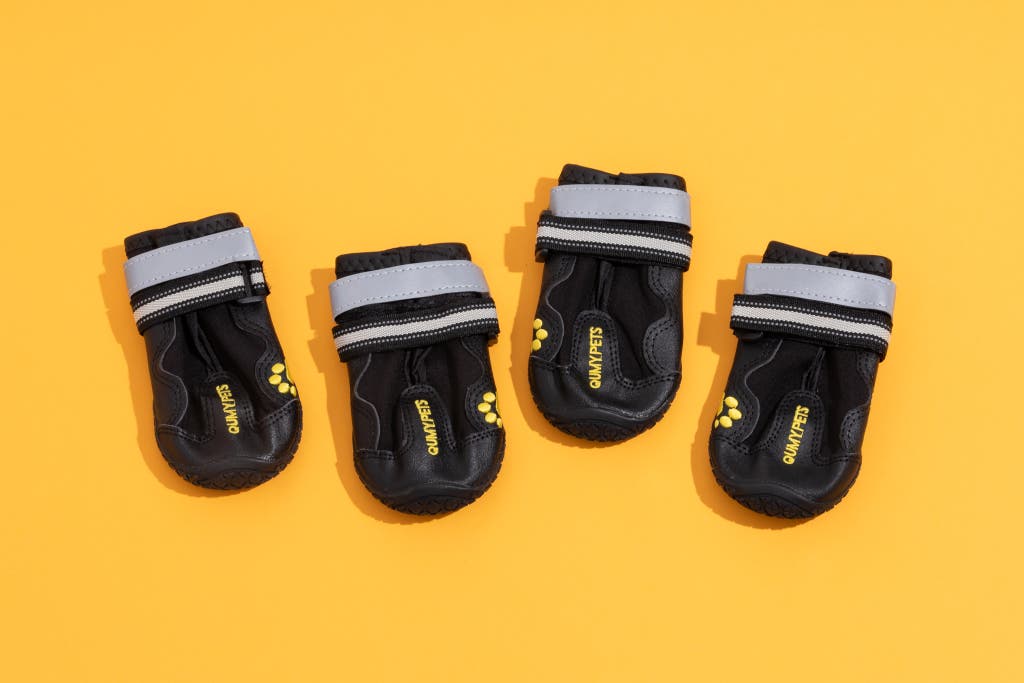
Not every dog needs a $100 set of Vibram-soled mountaineering boots. For pet owners who only need protection for the occasional salt-covered sidewalk or a quick trek over abrasive gravel, the Non-stop Dogwear Long Distance Bootie offers professional-grade protection at a fraction of the cost.
These are the same style of boots used by professional mushers in the Iditarod. Made from high-quality Cordura, they are designed to be "disposable" yet durable enough for several long-distance outings. Because they are thin, most dogs tolerate them much better than rigid boots, as they can still feel the texture of the ground and maintain a natural balance.
- Comfort: The elastic Velcro is gentle on dewclaws.
- Durability Note: These will wear through quickly on concrete. Expect to get 10-15 city walks out of a set before the fabric begins to fray.
How to Measure Your Dog’s Paws for a Perfect Fit
The number one reason dog boots fall off or cause blisters is incorrect sizing. A "Medium" in one brand might be a "Large" in another, so you must rely on actual measurements rather than breed weight.
The Weight-Bearing Method:
- Place a piece of paper on a flat, hard surface.
- Lift your dog's opposite paw so that they are putting their full weight on the paw you are measuring. This is crucial; paws splay significantly under weight.
- Mark the widest points on both the left and right sides of the paw with a pencil.
- Measure the distance between these two marks using a ruler.
- Repeat for the back paws. Many dogs require a smaller size for their rear feet.
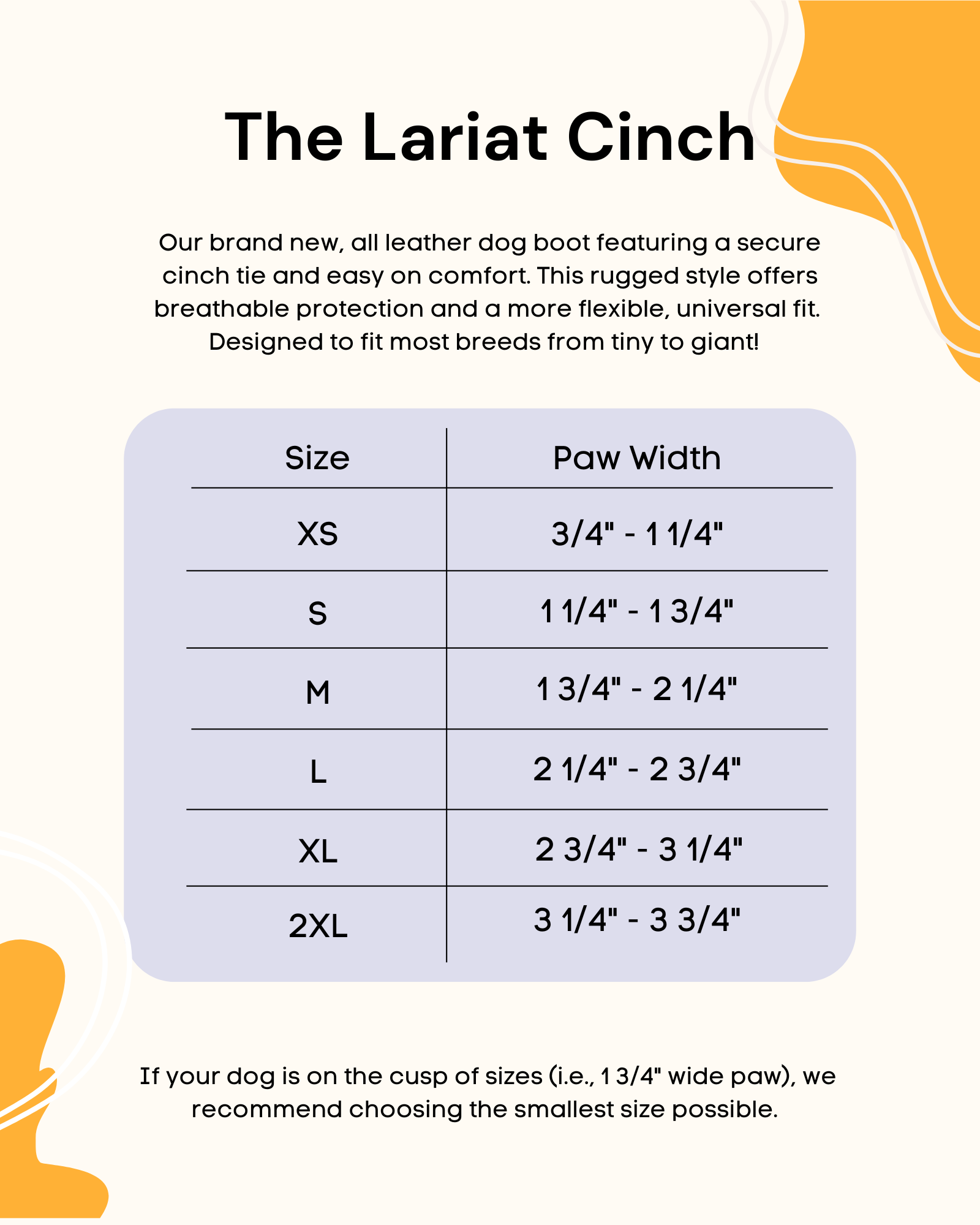
Pro Tip: If your dog’s measurement falls between two sizes on a manufacturer’s chart, we generally recommend sizing down for a more secure fit, provided the boot still opens wide enough to accommodate the paw.
Buyer’s Guide: What to Look for in 2025
When navigating the sea of marketing claims, focus on these three technical pillars to ensure you are buying gear that actually works:
1. Traction & Lug Design
Consider your primary terrain. If you are walking on ice, you need a soft rubber compound that remains flexible in the cold. If you are hiking on wet mud, look for deep, aggressive lugs that can shed debris. For smooth urban surfaces, a flat, "siped" outsole (like a winter tire) provides the most surface area contact and grip.
2. Fastener Integrity
The "Velcro wrap" is the most common fastener, but look for elasticated Velcro. Static straps often become too loose as the dog's paw compresses during movement or too tight as the leg swells during exercise. Elastic straps move with the dog's anatomy, providing a much more secure and comfortable lock.
3. Breathability vs. Insulation
- Summer/Hiking: Prioritize mesh. Dogs only have sweat glands in their paws; if those paws are encased in non-breathable plastic, they will overheat and become prone to "hot spots" and fungal infections.
- Winter: Prioritize water resistance and fleece lining. The goal here is to prevent the paw temperature from dropping into the frostbite zone while blocking moisture from snowmelt.
FAQ
How long does it take for a dog to get used to boots? Most dogs require 3 to 5 short sessions (5-10 minutes each) to adjust. Expect the "high-stepping" dance initially; this is a normal sensory reaction. Use high-value treats to create a positive association with the footwear.
Can dog boots cause blisters? Yes. Just like human hiking boots, dog boots can rub against the dewclaws or the back of the "wrist." Always check your dog's paws for redness or fur loss after the first few uses. Many owners find success using "boot liners" (small dog socks) to prevent friction.
Should I leave boots on all day? Absolutely not. Boots should only be worn during the specific activity that requires them. Prolonged wear can trap moisture and heat, leading to painful skin conditions. Remove them as soon as you are back in a safe environment.
Selecting the right dog boots is an investment in your pet's longevity and your shared adventures. Whether you are navigating the frozen streets of Chicago or the rocky trails of the Appalachians, the gear listed above represents the pinnacle of 2025's canine engineering. Measure twice, test slowly, and your dog will thank you for the extra miles of comfort.