Quick Facts
- Our Top Pick: The Black Diamond Pursuit is the best overall trekking pole for 2025, offering a bombproof 7000-series aluminum build and a genius built-in maintenance tool.
- Top Portable Option: For travelers and mountain runners, the Black Diamond Distance Carbon FLZ collapses to a mere 13–15 inches.
- Expert Testing: Our gear team put 19 leading models through their paces over 3,500+ miles on the PCT, CDT, and Arizona Trail.
- Health Benefits: Using poles reduces cumulative force on lower joints by nearly 5% per step and cuts knee impact by 4.4% on steep descents.
- The Stability Edge: Beyond joint health, poles provide critical balance for river crossings and technical, uneven terrain.
I’ve spent the better part of the last decade living out of a backpack, and if there’s one thing I’ve learned on the lung-busting climbs of the High Sierra and the knee-shredding descents of the White Mountains, it’s this: your legs need help. Trekking poles aren’t just "walking sticks" for the elderly; they are high-performance tools that act as a second set of legs. After testing 19 different models across the most rugged terrain in North America—from the dusty heat of the Arizona Trail to the muddy bogs of the CDT—I’ve seen firsthand how the right pair can be the difference between a triumphant summit and a debilitating injury.
In this guide, we’re breaking down the absolute best trekking poles of 2025, focusing on stability, durability, and real-world reliability. Whether you’re a weight-conscious thru-hiker or a weekend warrior looking to save your knees, we’ve found the perfect pair for your next expedition.
Comparison of the Top Trekking Poles 2025
| Model | Weight (Pair) | Material | Design | Best For |
|---|---|---|---|---|
| Black Diamond Pursuit | 16.4–17.6 oz | 7000 Aluminum | Telescoping | Overall Performance |
| BD Distance Carbon FLZ | 11.6–12.0 oz | Carbon Fiber | Folding (Z-Pole) | Travel & Portability |
| MSR DynaLock Ascent | 15.7–17.1 oz | Carbon/Kevlar | Folding | 4-Season/Winter |
| Leki Cressida FX Carbon | 16.4 oz | Carbon Fiber | Folding | Women/Smaller Hands |
| Cascade Mountain Tech | 16.0 oz | Carbon Fiber | Telescoping | Budget Conscious |
The Best Overall Trekking Pole: Black Diamond Pursuit
When I’m heading into the backcountry for a week-long push, I need gear that I don’t have to worry about. The Black Diamond Pursuit is that gear. It’s built from high-strength 7000-series aluminum, which offers a level of durability that carbon fiber simply can’t match when things get rocky. During a particularly nasty section of the CDT, I slipped and wedged a pole between two boulders; a carbon pole would have snapped, but the Pursuit flexed slightly and held firm.
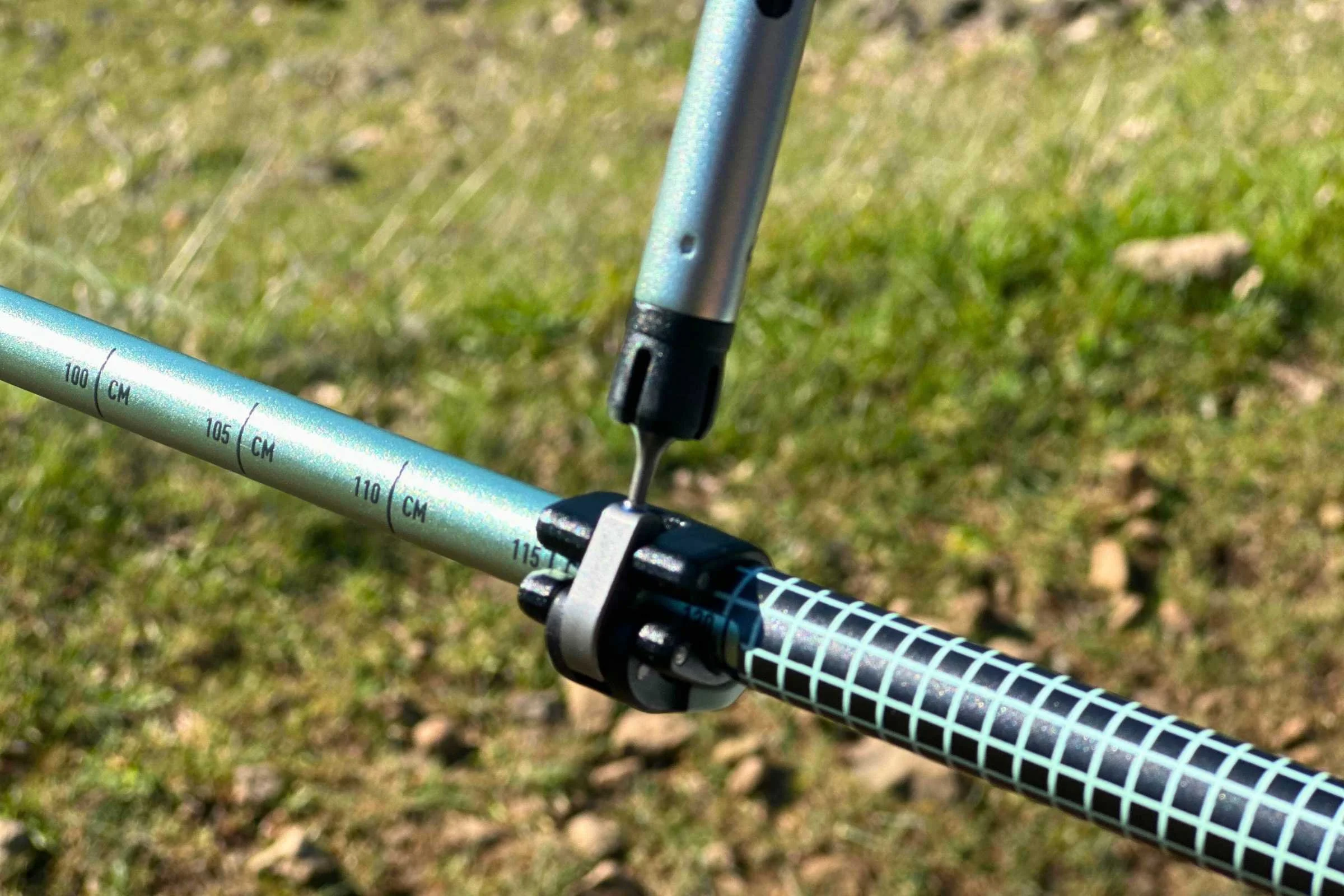
The standout feature here is the ergonomics. The natural cork grips are shaped to fit the hand perfectly, wicking away sweat even during 90-degree climbs. But the "secret sauce" is the integrated 1.5mm hex tool tucked into the handle. This allows you to tighten the FlickLock+ mechanisms in the field—a small detail that solves one of the most common gear failures on the trail.
Specifications
- Material: 7000-Series Aluminum
- Weight: 16.4 oz (S/M), 17.6 oz (M/L)
- Grip: Natural Cork
- Adjustment: FlickLock+
Pros & Cons
| Pros | Cons |
|---|---|
| Integrated hex tool for field repairs | Heavier than carbon fiber models |
| Highly durable 7000-series aluminum | Not the most compact for travel |
| Comfortable, moisture-wicking cork |
Check Price for Black Diamond Pursuit →
Best Folding Trekking Poles for Travel: Black Diamond Distance Carbon FLZ
If you’re the type of hiker who flies to destinations like the Dolomites or the Japanese Alps, you know the struggle of fitting gear into a carry-on. The Black Diamond Distance Carbon FLZ is the gold standard for portability. Using a Z-pole folding design inspired by avalanche probes, these poles collapse down to a measly 13 to 15 inches depending on the size.
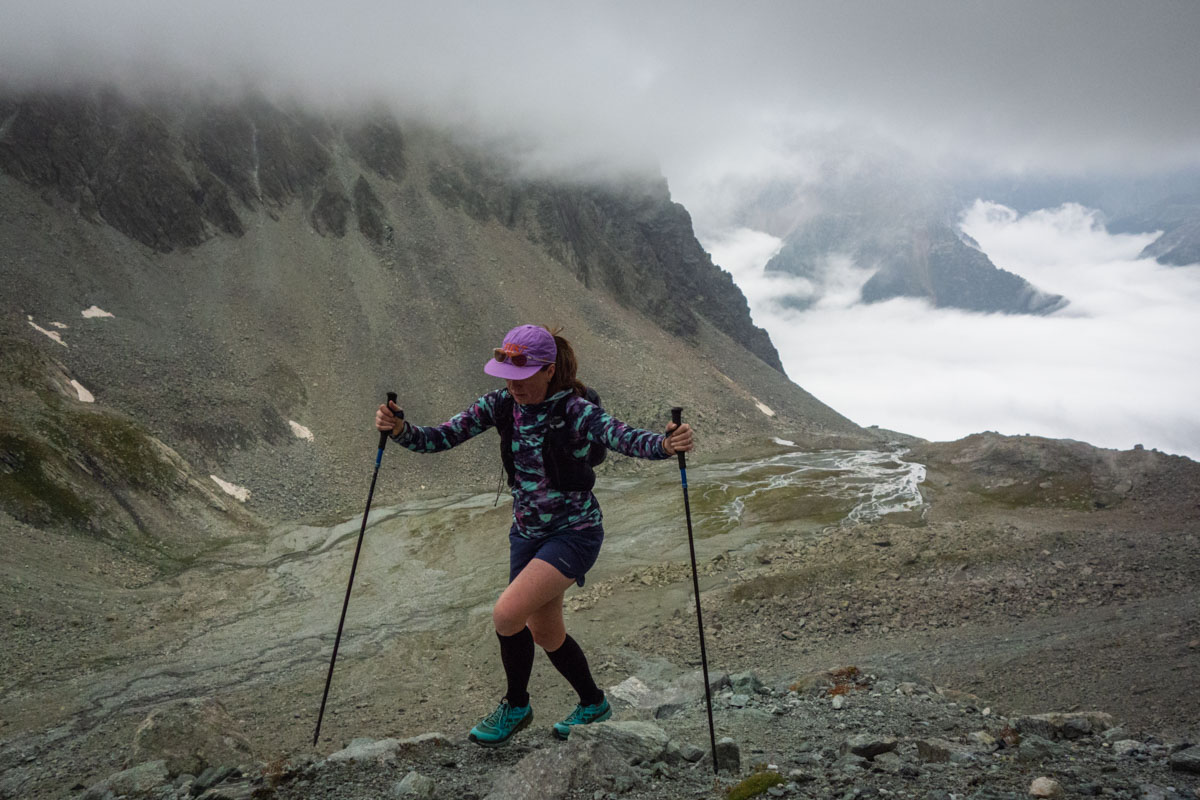
On a recent fastpacking trip through the Swiss Alps, I was impressed by how quickly these deployed. You just pull the top section until it clicks, and you're ready to go. While they are incredibly light (around 12 oz for the pair), the carbon fiber is stiff enough to provide serious stability when you're moving fast over technical terrain.
Specifications
- Material: 100% Carbon Fiber
- Weight: 11.6–12.0 oz per pair
- Collapsed Length: 13–15 inches
- Grip: EVA Foam
Pros & Cons
| Pros | Cons |
|---|---|
| Incredible packability for travel | Carbon is more prone to snapping than aluminum |
| Extremely lightweight for fastpackers | Not ideal for heavy snow/mountaineering |
| Reliable FlickLock adjustment |
Shop Black Diamond Distance Carbon FLZ →
Best for Stability and Four-Season Use: MSR DynaLock Ascent Carbon
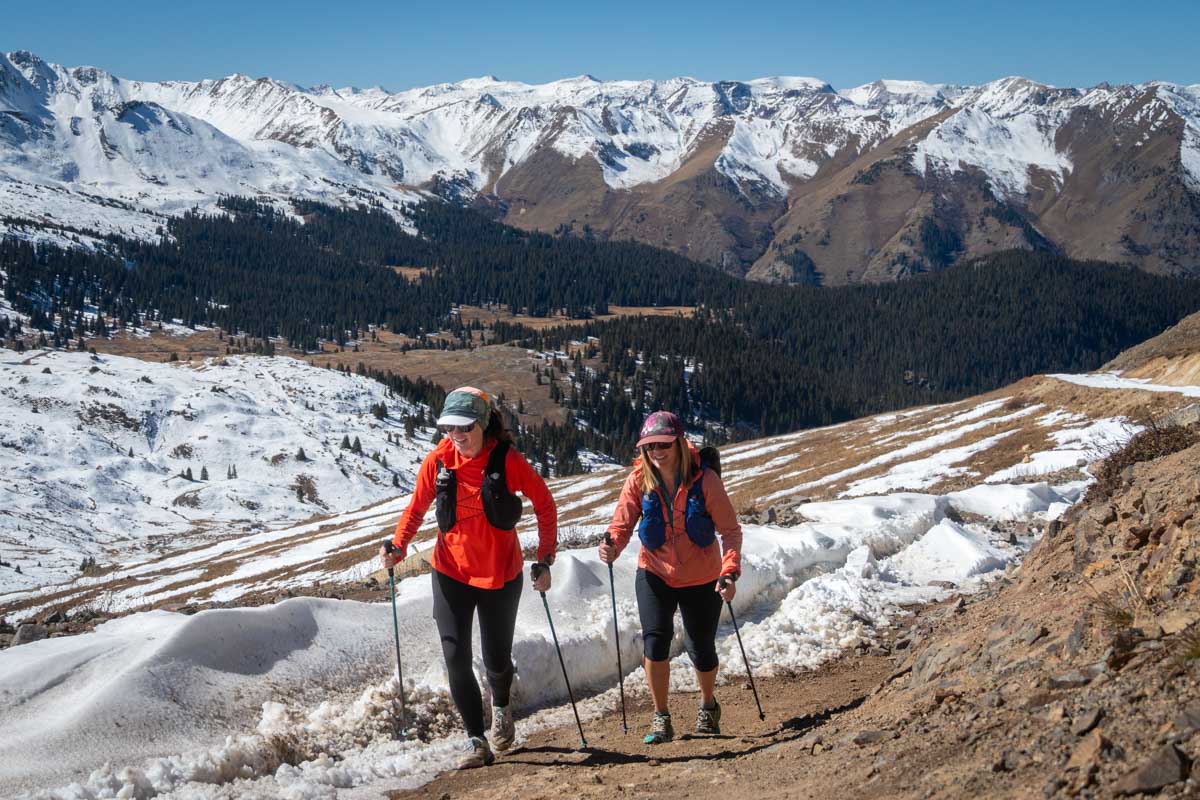
Most trekking poles are designed for three-season use, but the MSR DynaLock Ascent Carbon is a different beast entirely. It’s reinforced with Kevlar to increase the strength-to-weight ratio of the carbon fiber, making it rugged enough for snowshoeing, splitboarding, and high-altitude mountaineering.
What I love about these is the DynaLock mechanism. It features an easy-to-use lever that allows you to adjust the clamping force without tools. In sub-zero temperatures on the summit of Mt. Whitney, I was able to adjust my poles with thick mittens on—a feat that’s nearly impossible with most twist-lock or small lever systems.
Specifications
- Material: Kevlar-Reinforced Carbon Fiber
- Weight: 15.7 oz (Small), 17.1 oz (Large)
- Range: 100–140cm
- Features: Winter and summer baskets included
Pros & Cons
| Pros | Cons |
|---|---|
| Kevlar reinforcement for extra durability | Higher price point than average |
| Tool-free tension adjustment | Slightly heavier than ultralight carbon |
| Excellent performance in snow/ice |
Check Price for MSR DynaLock Ascent →
Best for Women and Smaller Hands: Leki Cressida FX Carbon
Fit is everything. If the grip is too large for your hand, you’ll end up with fatigue and blisters before you hit the five-mile mark. The Leki Cressida FX Carbon is specifically designed with a smaller diameter Aergon Air grip that is tilted at an ergonomic angle to keep your wrist in a neutral position.
Leki’s folding system is one of the smoothest in the industry, and the carbon construction keeps the weight low without sacrificing stiffness. For hikers who struggle with standard "unisex" poles that feel like holding a baseball bat, the Cressida is a revelation in comfort and control.
Specifications
- Material: Carbon Fiber
- Weight: 16.4 oz per pair
- Collapsed Length: 16.5 inches
- Grip: Aergon Air (Smaller diameter)
Pros & Cons
| Pros | Cons |
|---|---|
| Optimized for smaller hands/frames | Maximum height may be too short for tall hikers |
| Extremely comfortable ergonomic grip | Premium pricing |
| Very smooth folding mechanism |
View Leki Cressida FX Carbon →
Best Budget-Friendly Stability: Cascade Mountain Tech Carbon Fiber
If you’re looking at these $200 poles and thinking, "There’s no way," then the Cascade Mountain Tech Carbon Fiber poles are for you. You can often find these for under $70, yet they offer performance that rivals brands triple the price. I’ve seen these poles all over the Pacific Crest Trail; they’ve become a cult favorite among thru-hikers who realize they can replace them three times over for the cost of one pair of high-end poles.
They aren't as refined—the locks can be a bit finicky and the cork isn't as high-grade—but for the casual hiker or someone testing the waters of trekking pole use, they provide exceptional stability for a fraction of the cost.
Specifications
- Material: Carbon Fiber
- Weight: 16.0 oz per pair
- Design: 3-Section Telescoping
- Grip: Cork and EVA Foam
Pros & Cons
| Pros | Cons |
|---|---|
| Unbeatable value for carbon fiber | Locking mechanisms require frequent tightening |
| Includes multiple tip/basket options | Not as refined or durable as premium brands |
| Lightweight and accessible |

Check Price for Cascade Mountain Tech →
The Science of Stability: How Trekking Poles Protect Your Body
Many hikers view poles as a luxury, but the biomechanical data suggests they are a necessity for long-term trail health. Laboratory research has shown that using trekking poles can reduce the cumulative force on lower joints—knees, ankles, and hips—by nearly 5% per step. On a 10-mile hike, that adds up to thousands of pounds of pressure moved from your joints to your stronger upper body muscles.
The benefits are most pronounced on descents. Our testing and data show a 4.4% reduction in impact on the knee joints during steep downhills. By taking that jarring force off your patella, you’re not just preventing soreness; you’re preventing the long-term wear and tear that leads to chronic injuries.
Beyond the numbers, there’s the "safety factor." During river crossings, a pair of poles transforms you from a wobbly two-legged creature into a stable four-legged tripod. I’ve used my poles to probe deep water, maintain balance on slick river stones, and brace against heavy currents that would have surely swept me off my feet otherwise.

Buying Guide: Carbon Fiber vs. Aluminum
Choosing the right material is the first decision you’ll need to make. Here’s how I break it down for my readers:
Carbon Fiber: The Lightweight Specialist
Carbon fiber is the go-to for weight-conscious hikers. It’s naturally shock-absorbent and incredibly light, making it ideal for high-mileage days where every gram counts. However, carbon is brittle. If you wedge a carbon pole in a crack and apply lateral pressure, it will snap.
Marcus’s Tip: Choose carbon if you’re a "light and fast" hiker who sticks to established trails and wants to minimize fatigue.
Aluminum: The Rugged Workhorse
Usually made from 7075 or 7000-series alloys, aluminum is the choice for durability. It can withstand significant lateral stress; instead of snapping, aluminum will usually bend, which means you might be able to straighten it out and finish your trip.
Marcus’s Tip: Choose aluminum if you’re carrying a heavy pack (35+ lbs), doing off-trail bushwhacking, or if you simply want a pole that will last for a decade.
Locking Mechanisms and Grips
- Lever Locks (FlickLock/DynaLock): These are the industry standard for a reason. They are easy to operate with gloves and highly reliable.
- Twist Locks: Found on cheaper or older models. They tend to fail when dirt or moisture gets inside the shaft. Avoid them for serious expeditions.
- Cork vs. Foam: Natural cork is my personal favorite because it molds to your hand over time and manages sweat beautifully. EVA foam is lighter and softer, making it a great choice for cold-weather hiking where you don't want the "cold" feel of cork.
Maintenance and Care
To make your investment last, a little TLC goes a long way. After a muddy or snowy trek, always pull your poles apart and let them dry completely before storing them. Moisture trapped inside the aluminum shafts can lead to oxidation, making them nearly impossible to slide open later.
Also, don't forget your tips. Carbide tips provide the best grip on rock and ice, but they eventually wear down. Most high-end brands like Black Diamond and Leki offer replaceable tips. Swapping them out for $10 every few hundred miles is a lot cheaper than buying a whole new set of poles.
FAQ
Are trekking poles allowed on airplanes? Generally, no. Most airlines and the TSA require trekking poles to be in checked luggage because the carbide tips can be considered "prohibited items." This is why folding Z-poles like the Black Diamond FLZ are so popular—they fit easily into most checked suitcases.
How do I determine the correct height for my poles? The rule of thumb is that when holding the pole, your elbow should be at a 90-degree angle. On long uphills, you may want to shorten them by 5-10cm; on long descents, lengthen them by 5-10cm to help reach the ground sooner and stay upright.
Can I use just one pole instead of a pair? You can, and some hikers prefer it to keep one hand free. However, for maximum stability and to see the full biomechanical benefits (like that 5% joint force reduction), a pair is significantly more effective.
Take the Pressure Off
Stability on the trail isn't just about avoiding a fall; it's about preserving your body so you can keep hiking for years to come. Whether you opt for the bombproof Black Diamond Pursuit or the ultralight Distance Carbon FLZ, you're making an investment in your safety and longevity.
Ready to hit the dirt? Grab a pair, find a trail, and feel the difference that "four legs" can make. See you out there!