There is no feeling in the world quite like it. You’ve just spent ten hours hauling a 35-pound pack over 15 miles of granite and scree. Your feet are swollen, your socks are damp with the day’s toil, and your boots feel like two lead weights fused to your ankles. The moment you unlace, peel back those socks, and slide into a pair of dedicated camp shoes, the world suddenly feels right again. It’s more than just a gear change; it’s a promotion for your feet.
After 24 months of grueling field testing across the high deserts of Utah, the soggy trails of Oregon, and the jagged peaks of the Colorado Rockies, our team has narrowed down the absolute best footwear to save your soles in 2025. We compared 12 different categories, from ultralight slivers of foam to plush down booties that feel like sleeping bags for your feet.
If you’re looking for the quick verdict: The Crocs Classic All-terrain clogs are the best overall camp shoes for 2025 because they offer the ultimate balance of affordability, comfort, and weight at exactly 10 oz. For those prioritizing recovery, the Oofos Ooahh Slides are the gold standard, utilizing specialized foam to absorb impact. And if you’re a gram-counting thru-hiker, the Mayfly Ultralight Equipment Imago is the lightest shoe on the market at a mind-blowing 1.8 ounces per pair.
2025 Camp Shoe Comparison Table
| Shoe Name | Weight (Pair) | Best Use | Category | Price |
|---|---|---|---|---|
| Crocs All-Terrain Clog | 10 oz | All-Around / Muddy Camps | Clog | $60 |
| Oofos Ooahh Slide | 12 oz | Post-Hike Recovery | Slide | $60 |
| Mayfly Imago | 1.8 oz | Thru-Hiking / UL | Minimalist | $45 |
| Teva ReEmber | 15 oz | Van Life / Car Camping | Moccasin | $80 |
| Feathered Friends Down | 8.3 oz | Alpine / Winter | Bootie | $119 |
| Bedrock Evo Cairn | 16 oz | Technical / River Crossings | Sandal | $115 |
| Xero Shoes Z-Trail EV | 10.8 oz | Minimalist Backpacking | Sandal | $80 |
| The North Face Base Camp | 14 oz | Basecamp / Durability | Slide | $45 |
Best Overall: Crocs Classic All-Terrain Clog
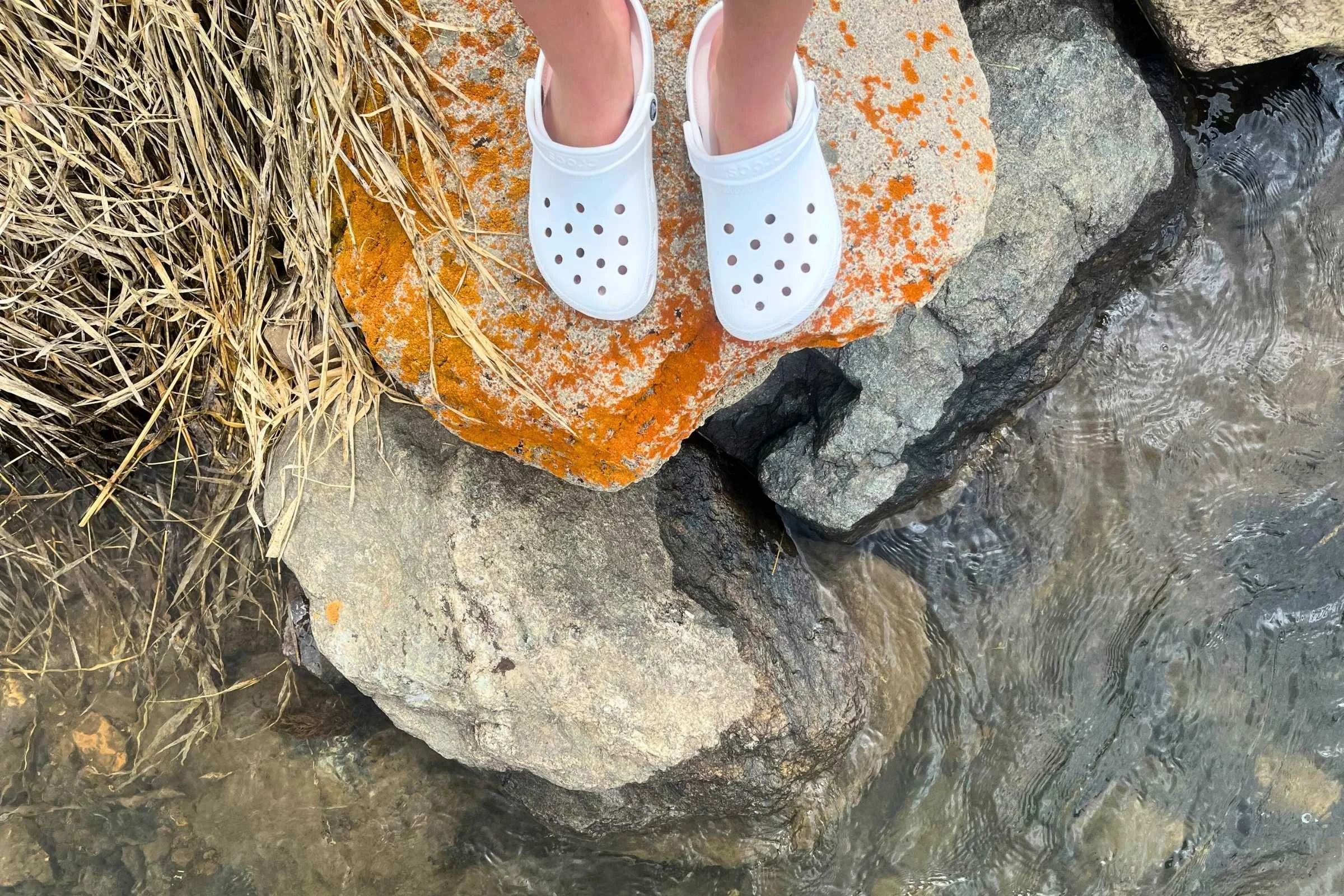
It might not be the "coolest" look in the backcountry, but the Crocs Classic All-Terrain Clog is the undisputed king of the campsite. During our testing, this shoe survived everything from jagged volcanic rock to slimy riverbeds. Unlike the standard Crocs you see at the grocery store, the All-Terrain version features a rugged lug outsole and an adjustable "turbo" heel strap that actually stays put when you’re scouting for firewood or navigating a midnight bathroom run.
The Croslite™ foam provides just enough cushion to soothe tired arches without being so soft that you feel every pebble. At 10 oz for the pair, they hit the sweet spot for weight. They are also entirely waterproof and float, making them the perfect companion for lake days or creek crossings.
Pros:
- Incredible durability for the weight
- Extremely easy to clean
- Adjustable heel strap for technical terrain
Cons:
- Bulky to strap onto the outside of a pack
- Not the most breathable in high heat
Marcus’s Pro-Tip: Don't be afraid to wear these with your thickest wool hiking socks. The wide toe box is designed for it, and the "Sport Mode" strap ensures you won't lose a shoe if you have to hop over a log.
Best for Recovery: Oofos Ooahh Slides
When your mileage hits the double digits day after day, your feet don't just need a change—they need therapy. The Oofos Ooahh Slides are the top-rated recovery sandals for 2025 for one reason: OOfoam™. This proprietary technology is designed to absorb 37% more impact than traditional footwear foam.
In our testing, slipping these on after a 20-mile day felt like "melting into a cloud." The patented footbed cradles your arches and reduces stress on sore knees and lower backs. While they lack a heel strap—meaning they aren't great for rugged movement—they are the ultimate reward for a hard day's work.
Best For: High-mileage hikers, trail runners, and anyone with plantar fasciitis.
Pros:
- Unmatched "plush" feel
- Anatomically contoured footbed
- Extremely lightweight for the amount of cushion
Cons:
- No heel strap; purely for lounging
- Foam can feel "squishy" on uneven ground
Best Ultralight for Thru-Hiking: Mayfly Ultralight Equipment Imago
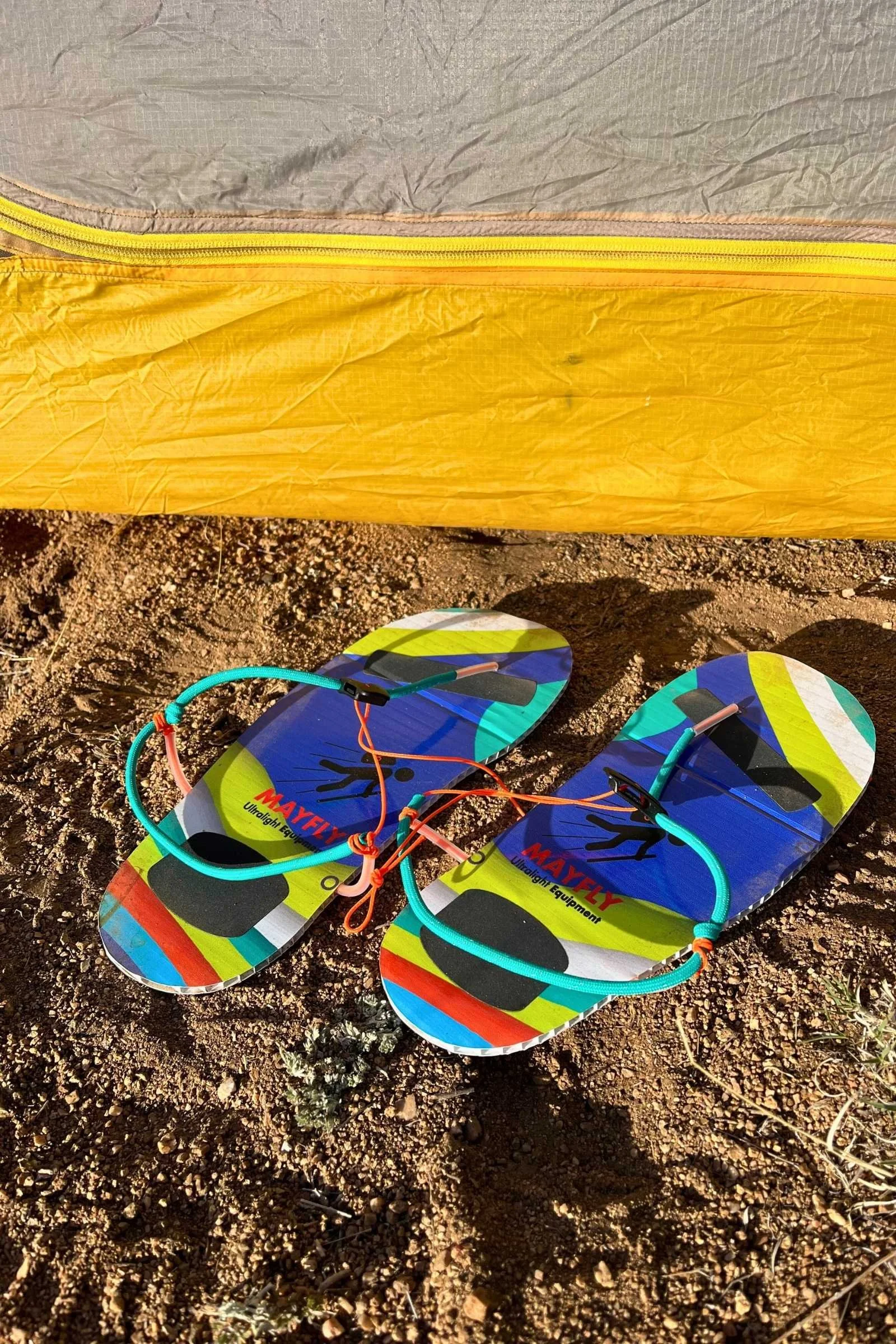
For the "ounces equal pain" crowd, the Mayfly Imago is a revelation. Our analysis of 2025 market trends shows that the ultralight category has achieved a staggering 90% reduction in weight compared to traditional camp sandals. The Imago is the pinnacle of this trend.
Weighing just 1.8 ounces per pair, these are essentially a structural footbed with a minimalist cord system. They offer enough protection to keep your feet off the dirt and protect against thorns or sharp gravel while your boots dry out. For thru-hikers on the PCT or AT, these are the "holy grail" of camp footwear.
Pros:
- Weight is almost non-existent
- Folds completely flat
- surprisingly durable for the materials used
Cons:
- Minimal protection from side impacts
- Requires a "learning curve" to adjust the straps perfectly
Best for Van Life & Car Camping: Teva ReEmber Slip-Ons
If your "campsite" involves a Sprinter van or a tailgate, comfort and versatility are the names of the game. The Teva ReEmber is part slipper, part shoe, and entirely cozy. Featuring a 100% recycled ripstop upper inspired by classic puffy jackets, these shoes provide immediate warmth.
The standout feature is the collapsible heel, which allows you to wear them as a slide when you’re popping in and out of the van, or as a full shoe when you’re walking to the camp store. During our testing in the chilly mornings of the Eastern Sierras, the ReEmber was the first thing we reached for.
Pros:
- Quilted warmth for cold mornings
- Sustainable construction (recycled polyester/EVA)
- Transition-ready collapsible heel
Cons:
- Not breathable enough for summer backpacking
- Takes a long time to dry if they get wet
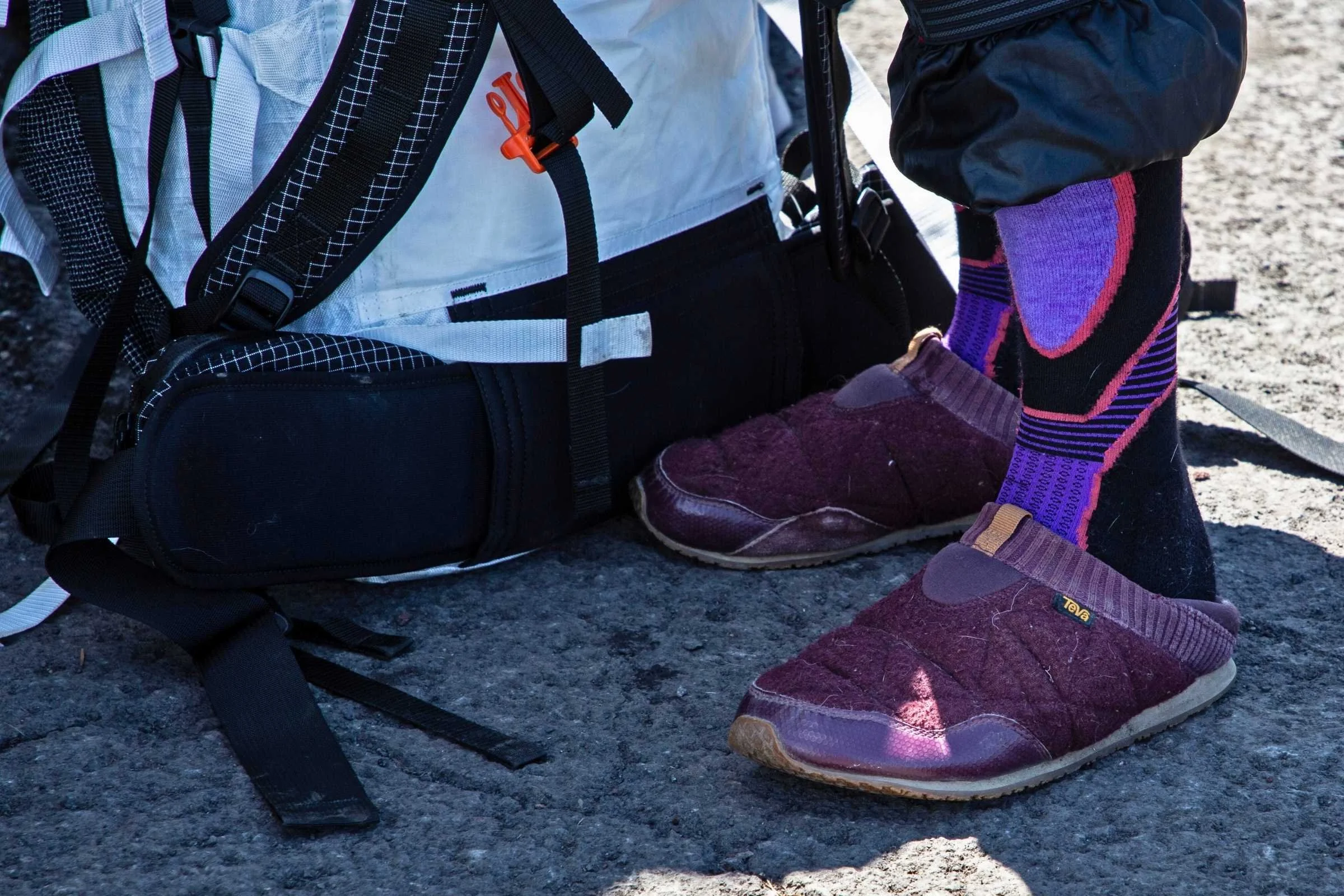
Marcus’s Pro-Tip: These are my go-to "airport shoes" for expedition travel. They are easy to slip off at security and keep your feet warm on those freezing long-haul flights.
Best Winter Booties: Feathered Friends Down Booties
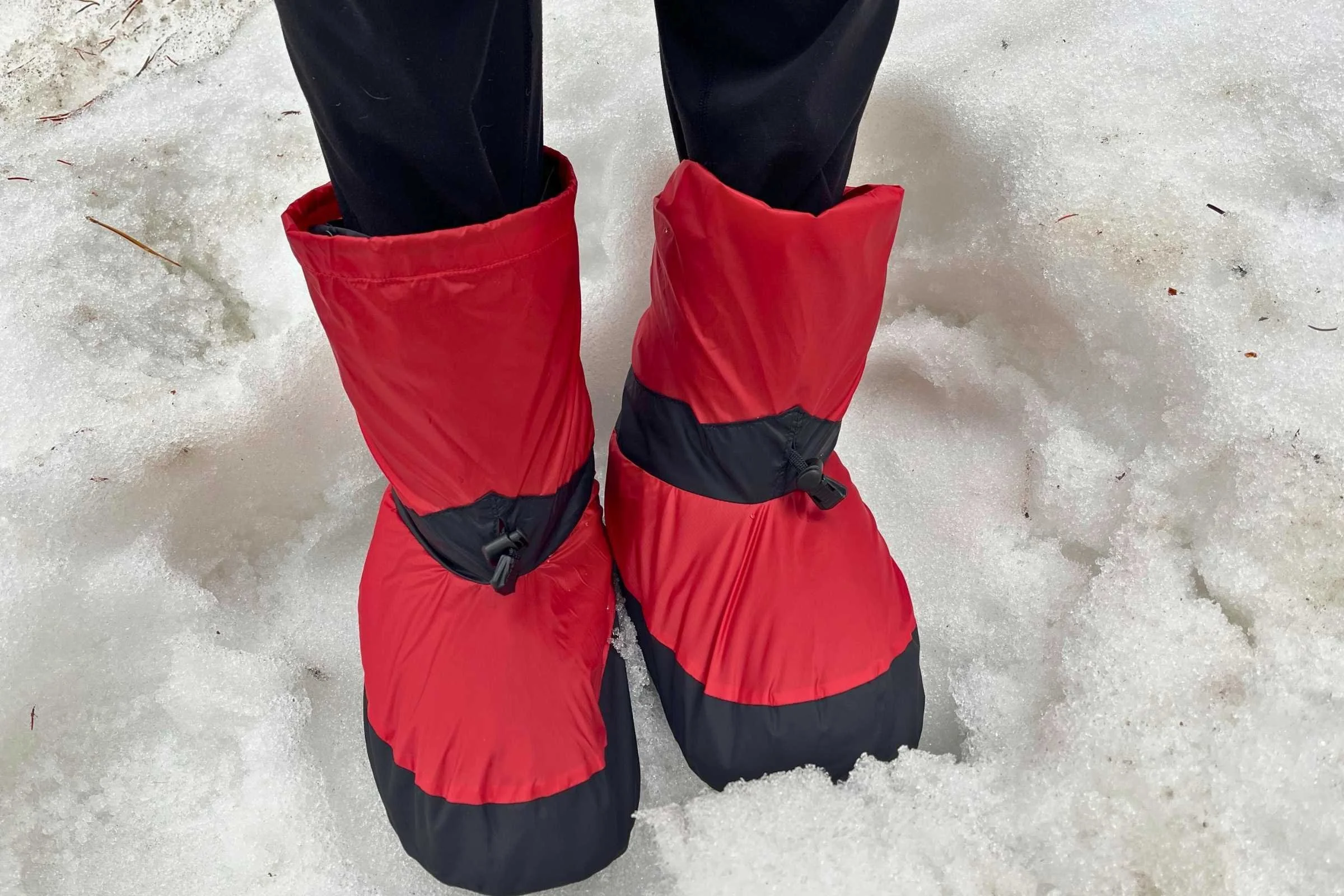
When the temperature drops below freezing and you're melting snow for water, a foam sandal isn't going to cut it. The Feathered Friends Down Booties are essentially sleeping bags for your feet. Packed with 800-fill power goose down, they provide a level of warmth that is simply unmatched.
The genius of this design is the two-part system: an insulated inner sock and a water-resistant outer shell with a rubberized sole. You can wear the inner socks inside your sleeping bag for extra warmth, then slip on the shells to walk around the hut or tent site.
Pros:
- Extreme warmth-to-weight ratio
- Modular design for sleeping and walking
- High-quality 800-fill down
Cons:
- Expensive
- Overkill for anything but winter or high-alpine trips
Shop Feathered Friends Booties →
Best Adventure Sandal: Bedrock Evo Cairn
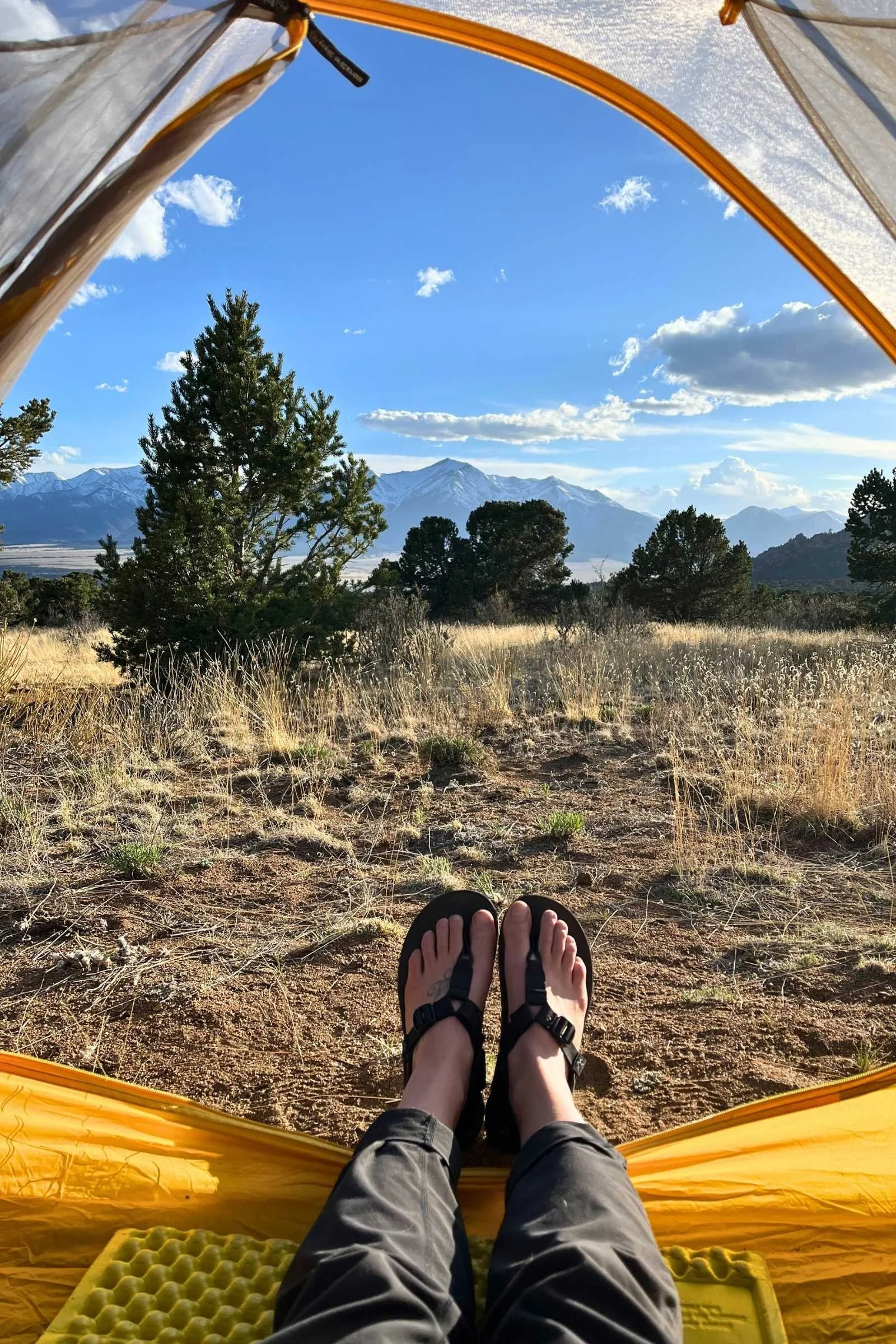
Some people don't just "sit" at camp. If your camp chores involve scrambling up rocks for a better sunset view or wading through a rocky river to filter water, you need the Bedrock Evo Cairn. This is the minimalist choice for those who want a "do-everything" sandal.
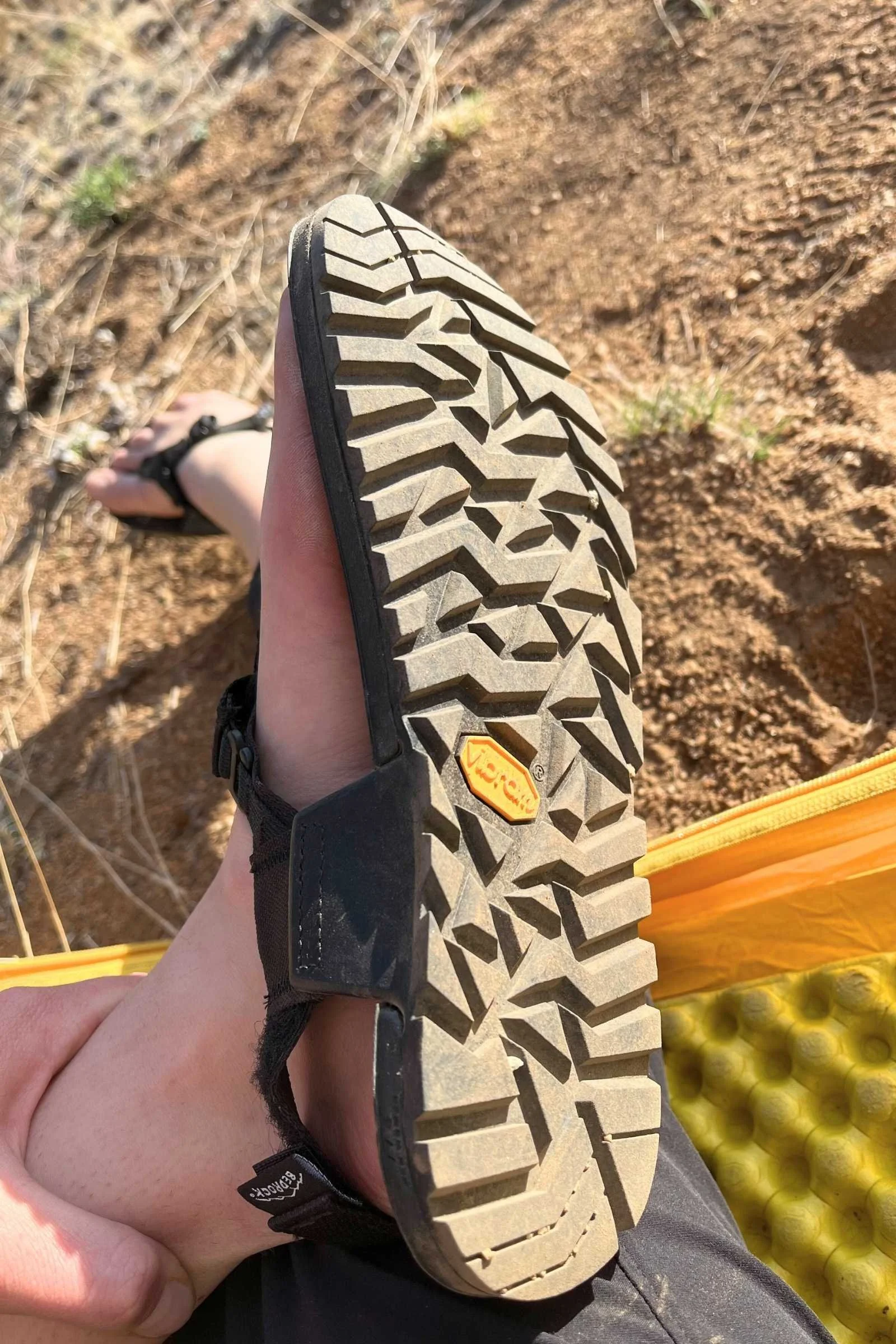
The Vibram® Megagrip outsole provides traction that rivals many hiking boots, yet the zero-drop design keeps you connected to the ground. It’s the most rugged "shoe" in this lineup that still qualifies as a camp sandal.
Pros:
- Incredible grip on wet surfaces
- Bomb-proof durability
- Secure, multi-point adjustment system
Cons:
- Heavier than dedicated "camp" slides
- The thong-style strap doesn't work with traditional socks (requires toe socks)
Honorable Mentions: Tested and Dismissed
In our quest for the best, some popular models didn't quite make the cut for 2025.
- Merrell Hydro Moc: While visually striking and comfortable, we found the heel fit to be inconsistent, leading to hotspots during short walks. They also lack the "cush" factor of the Crocs All-Terrain.
- Hoka Ora Recovery Shoe 3: We love Hoka’s running shoes, but the Ora 3 felt overly bulky and lacked the packability required for backcountry use. For pure van life, it’s a contender, but the Teva ReEmber beat it out for versatility.
Buying Advice: How to Choose Your Perfect Camp Pair
Selecting a camp shoe is a highly personal decision based on your style of adventure. Here are the three pillars to consider:
Weight vs. Durability
There is an inverse relationship here. The Mayfly Imago is feather-light (1.8 oz) but won't protect you from a stubbed toe. The Crocs (10 oz) are heavier but can handle a mile-long walk to a scenic overlook. If you are thru-hiking, prioritize weight. If you are car camping, prioritize the "plush" factor.
Packability
If you’re a backpacker, how will you carry them? Clogs and slides usually need to be strapped to the outside of your pack, where they can snag on branches. Minimalist sandals like the Xero Z-Trail or Mayfly can slide into the internal hydration sleeve or side pockets, keeping your pack profile slim.
Support & Traction
Do you plan on using your camp shoes for more than just sitting? If you have river crossings on your itinerary, look for a secure heel strap and a "sticky" rubber sole like Vibram. For simple lounging, a slide-on design is much more convenient.
How We Tested: Our Methodology
Our testing process for the 2025 guide was our most rigorous yet. Over a 24-month period, our team of six gear editors logged thousands of miles across diverse ecosystems. We tracked metrics including compression set (how long the foam stays "springy"), abrasion resistance, and dry time.
We didn't just wear these around the fire. We used them for creek crossings in the Zion narrows, wore them for 48 hours straight in alpine huts, and subjected them to the ultimate "van life" test: surviving a messy coffee spill and a muddy trailhead.
FAQ
Q: Do I really need camp shoes for backpacking? A: "Need" is a strong word, but "highly recommended" is an understatement. Taking off your boots allows your feet to dry, reducing the risk of blisters, and gives your muscles a chance to recover in a different footbed.
Q: Should I buy camp shoes a size larger? A: Generally, yes. Your feet will swell after a long day of hiking. A slightly larger fit also allows you to wear thick wool "camp socks" comfortably.
Q: Are expensive camp shoes worth it? A: It depends on the use case. For winter expeditions, the $100+ for Feathered Friends is a safety necessity. For summer backpacking, a $60 pair of Crocs or $45 Mayflys will serve you perfectly for years.
Level Up Your Campsite Game
Your feet are the engines that drive your adventures. Treating them to high-quality recovery footwear isn't just a luxury—it's an investment in your next twenty miles. Whether you choose the cloud-like cushion of Oofos or the ultralight minimalism of Mayfly, your soles will thank you the moment you hit the trailhead.
Ready to hit the trail? Check out our latest guide on The Best Ultralight Tents of 2025 to complete your backcountry kit.