There was a time when showing up to a trailhead in anything less than a six-inch leather boot was considered hiking blasphemy. But times have changed. As we push deeper into the backcountry and tackle more technical river crossings, the demand for footwear that breathes, drains, and grips has skyrocketed. At Adventure & Outdoors, we’ve traded the heavy leather for high-performance webbing. Since 2016, our expert team has field-tested over 100 different women’s sandal models across thousands of miles of trails, from the granite slabs of the Sierra Nevada to the muddy, flooded jungles of Southeast Asia.
We don’t just walk in these sandals; we live in them. Every pair in this guide has been put through a proprietary weighted scoring system: Comfort (25%), Traction (25%), Stability (20%), Adjustability (15%), and Versatility (15%). Whether you’re looking for a rugged companion for a multi-day trek or a lightweight pair for camp life, we’ve found the best of the best.
Our Top Picks at a Glance
- Best Overall Adventure Sandal: Chaco Z/Cloud 2 – Unrivaled durability, specialized arch support, and exceptional traction.
- Best for Maximum Protection: Keen Newport H2 – The gold standard for toe protection and high-coverage security.
- Best Value for Budget Hikers: Teva Original Universal – Simple, iconic, and reliable for modest outdoor excursions.
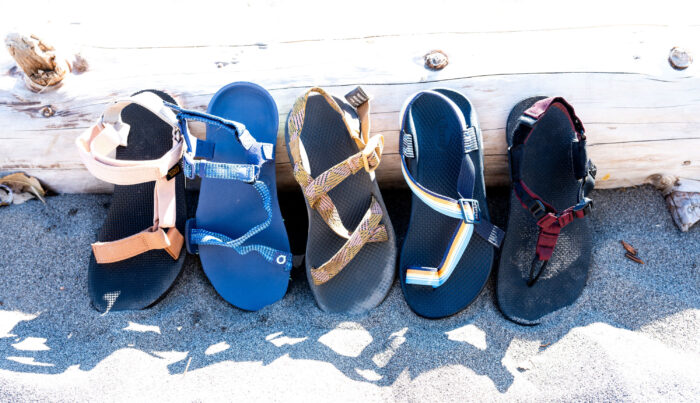
The Winners: Best Women's Hiking Sandals
Best Overall Adventure Sandal: Chaco Z/Cloud 2
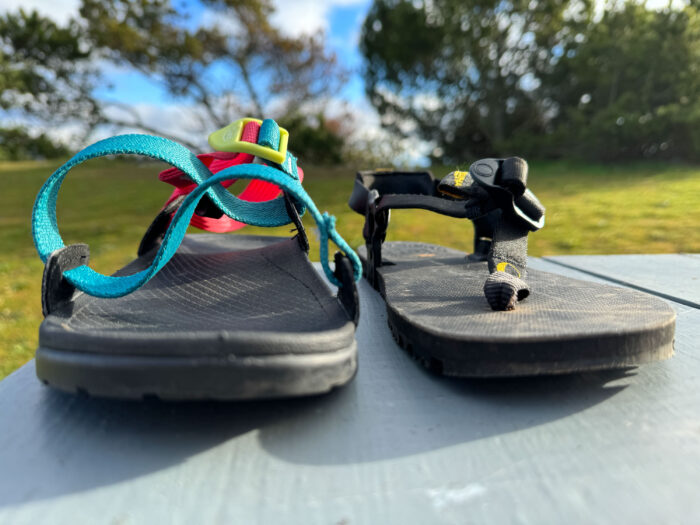
If I had to pick one sandal to survive an apocalypse—or just a very technical hike through Zion’s Narrows—it would be the Chaco Z/Cloud 2. This isn’t just a sandal; it’s a piece of engineering. What sets the Z/Cloud 2 apart from its predecessors is the additional 5mm of top-layer cushioning. It keeps the legendary "LUVSEAT" arch support but softens the break-in period significantly.
The "2" in the name refers to the toe loop. While some find it restrictive, for technical scrambles, it provides a level of lateral stability that no other open-toe sandal can match. The ChacoGrip rubber outsole is specifically designed for wet rock, making these a favorite for river guides and canyon hikers alike.
Key Stats:
- Weight: 1 lb 5 oz (per pair)
- Outsole: ChacoGrip™
- Arch Support: High (LUVSEAT™ footbed)
| Pros | Cons |
|---|---|
| Incredible arch support for long days | Heavier and bulkier than competitors |
| Toe loop offers superior foot-to-sole stability | Continuous strap system can be tricky to adjust |
| Lifetime durability (ReChaco repair program) | Long break-in period for the footbed |
Field Note: I took these through a three-day trek in the Olympic Peninsula. While my companions were fussing with wet socks and heavy boots, I was cruising through creek crossings. The weight is noticeable when they're in your pack, but on your feet, they feel like an extension of your body.
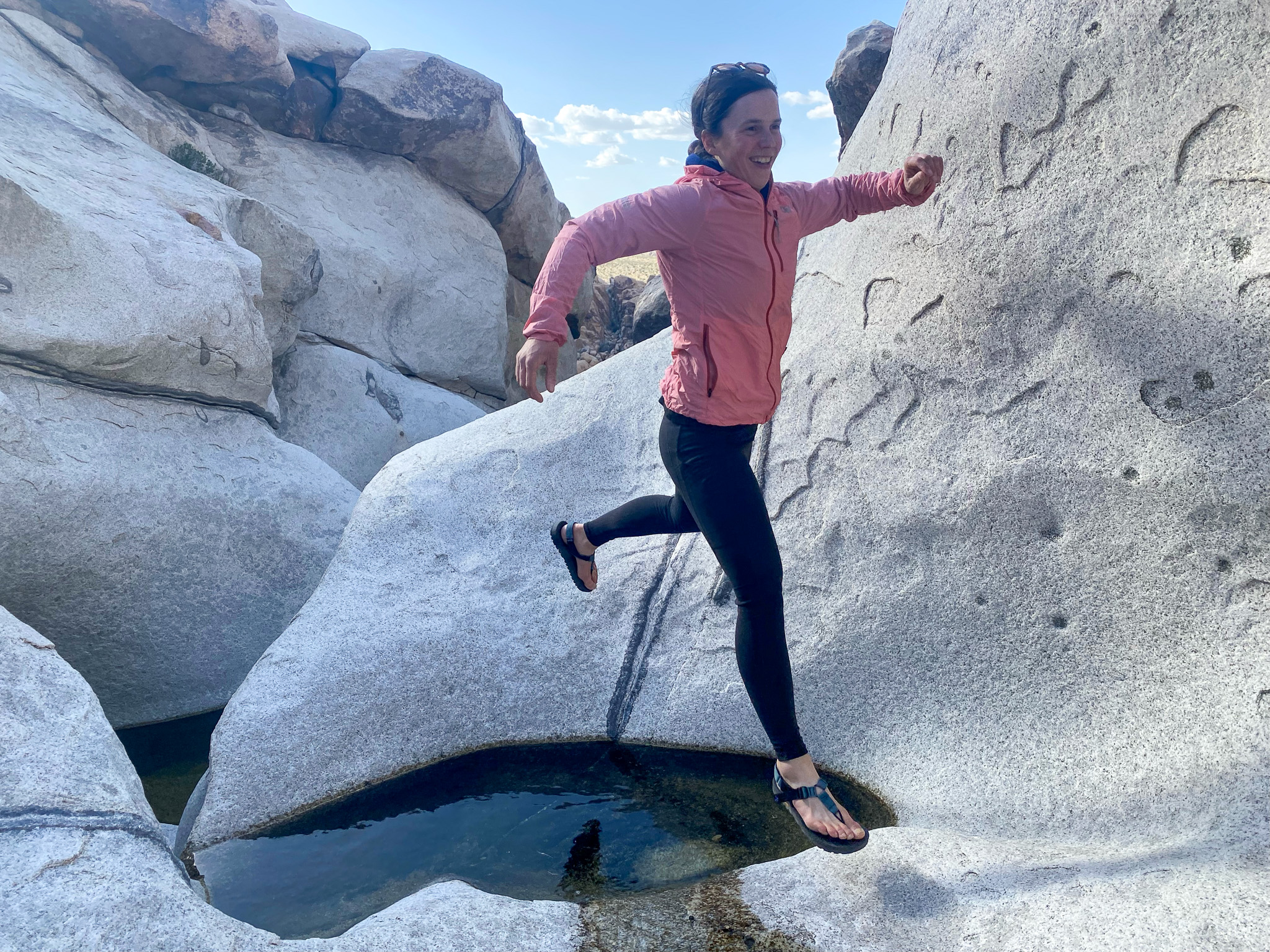
Best for Foot Protection: Keen Newport H2
For those who fear the dreaded "toe stub" on hidden river rocks, the Keen Newport H2 is the only answer. This is the sandal that bridged the gap between a water shoe and a hiking boot. The signature oversized rubber toe bumper provides a fortress for your feet, while the polyester webbing straps are treated with an anti-microbial finish to keep the "river funk" at bay.
The fit is distinctly "Keen"—meaning a wide toe box that allows for natural toe splay. While it’s not the prettiest sandal on the market, its performance on technical riverbeds and rocky scrambles is unmatched.
Key Stats:
- Weight: 1 lb 1 oz
- Design: Closed-toe rubber bumper
- Upper: Washable polyester webbing
| Pros | Cons |
|---|---|
| Unbeatable toe protection | Difficult to get on when feet are swollen |
| Sneaker-like security and stability | Can trap small pebbles inside the footbed |
| Excellent traction on slick surfaces | Not the most breathable for desert heat |
Best Value & Light Adventure: Teva Original Universal
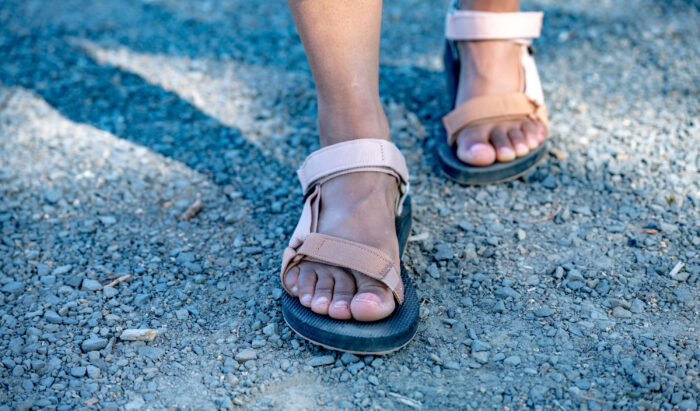
Sometimes, simplicity wins. The Teva Original Universal is a throwback to the 1980s, and for good reason. It’s lightweight, affordable, and incredibly easy to use. For light trails, beach approaches, or as a dedicated camp shoe after a 20-mile day, these are hard to beat.
At roughly $55–$60, you’re getting a durable rubber outsole and a quick-drying strap system made from recycled plastic. While it lacks the aggressive lugs of the Chaco or the protection of the Keen, its versatility is its greatest strength.
Key Stats:
- Price: ~$60
- Weight: 5.5 oz (Third lightest tested)
- Material: REPREVE® recycled polyester
| Pros | Cons |
|---|---|
| Ultra-light and packs flat in a backpack | Zero arch support for high-mileage days |
| Very affordable price point | Straps can feel "scratchy" initially |
| Classic, stylish look for town and trail | Minimal traction on steep or muddy terrain |
Shop Teva Original Universal →
Best Minimalist & Ground Feel: Bedrock Cairn Evo
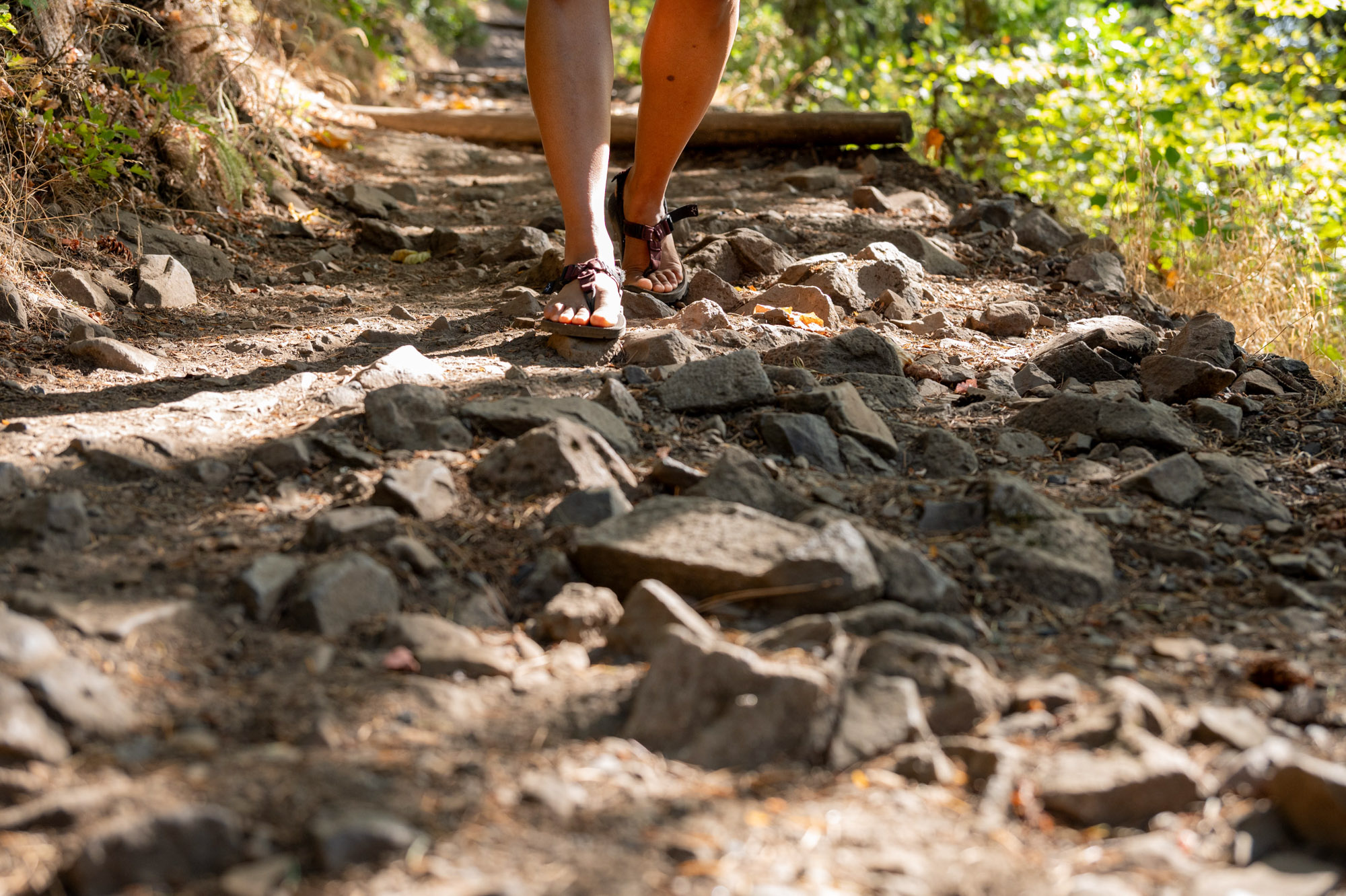
If you want to feel the trail beneath your feet without the risk of a puncture, the Bedrock Cairn Evo is a masterpiece of minimalist design. Featuring a Vibram® XS Trek EVO outsole, these sandals offer professional-grade grip in a zero-drop package. The Y-strap system is incredibly secure, preventing the "flop" often associated with thong-style sandals.
Key Stats:
- Sole: Vibram® XS Trek EVO
- Drop: 0mm (Barefoot feel)
- Adjustment: Three-point strap system
| Pros | Cons |
|---|---|
| Incredible ground feel and flexibility | Zero cushioning (requires foot strength) |
| Vibram sole is "sticky" on technical descents | Thong strap can be uncomfortable for some |
Best for High Support & Comfort: Ecco Yucatan
While Chacos are built for the "dirtbag" adventurer, the Ecco Yucatan is built for the trekker who demands all-day comfort without the rugged aesthetic. The nubuck leather straps are lined with soft neoprene, eliminating any chance of hotspots or blisters. The molded EVA footbed provides excellent stability even when you’re carrying a heavy daypack.
Highlights:
- Comfort: Neoprene lining prevents friction.
- Stability: A multi-layered sole provides a firm platform for long-distance walking.
- Versatility: Sophisticated enough for a European walking tour, rugged enough for a trail.
Best Post-Hike Recovery: Hoka Ora Recovery Slide 3
After a grueling 20-mile day in boots, your feet need a vacation. The Hoka Ora Recovery Slide 3 is the ultimate reward. With an oversized midsole and Hoka’s signature meta-rocker geometry, these slides allow your feet to recover by reducing the strain on your arches and metatarsals. They are APMA (American Podiatric Medical Association) approved and feel like walking on clouds.
Shop Hoka Ora Recovery Slide 3 →
Comparison Table: Performance Metrics
To help you decide, we've broken down our top contenders based on our weighted scoring system. Each category is rated on a 1-10 scale.
| Model | Comfort (25%) | Traction (25%) | Stability (20%) | Adjustability (15%) | Versatility (15%) |
|---|---|---|---|---|---|
| Chaco Z/Cloud 2 | 8 | 10 | 10 | 7 | 8 |
| Keen Newport H2 | 7 | 9 | 9 | 6 | 7 |
| Teva Original | 7 | 5 | 4 | 9 | 10 |
| Bedrock Cairn Evo | 6 | 10 | 8 | 10 | 8 |
| Ecco Yucatan | 10 | 7 | 8 | 8 | 6 |
How We Tested
Our testing process is grueling because we know your gear can't fail when you're 15 miles from the nearest trailhead. We don't just walk around the block. Our team of female testers took these sandals through:
- Submersion Tests: We hiked through knee-deep rivers to see how long straps took to dry and if the wet traction held up.
- Vertical Scrambling: We climbed Class 2 and 3 terrain to test lateral stability and toe protection.
- Long-Haul Days: We wore each pair for at least three consecutive 10+ mile days to identify hotspots and arch fatigue.
Our proprietary scoring system ensures that we aren't just looking at how a sandal "feels" in the store, but how it performs under pressure.
Buyer's Guide: How to Choose Your Perfect Sandal
1. Traction: Lugs vs. Siping
If you’re mostly hiking on dry, dusty trails, look for deep lugs (the bumps on the bottom) to bite into the dirt. However, if you’re spending time on wet rocks or boat decks, you need siping—thin slits in the rubber that move water away to create a vacuum-like grip. ChacoGrip and Vibram XS Trek are the gold standards here.
2. Support: High Arch vs. Minimalist
- High Support (Chaco/Ecco): Best for those with plantar fasciitis or those carrying heavy packs. These prevent your foot from over-pronating.
- Minimalist/Zero Drop (Bedrock/Teva): Best for shorter distances or hikers who prefer a "barefoot" experience. These require more strength in the small muscles of the feet.
3. Protection: Open-toe vs. Closed-toe
It’s a trade-off. Open-toe sandals (Chaco, Bedrock) are easier to clean—if a pebble gets in, it’s out in a second. Closed-toe sandals (Keen) protect your toes from impact but can trap debris, requiring you to stop and shake them out.
4. Material: Synthetic vs. Leather
Always choose synthetic webbing (polyester/nylon) for water-based adventures. It dries faster and won't stretch when wet. Leather or nubuck (Ecco) is more comfortable for dry, hot-weather walking but can become heavy and prone to mold if consistently soaked.
FAQ
Q: Can I actually hike a mountain in sandals? A: Absolutely, but with caveats. We’ve seen hikers tackle the PCT in Chacos. However, for steep scree slopes or sub-alpine environments with snow, a boot is safer. For everything else, a high-stability sandal like the Chaco Z/Cloud 2 is more than capable.
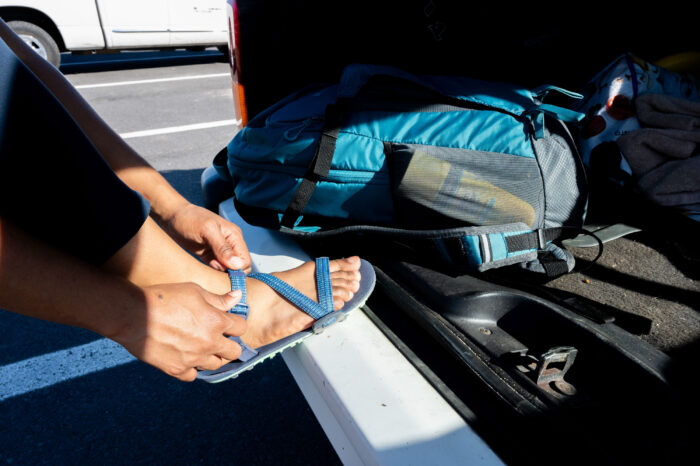
Q: How do I prevent blisters in hiking sandals? A: Blisters in sandals usually come from two things: sand trapped under the straps or "new shoe" friction. Always break your sandals in for at least two weeks before a big trip. If you feel a hotspot, a small piece of Leukotape works wonders.
Q: Are expensive hiking sandals worth it? A: Yes. A $100+ pair from Chaco, Bedrock, or Keen uses high-grade rubber compounds and ergonomic footbeds that last for years. A cheap "fashion" sandal will likely delaminate or cause foot pain within the first five miles of a real trail.
Gear Up for Your Next Expedition
The right pair of sandals can transform your outdoor experience, offering a level of freedom and breathability that boots simply can't match. Whether you're chasing waterfalls in the Tevas or navigating technical ridges in your Bedrocks, the key is to match the footwear to your specific terrain.
Ready to hit the trail? Grab your top pick, pack your sunscreen, and we'll see you out there.