I’ve stood on wind-whipped ridges in the Cascades and slogged through swampy trails in the Southeast, and if there’s one piece of gear that has survived every accidental rock-smash and torrential downpour, it’s the Garmin Instinct 2. In an era where smartwatches are becoming fragile, high-definition mini-computers for your wrist, the Instinct 2 feels like a middle finger to the status quo. It’s a tool, not a toy.
When you’re twenty miles into a thru-hike and the weather turns south, you don’t need a high-resolution AMOLED screen that drains your battery in a day. You need a device that is, quite literally, bombproof. After months of field-testing the various iterations of this lineup—from the compact 2S to the absolute beast that is the 2X—I can confidently say the Garmin Instinct 2 is the ultimate rugged GPS watch for anyone who treats the outdoors like a second home rather than a weekend photo op.
Quick Specs: Instinct 2 Family Comparison
| Feature | Instinct 2S | Instinct 2 | Instinct 2X Solar |
|---|---|---|---|
| Case Size | 40 mm | 45 mm | 50 mm |
| Display Res | 156 x 156 px | 176 x 176 px | 176 x 176 px |
| Weight | 42g | 52g | 67g |
| Battery (Smartwatch) | Up to 21 Days | Up to 28 Days | Unlimited (Solar) |
| GPS Battery Life | Up to 22 Hours | Up to 30 Hours | Up to 145 Hours (Solar) |
| Flashlight | No | No | Yes (Integrated LED) |
The Verdict: Why It Wins the Ridge
The Garmin Instinct 2 isn’t trying to be an Apple Watch, and it’s certainly not trying to be a Fenix. It occupies a unique "sweet spot" in the market: it provides military-grade durability (MIL-STD-810) and pro-level GPS tracking without the four-figure price tag or the delicate aesthetics of luxury trackers.
Why do I call it the ultimate rugged watch? It starts with the build. The fiber-reinforced polymer case and chemically strengthened, scratch-resistant glass are designed to take a beating. It’s thermal-resistant, shock-resistant, and rated for water up to 100 meters. I’ve scraped this thing against granite while scrambling in the Sierras, and it barely showed a scuff.
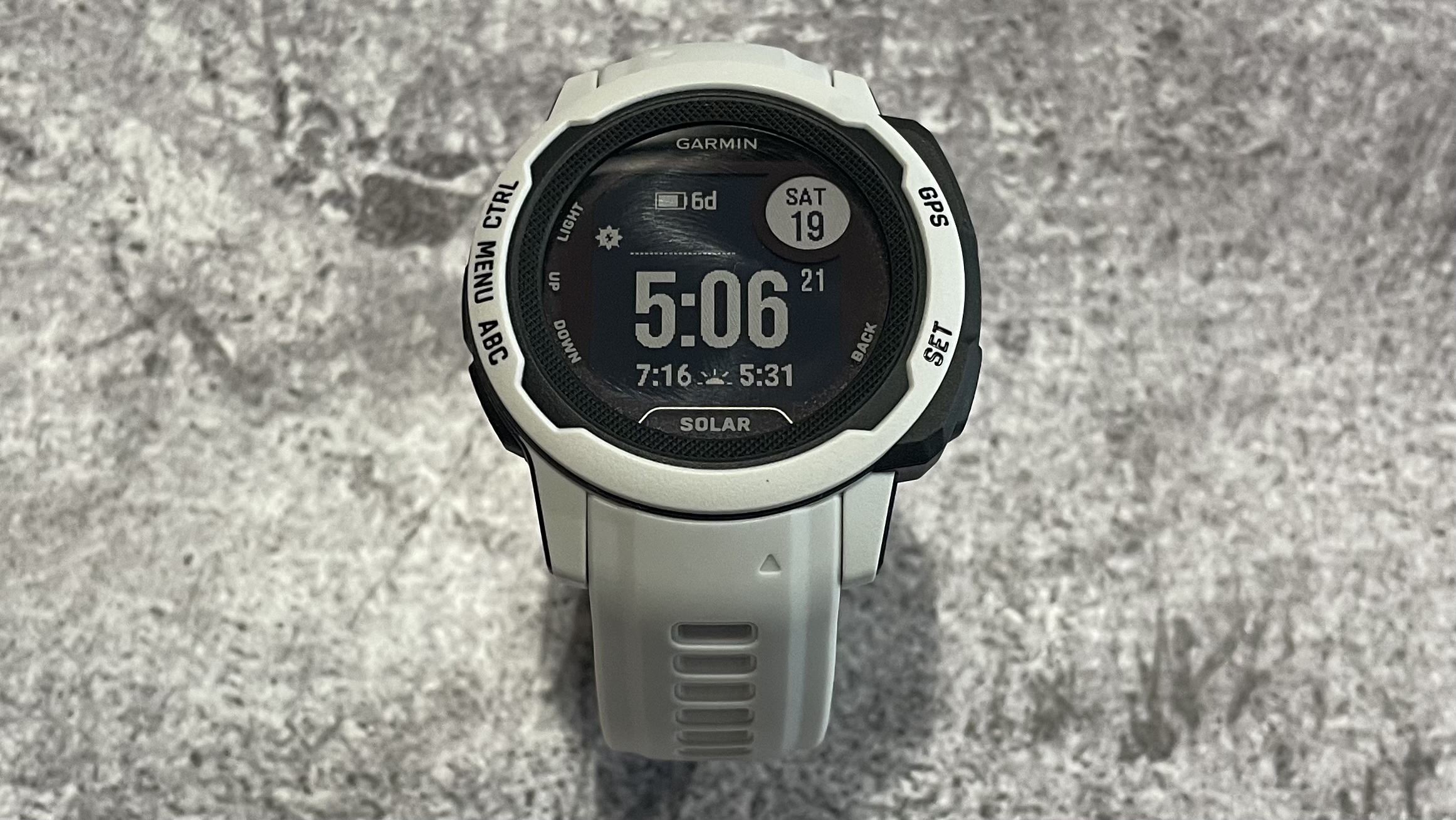
The "No-Frills" philosophy is its greatest strength. By sticking to a high-contrast, monochrome transflective display, Garmin ensures two things: extreme legibility in direct, blinding sunlight and legendary battery life. You aren't distracted by flashy animations; you get the data you need—altitude, pace, and heading—instantly.
What’s New: Instinct 2 vs. The Original
If you’re still rocking the original Instinct, you might be wondering if the upgrade is worth the cash. Short answer: Absolutely. On the surface, they look similar, but under the hood, the Instinct 2 is a different animal.
First, let’s talk data. Garmin doubled the storage capacity, jumping from 16 MB in the original to 32 MB. This 100% increase means you can save significantly more activity data and more complex courses without having to sync and clear your watch constantly.
Then there’s the screen. The resolution jumped from 128x128 pixels to 176x176. While that sounds like a minor technicality, in the field, it’s a game-changer. The text is crisper, the icons are clearer, and the "secondary window" (that little circle in the top right) is far more functional for quick-glance stats like heart rate or current elevation.

Perhaps the most significant "pro" upgrade is the inclusion of Garmin’s full suite of health and training metrics. You now get VO2 Max, Sleep Score, and HRV (Heart Rate Variability) status. For thru-hikers, the HRV status is clutch—it’s the best indicator of whether your body is actually recovering from those 20-mile days or if you’re heading toward an injury.
Battery Life: The Power of Solar
If there is one reason to buy this watch, it’s the power management. The standard Instinct 2 offers 28 days in smartwatch mode—nearly double the original's life. But the Solar models are where the real magic happens.
Garmin claims "unlimited" battery life for the Instinct 2 Solar in smartwatch mode, provided you’re getting at least 3 hours of 50,000 lux sunlight per day. To put that in perspective, a bright, sunny day can easily exceed 100,000 lux. If you’re a thru-hiker or a field researcher spending all day outside, you may literally never have to plug this watch into a wall again.
Battery Performance by Mode
| Mode | Standard Instinct 2 | Instinct 2 Solar (w/ Sun) |
|---|---|---|
| Smartwatch Mode | 28 Days | Unlimited |
| GPS Mode | 30 Hours | 48 Hours |
| Expedition GPS | 32 Days | Unlimited |
| Max Battery GPS | 70 Hours | 370 Hours |
For multi-week expeditions, I frequently use the "Expedition Mode." It records GPS track points at one-hour intervals, allowing the watch to last for weeks while still giving you a general map of your journey. It’s the ultimate "set it and forget it" feature for off-grid travel.
Size Guide: Which Instinct 2 Fits Your Wrist?
One of the biggest complaints about the original Instinct was its "one-size-fits-all" approach, which often left those with smaller wrists feeling like they were wearing a small brick. Garmin fixed that with three distinct sizes:
- Instinct 2S (40mm): This is the lightweight champion. It’s 11% smaller than the standard version and weighs just 42g. That’s a 10-gram (19%) weight reduction compared to the standard model. If you’re an ultralight hiker or simply have a smaller frame, this is your watch. It stays snug and doesn't bounce around when you're using trekking poles on a steep descent.
- Instinct 2 (45mm): The goldilocks choice. It fits most wrists perfectly and offers the best balance of screen real estate and weight (52g).
- Instinct 2X (50mm): The "beast mode" option. It features a massive 1.1-inch display and a built-in LED flashlight (which is surprisingly useful for finding gear in a dark tent). More importantly, it boasts a staggering 145-hour GPS battery life with solar assistance.
Marcus’s Tip: If you have any choice in the matter, go for the Solar version. Even if you don't reach "unlimited" status, the extra buffer it provides during long GPS-tracked hikes is worth the $100 upgrade.
Built for the Backcountry: Navigation & ABC Sensors
While many people buy this for the "rugged look," the real value is in the ABC sensors: Altimeter, Barometer, and 3-axis Compass.
- Altimeter: Tracks your ascent and descent. Crucial for knowing exactly how much more climbing you have left on a pass.
- Barometer: Monitors short-term trends in air pressure. The "Storm Alert" feature is a lifesaver; it’s buzzed on my wrist hours before a front moved in, giving me enough time to find a sheltered campsite.
- 3-axis Compass: Works even when you aren't moving.
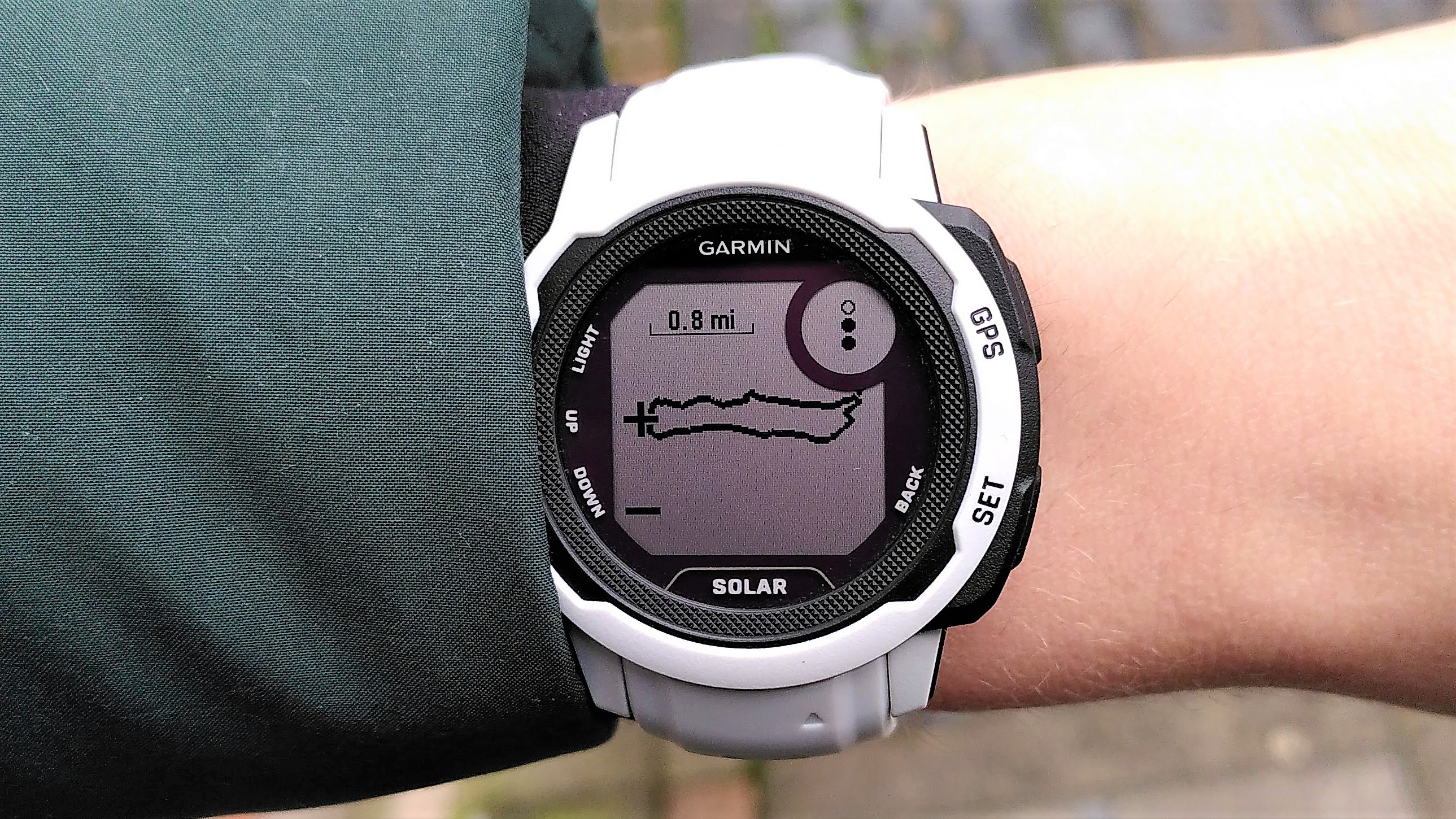
For navigation, the Instinct 2 uses "breadcrumb" mapping. You won't see topographical contours or street names, but you will see a clear line showing your path. If you lose the trail or the fog rolls in, the TrackBack feature will guide you exactly back the way you came. It’s simple, reliable, and uses very little power compared to full-color mapping.
The Trade-offs: What You Don't Get
No piece of gear is perfect for everyone. To get that legendary battery life and ruggedness, you have to make some sacrifices.
- No Topographical Maps: If you need to see every stream and contour line on your wrist, you’ll need to step up to the Garmin Fenix or Epix series. The Instinct 2 is for people who use their watch to supplement a paper map or a phone app like Gaia GPS.
- No Touchscreen: This is a button-only interface. Personally, I prefer this. Try using a touchscreen with wet fingers or heavy gloves in the middle of a blizzard—it doesn’t work. Buttons always work.
- No Onboard Music: Unless you get the "Music" edition (rarely available in the 2 series) or the specialized Dezl/Surf versions, you can't load Spotify onto the watch. You can control the music playing on your phone, but the watch itself doesn't store tunes.
FAQ
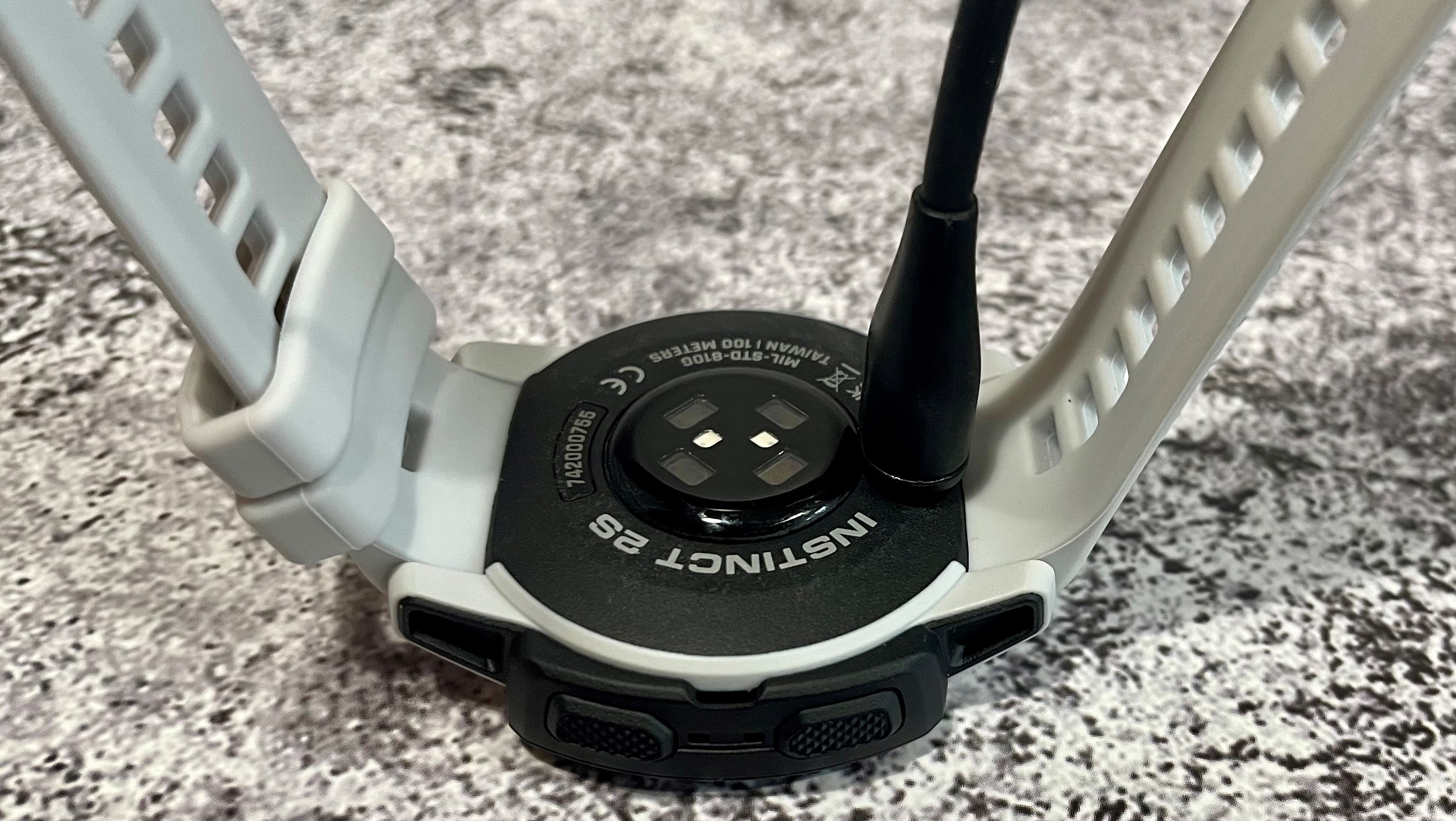
Is the Garmin Instinct 2 waterproof? Yes, it’s rated to 10 ATM (100 meters). This means it can handle swimming, snorkeling, and high-speed water sports. In the backcountry, this means you never have to worry about crossing rivers or trekking through a monsoon.
Can it track hiking elevation gain accurately? Absolutely. Because it uses a barometric altimeter rather than just GPS data to calculate height, it’s much more sensitive to small changes in elevation. Just remember to calibrate it at the trailhead for the best results.
Does the solar version actually charge while I'm hiking? Yes, but don't expect it to go from 0% to 100% just sitting in the sun. Solar charging is primarily designed to slow the drain while the GPS is running or to maintain the battery in smartwatch mode. In my experience, on a clear day, the solar intensity can easily offset the power usage of the heart rate sensor.
The Garmin Instinct 2 is the closest thing to a "buy it for life" piece of technology I’ve found in the outdoor world. It’s tough enough to survive a fall, smart enough to guide you home, and efficient enough to stay powered long after your other devices have died. If you’re ready to stop worrying about your gear and start focusing on the trail, this is the watch that belongs on your wrist.